"We launched TPM three years ago. We had a kickoff party, printed banners, and trained everyone.
Today, the banners are dusty, and we are back to firefighting."
This is the most common story in manufacturing.
Total Productive Maintenance (TPM) is the gold standard for operational excellence. Its goal, Zero Breakdowns, Zero Defects, Zero Accidents—is perfect.
So why does it fail so often?
It fails because Analog Tools cannot support the discipline required.
Expecting an operator to clean a machine, inspect it, and log the data on three different pieces of paper is unrealistic in a modern high-speed plant.
To revive your TPM program, you don't need more training. You need better tools. Here is how to digitize the core pillars of TPM to make them stick.
Pillar 1: Autonomous Maintenance (Jishu Hozen)
The Theory: Operators perform daily cleaning and minor maintenance to detect abnormalities early.
The Failure: Paper checklists are "pencil whipped" (faked) at the end of the shift.
The Digital Fix:
-
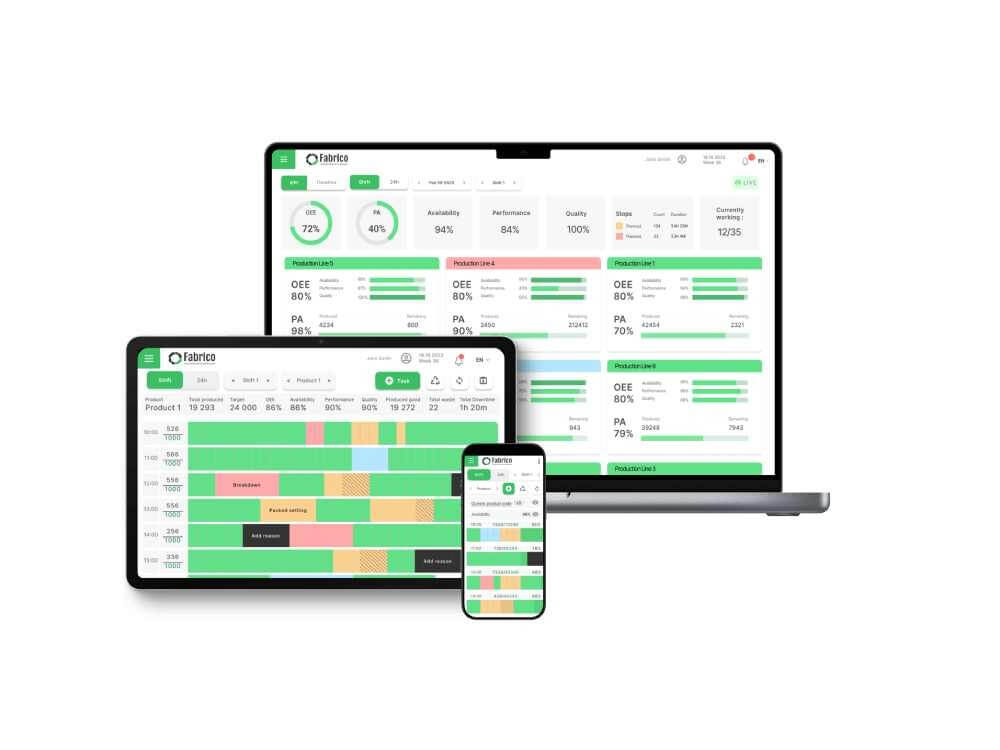
Digital CILs: Use Fabrico to push a daily "Clean, Inspect, Lube" route to the operator's tablet.
-
Forced Evidence: Require a photo of the clean sensor or the oil gauge. No photo, no submission.
-
Result: You get verified proof that the machine is actually being cared for.
Pillar 2: Planned Maintenance
The Theory: Move from reactive to proactive maintenance based on data.
The Failure: PM schedules are based on calendars ("Monthly Check"), regardless of machine usage.
The Digital Fix:
Pillar 3: Focused Improvement (Kobetsu Kaizen)
The Theory: Small groups work together to eliminate the "Six Big Losses."
The Failure: Teams spend weeks manually gathering data to find the losses. By the time they analyze it, the problem has changed.
The Digital Fix:
-
Automated OEE: Let the software capture the micro-stops and speed losses in real-time.
-
Video Root Cause: Use Inefficiencies Zoom-In to show the team video of the failure.
-
Result: The Kaizen team starts the meeting with answers, not questions.
Pillar 4: Early Equipment Management
The Theory: Designing machines that are easy to maintain.
The Failure: Maintenance data is locked in a filing cabinet, so engineers buy the same bad motor again.
The Digital Fix:

The Financial Impact of Digital TPM
Transitioning from "Paper TPM" to "Digital TPM" isn't just about culture; it's about profit.
| Metric |
Analog TPM |
Digital TPM (Fabrico) |
| OEE |
Stagnant (Manual data is too slow) |
+10% to +15% (Real-time action) |
| Maintenance Cost |
High (Reactive + Overtime) |
-20% (Predictive) |
| Operator Engagement |
Low (Hates paperwork) |
High (Likes using modern tech) |
Conclusion: Make the Right Thing the Easy Thing
TPM fails when it feels like "extra work."
Your job as a leader is to lower the barrier to entry. If an operator can tag a leak, take a photo, and notify maintenance in 10 seconds on a screen, they will do it. If it takes 10 minutes to find a tag and a pen, they won't.
Don't blame your culture. Upgrade your tools.


 Login
Login
 Blog
Blog