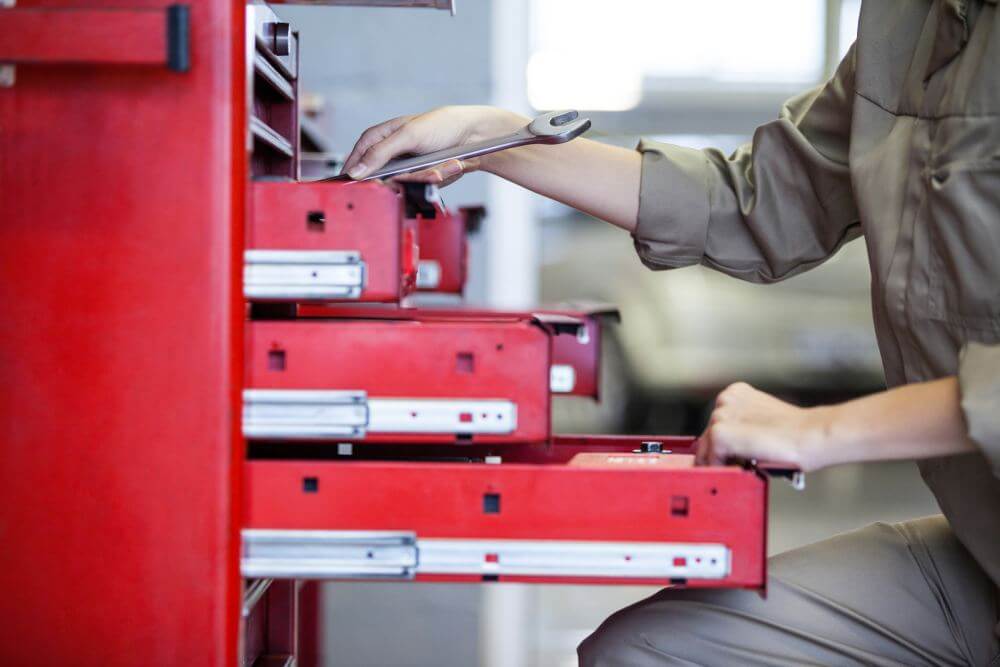
Kitting in der Instandhaltung ist die Praxis, vor Beginn einer geplanten Arbeitsorder alles zu sammeln und bereitzustellen, was ein Wartungsauftrag benötigt (Teile, Verbrauchsmaterialien, Sonderwerkzeuge, Unterlagen), in einem einzigen vorbereiteten Kit, sodass der Techniker einmal zum Einsatzort geht und arbeitet, statt Materialien zu suchen. Es ist eine der wirkungsvollsten Gewohnheiten in der Wartungsplanung, weil es die größte versteckte Zeitfalle in den meisten Instandhaltungsabteilungen angreift: Suchen und Warten.
Eine Abteilung mit 12 Technikern führt 60 geplante Arbeitsaufträge pro Monat aus. Zeitstudien (und die meisten veröffentlichten Schätzungen) beziffern das Suchen nach Teilen, Werkzeugen und Informationen in einer nicht gekitteten Organisation auf 30 bis 60 Minuten pro Auftrag; nehmen wir 45 Minuten an.
Das sind 45 Stunden pro Monat qualifizierter Arbeitszeit, die mit Laufen und Suchen verbracht werden. Durch Kitting derselben Aufträge reduziert sich die Entnahmezeit auf etwa 10 Minuten (Kit holen, Inhalte bestätigen): 10 Stunden, womit 35 Technikerstunden pro Monat zurückgewonnen werden, ungefähr ein Fünftel eines Vollzeittechnikers, ohne neues Personal einzustellen.
Der Gewinn zeigt sich direkt in der Schrauberzeit und wirkt sich verstärkend aus: Aufträge beginnen termingerecht, sodass der Plan selbst glaubwürdig bleibt.
Kitting setzt voraus, dass der Auftrag im Voraus bekannt ist, daher gehört es in den Bereich der geplanten Arbeiten: vorbeugende Wartungsroutinen, geplante korrektive Arbeiten und Stillstandsaufgaben. Notfälle und ungeplante Ausfälle können nicht gekittet werden, was ein weiterer stiller Grund dafür ist, den Mix von reaktiven zu geplanten Arbeitsauftragstypen zu verschieben.
Viele Standorte beginnen damit, ihre wiederkehrenden PM‑Routen zu kitten, bei denen sich die Kit-Inhalte in jedem Zyklus wiederholen und einmal als Vorlage angelegt werden können.
Ein Kit, dem eine Dichtung fehlt, versagt genau in dem Moment, den es verhindern sollte. Kitting basiert daher auf diszipliniertem Ersatzteilmanagement: genaue Bestandszählungen, korrekte Lagerorte, verlässliche Bestellpunkte und ein sauberer MRO‑Katalog, damit der Planer die richtige Teilenummer gleich beim ersten Mal findet. Standorte mit schlechten Bestandsunterlagen korrigieren meist zuerst die Genauigkeit im Bereich der zu kittenden Artikel und erweitern dann.
Auf dem Papier versinkt Kitting in Listen. In einem CMMS lebt die Teileliste auf dem Arbeitsauftrag, Bestand wird bei Terminierung reserviert und das Lager kommissioniert aus dem System statt aus einer handschriftlichen Notiz; unser Leitfaden zum Automatisieren des Wartungskittings mit einem CMMS führt durch die Einrichtung.
Das CMMS von Fabrico verknüpft Arbeitsaufträge, Teilelisten von Anlagen und Ersatzteillagerbestände, sodass Planer die Teileverfügbarkeit bei der Terminierung sehen und Techniker vollständige Kits statt Überraschungen erhalten.
Wiederkehrende vorbeugende Wartungsrouten mit stabilen Teilelisten. Sie wiederholen sich, sodass sich eine einmal erstellte, standardisierte Kit‑Definition in jedem Zyklus auszahlt, und ihr Materialbedarf ist vorhersehbar genug, um Bestände zuverlässig zu reservieren.
Typischerweise kommissioniert und stellt das Lagerpersonal die Kits anhand der Stückliste im Arbeitsauftrag zusammen. Techniker ihre eigenen Kits zusammenstellen zu lassen, würde das Suchproblem wiederherstellen, das Kitting beseitigen soll, wobei das Feedback der Techniker die Kit‑Inhalte kontinuierlich verbessern sollte.
Lange genug, um Engpässe vor dem geplanten Termin zu beheben, kurz genug, damit Kits nicht wochenlang anstehen: ein paar Tage bis eine Woche im Voraus ist ein gängiges Ziel, wobei Teile bei der Terminierung reserviert und kurz vor der Ausführung kommissioniert werden.
Sehen Sie Arbeitsaufträge, Teilelisten und Lagerbestände in einem System. Vereinbaren Sie eine Fabrico‑Demo.
Sehen Sie, wie Fabrico OEE und Instandhaltung in einer Plattform vereint.
Vereinbaren Sie eine Demo
















 Anmeldung
 Blog
Blog