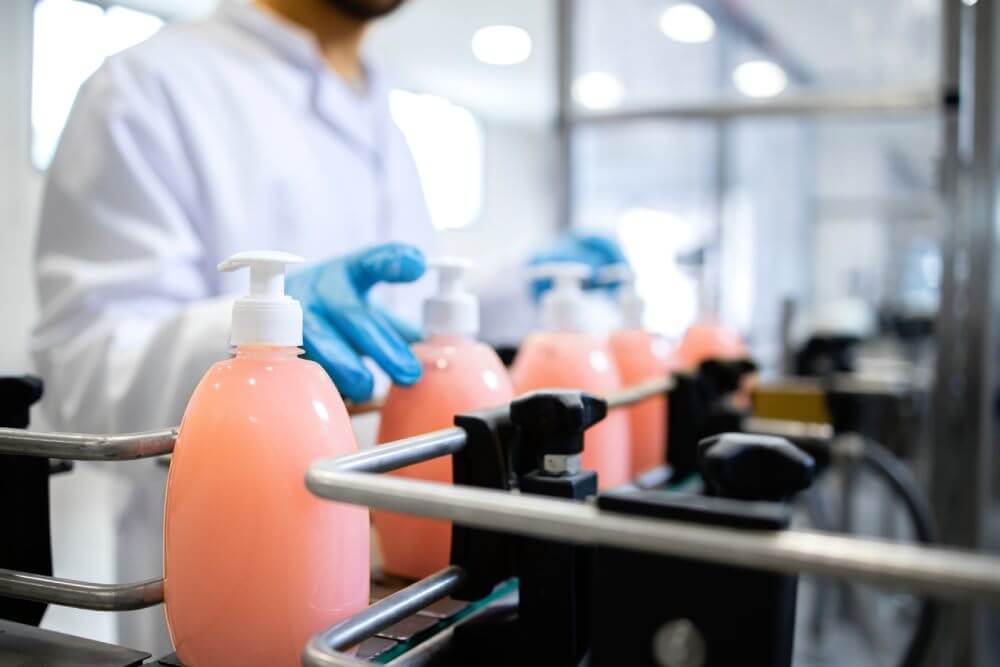
Managing maintenance in FMCG (Fast-Moving Consumer Goods) is different from any other industry.
You aren't managing heavy, slow assets like a steel mill.
You are managing high-speed packaging lines running at 500 units per minute.
-
The Enemy is the Micro-Stop: A jam that lasts 30 seconds doesn't look like a "Breakdown" in a generic CMMS, but it kills your OEE.
-
The Constraint is Compliance: You cannot fix a machine without signing off on Line Clearance and Hygiene checks.
-
The Scale is Massive: You likely have multiple sites producing different SKUs (Home Care, Food, Personal Care).
Generic facility software cannot handle this speed. You need High-Velocity Maintenance Software.
Here are the 7 Best CMMS Software Tools for FMCG in 2026.
1. Fabrico: The "OEE-Integrated" Solution
Best For: FMCG manufacturers who need to link Line Speed to Maintenance Action.
Fabrico is built for the high-speed reality of FMCG. We don't just track work orders; we track the interruptions to flow.
Why FMCG Leaders Choose Fabrico:
-
Micro-Stop Detection: Fabrico connects to your PLCs and uses Computer Vision to detect jams and minor stops. It aggregates these "small" losses to show Maintenance exactly where the biggest opportunity lies.
-
Digital CILs (Clean, Inspect, Lubricate): In FMCG, Autonomous Maintenance is critical. Fabrico puts the CIL checklist on the operator's tablet. They cannot start the shift until they prove (with photos) that the line is clean and ready.
-
GMP Compliance: You can configure "Hard Stops" in the workflow. A technician cannot close a work order until they confirm "Tools Removed" and "Sanitization Complete," creating a perfect audit trail.
-
Multi-Site Standardization: For VPs of Operations ("Paula"), Fabrico offers a global dashboard. You can compare the reliability of the bottling line in Plant A vs. Plant B and standardize the maintenance strategy.
The Verdict: If you want to squeeze every percentage point of OEE out of your assets while staying audit-ready, Fabrico is the specialized choice.

2. SAP PM (Plant Maintenance)
Best For: Global conglomerates (P&G, Unilever scale).
If you are a massive FMCG corporation, SAP is likely your backbone.
-
Pros: Total integration with the global supply chain. It handles procurement of raw materials and spare parts in the same system. Unmatched financial reporting.
-
Cons: It is slow and rigid. Technicians on a fast-moving line hate the complex interface. It often leads to "Shadow Maintenance" where fixes happen without being logged.
-
The Niche: Corporate Standardization.
3. Redzone
Best For: Workforce productivity and culture.
Redzone is famous in the Food & Beverage and FMCG sectors for driving "Huddles" and team wins.
-
Pros: Excellent gamification. It visualizes production targets on big TV screens, motivating operators to "Win the Shift." Great for culture change.
-
Cons: It is expensive. It focuses more on the Operator than the Asset. It lacks the deep Reliability Engineering (RCM) features needed to solve chronic machine failures.
-
The Niche: Productivity & Culture.
4. Aveva (Asset Performance)
Best For: Process-heavy FMCG (Mixing/Blending).
If your facility has a massive "Kitchen" or "Mixing Hall" (e.g., Shampoo blending, Dough mixing), Aveva is strong.
-
Pros: Deep integration with SCADA. It visualizes the process flow and batch health. Excellent for tracking energy and utilities.
-
Cons: It is an engineering tool, not a workflow tool. It is often too complex for the packaging hall where speed is the priority.
-
The Niche: Process Engineering.
5. Poka (IFS)
Best For: Training and Knowledge Management.
FMCG often suffers from high staff turnover. Poka solves the "How do I fix this?" problem.
-
Pros: Best-in-class video training. Operators can scan a QR code to watch a video on how to clear a specific jam or perform a changeover.
-
Cons: It is a training platform, not a full maintenance system. It doesn't manage the spare parts inventory or the asset lifecycle costs natively.
-
The Niche: Skills Training.
6. Fiix (Rockwell Automation)
Best For: Automated packaging lines.
If your lines are driven by Rockwell (Allen-Bradley) automation, Fiix offers good connectivity.
-
Pros: Cloud-native and modern. It connects well to the shop floor hardware. Good AI features for predicting component failures.
-
Cons: As it moves up-market, it is becoming more expensive. It requires configuration to handle specific FMCG workflows like "Line Clearance."
-
The Niche: Automated Packaging.
7. SafetyCulture (iAuditor)
Best For: Quality and Safety Audits.
SafetyCulture is the standard for mobile inspections.
-
Pros: Very easy to build checklists for GMP audits, glass audits, and hygiene checks.
-
Cons: It creates a data silo. The audit data lives in SafetyCulture, but the repair work lives in the CMMS. You have to manually bridge the gap.
-
The Niche: Auditing.
Comparison Matrix: Speed vs. Compliance
| Feature |
Fabrico |
SAP PM |
Redzone |
Aveva |
Poka |
| OEE Integration |
✅ Native |
❌ Custom |
✅ Native |
✅ Native |
❌ No |
| GMP/Hygiene |
✅ Native |
✅ Deep |
⚠️ Basic |
✅ Deep |
✅ Video |
| Micro-Stops |
✅ Vision |
❌ No |
✅ Auto |
⚠️ Basic |
❌ No |
| User Experience |
Modern |
Poor |
Gamified |
Complex |
Modern |
| Focus |
Production |
Finance |
People |
Process |
Training |
Summary: Speed Requires Reliability
In FMCG, you cannot afford to have a line down for an hour waiting for a part.
-
Choose SAP if you are forced to by corporate IT.
-
Choose Redzone if you need to motivate your workforce.
-
Choose Fabrico if you are a VP of Operations. If you need to connect your OEE Data (Micro-stops) to your Maintenance Team (Work Orders) to drive continuous improvement, Fabrico is the unified solution.
Keep the line moving.
[Book a Demo with Fabrico] to see how we handle high-speed FMCG maintenance.


 Login
Login
 Blog
Blog