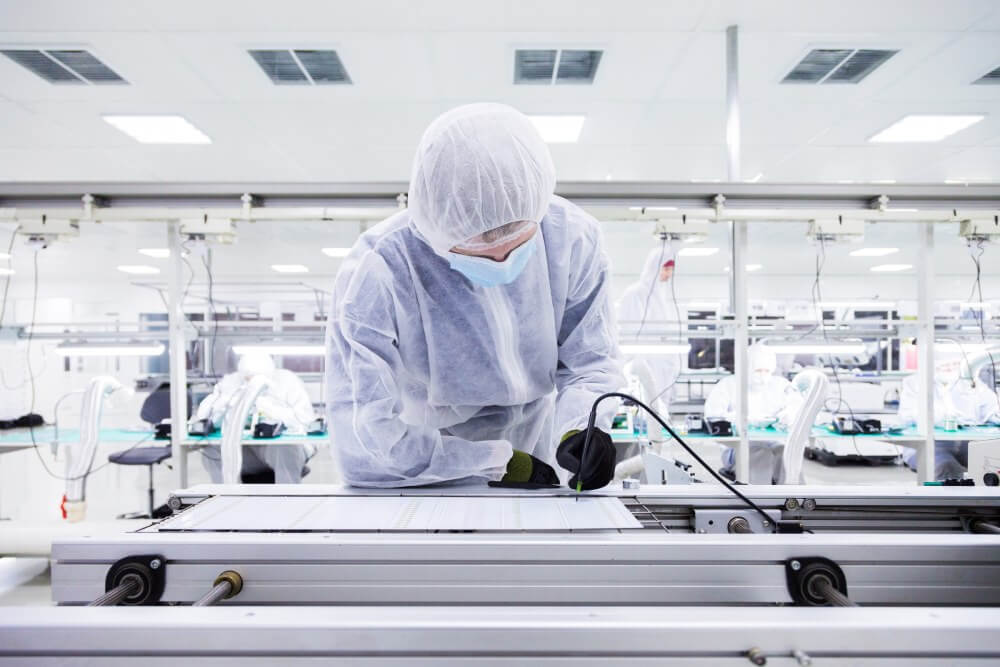
Managing a Semiconductor Fab is the peak of manufacturing difficulty.
The environment is cleaner than a hospital operating room.
The equipment (Etchers, Lithography, Deposition) is incredibly complex. The margins for error are zero.
Generic maintenance software fails here for two reasons:
-
Contamination: You cannot use paper logbooks or binders inside the cleanroom.
-
Precision: A generic "Repair" ticket isn't enough. You need calibration records, sub-component tracking, and precise Tool Uptime metrics.
You need Semiconductor CMMS Software—tools that understand the rigor of the Fab and the Sub-Fab.
Here are the 5 Best CMMS Tools for Semiconductor Manufacturing in 2026.
1. Fabrico: The "Cleanroom-Ready" Solution
Best For: Fabs that need to eliminate paper and maximize Tool Availability.
Fabrico is designed for high-tech manufacturing. We replace the "Cleanroom Notebook" with a secure, digital tablet workflow that tracks both Maintenance and Tool Performance (OEE).
Why Fab Managers Switch to Fabrico:
-
Paperless Execution: Fabrico runs on tablets. Technicians can view schematics, sign off on PMs, and order parts without leaving the cleanroom to check a binder.
-
Tool Uptime (OEE): Fabrico tracks the availability of critical tools (e.g., ASML, Lam, Applied Materials). If a tool goes down, the system logs the exact duration and reason code, helping you fight yield loss.
-
Sub-Fab Management: Managing the thousands of pumps, chillers, and abatement systems in the sub-fab is chaos. Fabrico’s deep asset tree handles the complexity of "Parent Tool -> Child Pump" relationships perfectly.
-
Calibration Control: You can set hard blocks on tools that are out of calibration. If the date passes, Fabrico flags the asset, preventing production on a non-conforming tool.
The Verdict: If you need to protect your yield and your uptime without bringing paper into the Fab, Fabrico is the specialized choice.

2. IBM Maximo
Best For: Mega-Fabs (Intel, TSMC scale).
Maximo is the traditional standard for massive semiconductor enterprises.
-
Pros: Infinite scalability. It can manage the facility (HVAC/Power), the tools, and the supply chain in one massive database. It is highly configurable for complex compliance needs.
-
Cons: It is heavy. Implementing Maximo in a new Fab is a multi-year project. The user interface is often too complex for technicians to use quickly during a critical tool-down event.
-
The Niche: Global Enterprise Fabs.
3. Siemens Opcenter (Semiconductor)
Best For: Manufacturing Execution (MES) and Process Control.
Siemens Opcenter (formerly Camstar) is the dominant MES in the semiconductor industry.
-
Pros: It controls the wafer. It knows exactly which lot is in which chamber. It prevents misprocessing better than any maintenance tool.
-
Cons: It is an MES, not a dedicated CMMS. It focuses on the product flow, not the spare parts inventory or the facility infrastructure (Sub-Fab). It is extremely expensive.
-
The Difference: Siemens moves the wafer; Fabrico fixes the tool.
4. Eyelit
Best For: Specialty Fabs and MEMS.
Eyelit is a flexible MES/CMMS hybrid popular in smaller or specialty semiconductor operations.
-
Pros: Very strong traceability. It handles "Lot Tracking" and "Equipment Management" in a single suite. Easier to deploy than Siemens or Maximo.
-
Cons: It can lack the modern, mobile-first usability of a dedicated SaaS maintenance platform.
-
The Difference: A strong mid-market choice for process control.
5. eMaint (Fluke)
Best For: Sub-Fab condition monitoring (Pumps/Scrubbers).
The Sub-Fab is full of rotating equipment (Vacuum Pumps) that are critical to the tool above. eMaint excels here.
-
Pros: Vibration monitoring integration. It connects to Fluke sensors to predict pump failure before it dumps the vacuum on a process chamber.
-
Cons: The interface is dated. It is less effective for managing the complex "Recipe" and "Calibration" workflows of the main process tools upstairs.
-
The Niche: Sub-Fab Reliability.
Comparison Matrix: Precision vs. Scale
| Feature |
Fabrico |
Maximo |
Siemens |
Eyelit |
eMaint |
| Primary Focus |
Tool Uptime |
Enterprise Asset |
Wafer Process |
Lot Tracking |
Condition Mon. |
| Cleanroom UX |
✅ Excellent |
⚠️ Complex |
⚠️ Complex |
Good |
Dated |
| Sub-Fab Mgmt |
✅ Deep |
✅ Deep |
❌ No |
⚠️ Basic |
✅ Deep |
| OEE/Utilization |
✅ Native |
❌ Custom |
✅ Native |
✅ Native |
❌ No |
| Deployment |
Weeks |
Years |
Years |
Months |
Months |
Summary: Protect the Yield
In a Fab, maintenance is production. If the tool isn't ready, the wafer dies.
-
Choose Maximo if you are building a multi-billion dollar site and need total enterprise governance.
-
Choose Siemens if you need to control the lithography recipe.
-
Choose Fabrico if you are an Equipment Engineer. If you need to manage the maintenance of the Tools and the Sub-Fab equipment with a modern, paperless workflow that protects the cleanroom, Fabrico is the agile solution.
Zero particles. Zero downtime.
[Book a Demo with Fabrico] to see how we digitize maintenance in the cleanroom.


 Login
Login
 Blog
Blog