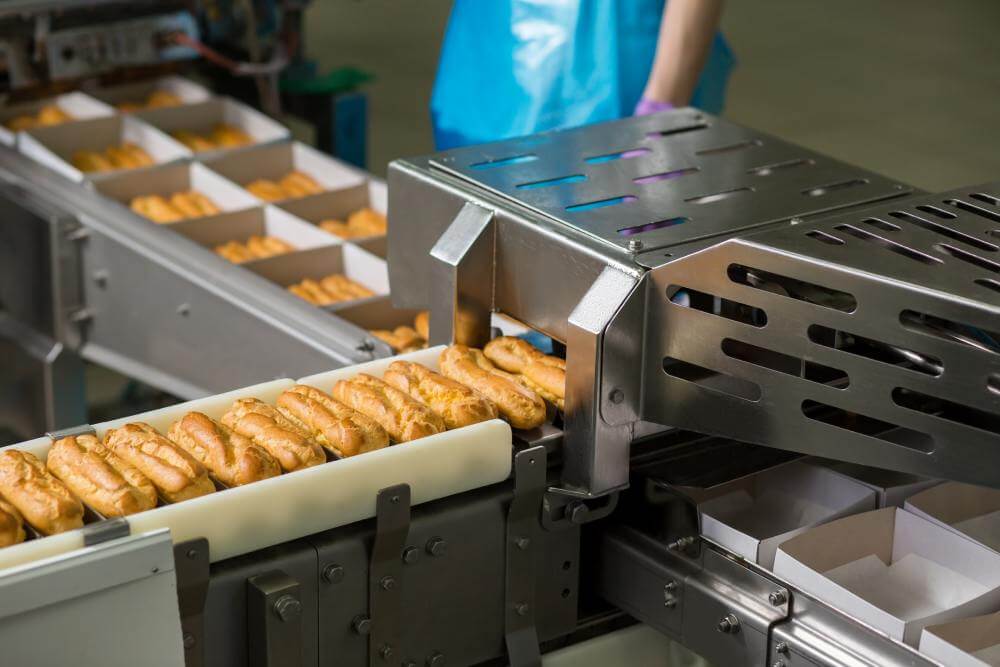

The "Paper Anchor": In regulated industries (Food, Pharma, Chem), you cannot ship the product until the paperwork is reviewed. Paper batch records delay release by days.
The "Review by Exception": Digital EBR software highlights errors instantly (e.g. missing signature), allowing Quality teams to review only the exceptions, not every page.
The Top 5: We review Werum PAS-X, MasterControl, Siemens, and others to help you digitize your "Travelers" and "Batch Sheets."
Electronic batch record (EBR) software replaces the paper batch record with a validated digital workflow that guides an operator through every step of a production batch and captures the result as it happens.
Instead of a printed form filled in by hand, the batch instructions become an enforced sequence: the system presents the next step, checks that each entry sits inside its allowed range, applies electronic signatures, and writes a time stamped, tamper evident record to an audit trail.
The core idea is right first time execution. Because the software validates data at the point of entry, out of specification values, skipped steps, and missing signatures are caught during the run rather than during a paper review days later.
That is what enables review by exception , where a reviewer only inspects the flagged deviations instead of re reading a full paper packet. Good root cause analysis becomes far easier when every deviation is already logged with context.
These three terms describe different layers of the same production record, and buyers often conflate them:
In short, the MBR is the plan, the EBR is the proof of what actually happened, and the MES is the wider system that may run both alongside other operations.
Alongside the batch record, every line also has an equipment side: when it runs, when it stops and why. See how MES and OEE software tracks it with real-time production monitoring, automatic downtime tracking with the cause and duration of every stop, and OEE by line and shift.
An EBR is the digital record of one executed batch against an approved template. An MES (manufacturing execution system) is the wider platform that can manage scheduling, equipment, materials, and many record types across a plant. EBR is frequently a module inside an MES, but lightweight standalone EBR tools also exist for teams that only need to digitize the batch record itself.
The MBR is the approved template that defines the recipe, ordered steps, and acceptance limits for a product. The EBR is the executed copy of that template for a single batch, holding the real values, operators, signatures, and deviations from that specific run. One MBR generates many EBRs over time.
Compliance depends on how a given system is configured and validated, not on the label alone. To support 21 CFR Part 11 and EU Annex 11, EBR software should provide unique user accounts, enforced electronic signatures, a secured and time stamped audit trail, and controls that protect data integrity across the ALCOA plus principles. Buyers still need to validate the system for their own processes and keep the supporting documentation.
Cost is driven by scope rather than a single figure. The main levers are the number of sites and users, whether deployment is cloud or on premise, how many products and templates must be built and validated, the depth of integration with existing systems, and the effort to qualify and validate the installation.
Configuration and validation work often outweighs the raw license line, so total cost of ownership is the more useful lens than sticker price.
Electronic batch records improve data integrity by validating entries at the point of capture, reduce transcription and calculation errors, and speed up batch release through review by exception. They also give real time visibility into a run in progress and create a searchable, traceable history that connects with wider in process control data for trend analysis.
A typical rollout starts by mapping current paper batch records and defining the master templates, then configuring those templates in the system with their steps, limits, and signature points. Teams integrate the required data sources, run qualification and validation, train operators and reviewers, and usually pilot on one product line before scaling. Change control and periodic review keep the validated state intact after go live.
If you manufacture Food, Beverage, Chemicals, or Pharmaceuticals, your product is only as good as its paperwork.
The Batch Record is the story of the product. It proves you followed the recipe, cleaned the line, and performed the quality checks.
But when that record is on paper, it becomes a bottleneck.
Technicians miss signatures.
Paper gets stained or lost.
Quality Assurance (QA) spends days reviewing stacks of binders before they can release the pallet for shipping.
Electronic Batch Record (EBR) software solves this. It validates data at the point of entry, ensuring "Right First Time" documentation.
Here are the 5 Best EBR Software Tools for 2026.
Best For: DACH and global pharma CDMOs, biologics, and high-validation environments.
Werum PAS-X is the de facto standard for electronic batch records in regulated pharma manufacturing. It sits inside the MES layer and is built around GAMP 5, 21 CFR Part 11 and Annex 11 from the ground up.
Pros: Deep validation tooling. Strong integration with weighing, dispensing and process equipment via OPC-UA. Reference deployments across the largest DACH biopharma sites.
Cons: 18-24 month implementation, six-figure consulting spend, and tight coupling to Körber's ecosystem. Heavy for sub-€50M CDMOs.
When to pick it: You are running validated pharma or biologics and the cost of a regulatory finding is greater than the cost of the implementation.
Best For: Life Sciences and heavy FDA compliance.
MasterControl is the "Gold Standard" for Quality Management in Pharma and MedDev.
Pros: Unmatched integration with the Quality Management System (QMS). If a batch fails, it launches a CAPA (Corrective Action) automatically. It handles the rigorous document versioning required by the FDA perfectly.
Cons: It is a "Quality" tool, not a "Shop Floor" tool. It can be disconnected from the actual machine data (PLCs). Operators often find the interface heavy compared to modern apps.
Best For: High-volume, automated Pharma & Biotech.
Siemens Opcenter Execution is the heavyweight MES that handles batch records as one module among many.
Pros: Deep integration with Siemens PLC and DCS hardware. Strong fit for sites already standardized on Siemens automation.
Cons: Long deployment cycles, specialist consultants needed. Overkill for a mid-sized food or chemical plant that just needs to digitize a paper traveler.
Best For: Custom batch apps.
Tulip allows you to build your own "Batch App."
Pros: Flexibility. You can design a screen that looks exactly like your old paper form, making training easy. You can integrate IoT scales to verify ingredient weights automatically.
Cons: You have to build and maintain the logic. It requires an internal engineering champion to ensure the "App" stays compliant with regulations.
Best For: Cloud ERP with built-in production tracking.
Plex offers EBR as part of its "Smart Manufacturing Platform."
Pros: Total traceability. Since it is also an ERP, it tracks the lot number from the raw material receiving dock all the way to the finished goods shipment.
Cons: It is a massive system replacement. You don't just buy the EBR module; you usually buy into the whole Plex ecosystem.
| Feature | Werum PAS-X | MasterControl | Siemens | Tulip | Plex |
| Primary Focus | Pharma MES + EBR | Quality (QMS) | Pharma MES | Custom Apps | ERP / MES |
| Validation | ✅ GAMP 5 native | ✅ QMS-led | ✅ Project-led | ⚠️ DIY | ✅ Built-in |
| User Experience | Operator-focused | Corporate | Complex | Modern | Good |
| Deploy Time | 18-24 months | Months | Years | Months | Months |
| Best For | Large pharma / biologics | Life Sciences QMS | Automated lines | Custom workflows | ERP-led plants |
Fabrico is not an Electronic Batch Record system. We're an MES and OEE platform with maintenance (CMMS) built in, and we sit next to your EBR, not inside it.
Once an EBR is in place, plants quickly find that batch yield is gated by something the EBR cannot see: equipment uptime, micro-stops, condition-based maintenance, and line clearance discipline at the machine. That's the layer Fabrico runs.
How the two systems work together:
EBR (Werum, MasterControl, Siemens, Plex, etc.), owns recipe execution, batch genealogy, electronic signatures, GxP audit trail.
Fabrico, owns the equipment side: OEE measurement (including Computer Vision OEE for lines without PLCs), preventive maintenance, work order execution, asset history.
Where they meet: the EBR can call Fabrico via API when a batch starts (auto-open a line clearance work order) or when a deviation is logged (auto-open a maintenance investigation against the offending asset). The full equipment history then lives alongside the batch record.
If you already have an EBR and you're asking why batches still slip on yield, the answer usually sits in equipment performance. That's the gap we close.
The goal of an EBR is to ship good product faster, with a clean audit trail. Pick based on what your plant actually needs to validate:
Choose Werum PAS-X if you are running validated pharma or biologics at scale and need a deep, GAMP 5-native MES.
Choose MasterControl if your bottleneck is the QMS side, document control, CAPA, training records.
Choose Siemens Opcenter if your site is already standardized on Siemens PLC / DCS hardware and you want one ecosystem.
Choose Tulip if you have an internal engineering team that can own custom batch apps and you need maximum flexibility.
Choose Plex if you're open to replacing the ERP layer and want EBR as part of one platform.
Already have an EBR? If equipment uptime, maintenance, and OEE are still your bottleneck, that's where Fabrico runs. Book a Fabrico demo to see how an MES and OEE platform with maintenance (CMMS) built in plugs into an EBR-equipped plant without replacing it.
Turn downtime into a number your team can actually act on.
Request a demo










 Login
Login
 Blog
Blog