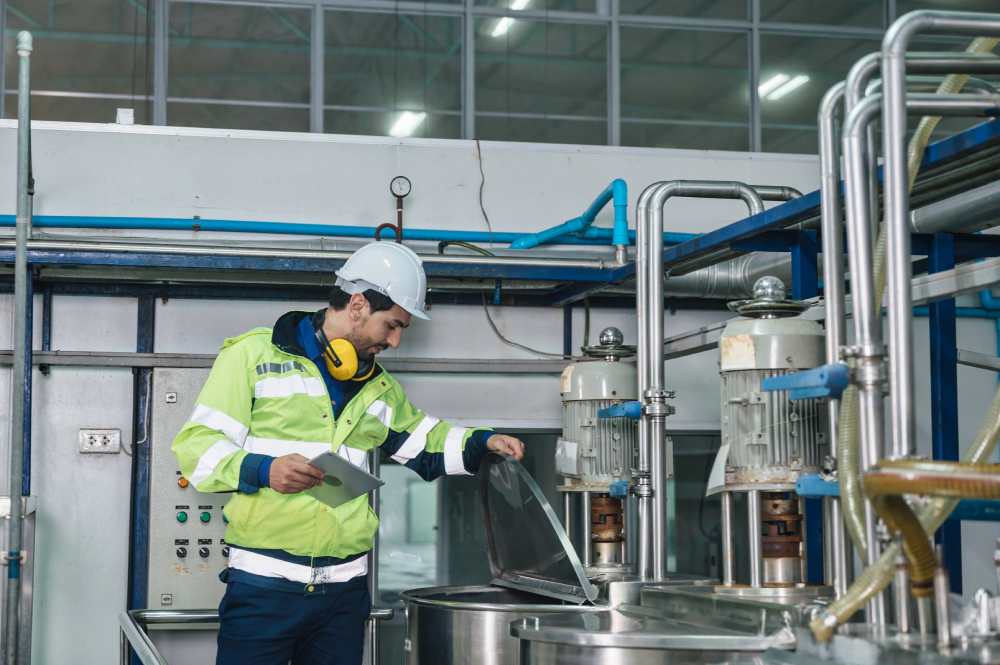
Vegetable oil processing is a dangerous and heavy industrial operation. You are taking hard seeds, crushing them under immense pressure, and then bathing them in highly flammable solvents to extract the oil.
The plant runs 24/7. A shutdown of the extractor means the prep building chokes up with seeds.
A failure in the desolventizer toaster (DT) can ruin the meal quality.
Standard maintenance tools often fail here. They do not handle the "Process Safety Management" (PSM) requirements of a chemical plant, nor do they track the heavy mechanical wear of the prep room.
You need a tool that handles Explosive Safety and Mechanical Reliability in one package.
Here are the 5 best maintenance software tools for vegetable oil refineries in 2026.
1. Fabrico (The Safety & Extraction Specialist)
Best For: Plants that need to link Process Safety with Asset Uptime.
Fabrico is built for hazardous process industries. In an oil refinery, maintenance is not just about fixing things; it is about doing it without blowing up the plant. Fabrico combines the mechanical tracking of screw presses with the safety workflows of a chemical plant.
Why it wins for Oil Processing:
-
Digital Safety Permits: Before a technician can open a work order in the extraction building, Fabrico forces a "Safe Work Permit" workflow. They must digitally sign off on LEL (Lower Explosive Limit) checks and ground verification. No check, no work order.
-
Expeller Wear Tracking: Fabrico tracks the hours and amperage load on your expellers / screw presses. It predicts when the worm shaft creates too much friction and schedules a replacement during a planned stop, ensuring you get maximum oil yield.
-
Visualizing Centrifuge Trips: In the refinery, separators and centrifuges trip often. Fabrico's video replay feature lets you see the feed rate and pressure trends in the minute before the trip, helping you solve "mystery" shutdowns.
-
Mobile Tank Farm Rounds: Operators can use the offline mobile app to walk the tank farm, scanning QR codes on valves and tanks to log levels and check for leaks. This replaces the greasy clipboard that no one reads.
The Verdict: If you want to keep your extraction rates high and your safety officer happy, Fabrico is the strategic choice.

2. SAP PM (The Agribusiness Standard)
Best For: Large Global Agribusiness (Cargill, ADM, Bunge).
The vegetable oil industry is dominated by massive global players. For these companies, SAP is the backbone of grain trading and logistics. SAP Plant Maintenance (PM) is usually the mandated standard.
Pros:
-
Grain to Oil Integration: It connects the maintenance of the plant directly to the grain intake and oil shipping schedules.
-
Procurement Power: If a massive 500HP motor fails, SAP allows you to search inventory across all your company's sites globally to find a spare.
Cons:
-
Technician Usability: The interface is built for buyers and planners. It is notoriously difficult for a mechanic in the field to use quickly.
-
Rigid Planning: Changing a maintenance schedule in SAP often requires multiple approvals, which is too slow when a cooker is overheating.
3. IBM Maximo (The Asset Lifecycle Tool)
Best For: Refineries with On-Site Power Generation.
Many crush plants generate their own steam and power. Maximo is excellent for managing these complex utilities assets (boilers, turbines, water treatment).
Pros:
-
PSM Compliance: Very strong features for managing "Management of Change" (MOC) documentation required by safety regulators.
-
Deep History: It stores decades of data on asset performance, which is great for long term reliability engineering.
Cons:
-
Cost: Maximo is one of the most expensive systems on the market.
-
Complexity: It requires a dedicated team of admins to keep it running. It is overkill for the simpler mechanical tasks in the prep room.
4. Fiix (The Automation Choice)
Best For: Highly Automated, Modern Refineries.
If you have a modern refinery with a central control room and Rockwell Automation PLCs governing the flow, Fiix is a strong option.
Pros:
Cons:
-
Safety Workflows: While good for maintenance, it is less specialized in the strict "Permit to Work" safety workflows needed for Hexane extraction zones.
-
Inventory Depth: It may struggle with the massive variety of spare parts needed for a fully integrated crush plant.
5. MaintainX (The Quick Compliance Tool)
Best For: Independent Mills needing digital logs.
If you are a smaller, independent oil processor and your main headache is paper logs for safety and housekeeping, MaintainX is the solution.
Pros:
-
Speed: You can digitize your "Daily Boiler Check" or "Tank Farm Inspection" in minutes.
-
Mobile Interface: Technicians love the simple, chat like interface.
Cons:
-
No Process Context: It doesn't connect to the tonnage or flow rates. It won't tell you that your maintenance is improving your extraction efficiency.
-
Limited Asset Hierarchy: It struggles to manage the complex parent child relationships of a multi stage bleaching and deodorizing line.
Comparison Matrix: Fabrico vs. The Oil Industry
| Feature |
Fabrico |
SAP PM |
Maximo |
MaintainX |
| Primary Focus |
Safety & Yield (Unified) |
Finance & Logistics |
Asset Lifecycle |
Checklists |
| Mobile Experience |
Field Ready (Fast) |
Desktop Focus |
Complex |
Excellent |
| Hazardous Work Permits |
Enforced Workflows |
Custom Config |
Strong |
Good |
| Video Analysis |
"Zoom In" Replay |
None |
None |
Photo Only |
| Implementation |
Weeks |
Years |
Months |
Days |
Summary: Crush Efficiency, Not Profits
In vegetable oil processing, margins are made on the pennies. A 1% increase in oil yield or a 1% reduction in solvent loss is massive.
-
Choose SAP if you are part of a global giant that requires centralized financial control.
-
Choose Maximo if you need deep regulatory compliance for power generation assets.
-
Choose Fabrico if you want to optimize your Expeller Wear, enforce Hexane Safety, and give your team a tool that works in the toughest parts of the plant.
Ready to refine your maintenance?
Stop relying on paper logs in the extraction zone. [Request a Demo] to see how Fabrico visualizes your refinery operations.


 Login
Login
 Blog
Blog