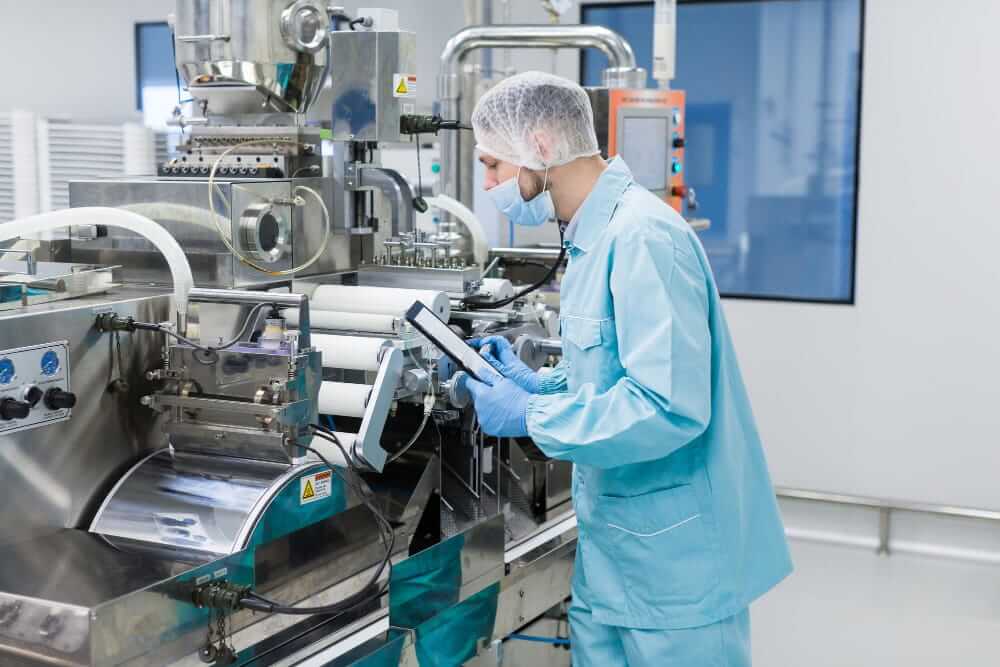

The "Pit Stop" Mentality: Single Minute Exchange of Die (SMED) is about turning a 4-hour setup into a 10-minute precision event. You cannot do this with paper checklists.
The OEE Link: Changeover time is the biggest killer of Availability in high-mix manufacturing. Reducing it is the fastest way to "find" hidden capacity.
The Top 7: We review Fabrico, Redzone, Poka, and others to help you digitize and optimize your setup times.
In many factories, a product changeover is a chaotic event.
The machine stops. The operator walks away to find tools.
The maintenance technician is called in to adjust a guide rail. They wait for the first part to come off. It’s bad. They tweak it again.
Two hours later, the line is finally running.
In Lean Manufacturing, this is a crime.
Shigeo Shingo (the father of SMED) taught us that changeovers should be like Formula 1 Pit Stops: choreographed, standardized, and fast.
To achieve this in 2026, you don't need a stopwatch and a clipboard. You need SMED Software.
Here are the 7 Best Software Tools to digitize your changeovers and boost your OEE.
Best For: Manufacturers who want to time the changeover automatically and enforce the checklist.
Fabrico bridges the gap between Production (OEE) and Process (SOPs). It doesn't just tell you how to do the changeover; it tracks how long it takes in real-time.
Automated Timing: Fabrico connects to the machine's PLC. As soon as the machine stops for setup, the "Changeover Clock" starts ticking in the OEE module. No manual timing required.
Digital Choreography: The operator opens the Fabrico app and sees a step-by-step Digital SOP (Standard Operating Procedure). "Step 1: Pre-stage resin. Step 2: Loosen clamps."
The "External" Shift: Fabrico helps you identify tasks that can be done while the machine is running (External Setup) vs. stopped (Internal Setup), which is the core of SMED.
Trend Analysis: You can see which shifts are fast and which are slow, allowing you to replicate the best practices of your top performers.
The Verdict: If you want to turn changeovers into a data-driven science, Fabrico is the integrated choice.
Best For: Gamifying the changeover.
Redzone is famous for its "Huddles" and visual scoreboards.
Pros: It turns the changeover into a race. Operators see a countdown clock on a big TV screen. If they beat the "Standard Time," they get a digital high-five. It creates incredible team energy.
Considerations: It is expensive. It requires a full cultural transformation to work effectively. It focuses more on motivation than on the engineering details of the setup.
The Niche: High-speed packaging lines.
Best For: Video-based setup instructions.
If your changeovers fail because operators "forget" how to adjust the machine, Poka is the answer.
Pros: Video guides. Instead of reading "Adjust guide rail to 5mm," the operator watches a 10-second video of the expert doing it. This reduces "tweaking" time during startup.
Considerations: It is a training platform, not an OEE platform. It is not positioned to automatically capture the downtime duration from the PLC; it relies on user interaction.
The Niche: Training new operators.
Best For: Custom "Smart Bench" setups.
Tulip allows engineers to build custom apps for specific workstations.
Pros: You can connect smart tools (e.g., torque wrenches) to the app. The system won't let the operator proceed to Step 2 until the bolt in Step 1 is torqued to the correct spec.
Considerations: High effort. You have to build the app yourself. It requires engineering resources to design and maintain the logic.
The Niche: Complex, high-value assembly.
Best For: The "Big Red Clock."
Vorne is a hardware solution, a giant LED display that hangs over the line.
Pros: You can't ignore it. When the line stops, the Vorne display starts counting up in red numbers. It creates immediate urgency on the floor.
Considerations: It is hardware. It tells you that you are slow, but it doesn't give the operator the checklist on a tablet to help them go faster.
The Niche: Visual Factory management.
Best For: Simple OEE tracking of setup codes.
Evocon is a lightweight OEE tool that handles "Reasons" well.
Pros: Very easy to categorize stops. The operator taps "Changeover - Product A to B." The system tracks the time against the target.
Considerations: Like Vorne, it is less focused on the "Instructional" layer. It tracks the time but doesn't guide the work.
The Niche: Simple monitoring.
Best For: Video analysis of the event.
There are several niche apps designed specifically for the analysis phase of SMED (recording a video and tagging "Internal" vs. "External" time).
Pros: Great for the Continuous Improvement engineer who is studying the process to find waste.
Considerations: It is an analysis tool, not an operational tool. You use it once to improve the process, but you don't use it every day to run the line.
The Niche: Kaizen events.
| Feature | Fabrico | Redzone | Poka | Vorne | Tulip |
| Digital SOPs | ✅ Native | Varies Basic | ✅ Video | Varies | ✅ Custom |
| Auto-Timing (PLC) | ✅ Native | ✅ Native | Varies | ✅ Native | ✅ Custom |
| Gamification | Varies Basic | ✅ High | Varies | ✅ High | Varies |
| Maintenance Link | ✅ Deep | Varies Basic | Varies | Varies | Varies DIY |
| Setup Speed | Fast | Slow | Medium | Fast | Slow |
The difference between a profitable run and a loss often comes down to the changeover.
Choose Redzone if you need to motivate your team to move faster.
Choose Poka if your team is less focused on the skills to do the setup correctly.
Choose Fabrico if you want a System. If you want to time the event (OEE), guide the work (SOPs), and handle any breakdowns that happen during startup (CMMS) in one platform, Fabrico is the unified solution.
Master the pit stop.
Book a Demo with Fabrico to see how we reduce changeover times by digitizing the workflow.
See how Fabrico unifies OEE and maintenance in one platform.
Request a demo





 Login
Login
 Blog
Blog