Login
 Blog

How to Increase OEE When Standalone Dashboards Stall

Achieving a 5% OEE jump in high-speed manufacturing is the difference between hitting annual revenue targets and falling into an operational deficit.
Key Takeaways
-
Visibility hits a ceiling at 60% OEE. To move beyond basic tracking, you must automate the transition from data to repair.
-
The "Loop of Inaction" is the primary barrier. Identifying a loss on a dashboard without a native work order is a sunk cost.
-
MTTR reduction drives the first 5%. Slashing decision latency through mobile execution is the fastest way to reclaim availability.
Why Visibility Alone Hits a Ceiling at 60% OEE
What is the OEE measurement ceiling?
The OEE measurement ceiling is the point where simply monitoring downtime no longer leads to efficiency gains because the maintenance team lacks a real-time, digital link to the production data required to fix the underlying mechanical causes.
For Mike, the maintenance manager, a dashboard that shows 60% OEE is just a reminder of the "Hidden Factory" he can't access.
He sees the red lights, but his team is still reacting to breakdowns via phone calls and radios rather than data-driven triggers.
Fabrico breaks this ceiling by turning every "Six Big Losses" event into an automated task, moving you from Stage 2 to Stage 3 of the OEE Maturity Model.
Closing the "Loop of Inaction"
In a siloed factory, the "Loop of Inaction" occurs when a performance drop is detected but the repair is delayed by human communication gaps.
This "Decision Latency" is the silent killer of your first 5% gain.
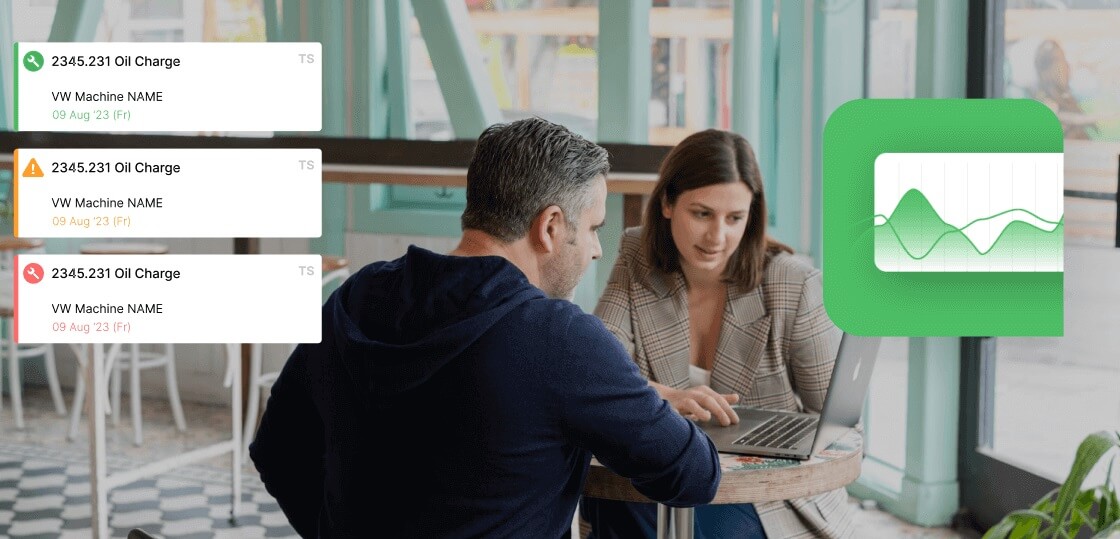
Fabrico’s integrated OEE and CMMS closes this loop by natively linking the machine pulse to the technician’s mobile app.
-
Detection: Fabrico pulls real-time PLC signals to identify a 10% speed loss on a packaging line.
-
Visual RCA: The Inefficiencies Zoom-In module flags a video clip, showing a misaligned feeder.
-
Execution: A prioritized Work Order is instantly sent to Tom, the technician, with the visual proof attached.
By automating the hand-off, you reclaim the minutes that accumulate into hours of lost throughput every shift.
Comparison Matrix: Reporting Tools vs. Execution Engines
| Strategic Capability | Standalone OEE Dashboards | Legacy ERP / MES | Fabrico (MES and OEE Platform) |
| Response Trigger | Visual Alert Only | Financial / Batch | A stop can open a maintenance task |
| Micro-stop RCA | Data-Only / Guesswork | None | Video of the moment the line stopped |
| Maintenance Link | Disconnected | Siled / Delayed | Native Integrated CMMS |
| Technician Context | Subjective Shift Logs | Minimal | OEE and video history |
| Planning Agility | Static | Historical | Live OEE per line and shift |
The Financial Lever: MTTR Reduction via Integrated Data
For plant leadership, the first 5% OEE jump is a massive financial win that requires zero new Capex.
Reclaiming 5% of availability through reduced MTTR (Mean Time to Repair) often generates $200,000 to $400,000 in bottom-line profit for a mid-sized plant.
By identifying "Bad Actor" assets through the 80/20 Rule, she can ensure her budget is spent on the machines that actually drive revenue.
Fabrico’s Field-Ready CMMS ensures that Tom spends his day on high-impact "Wrench Time" instead of administrative data entry.
This shift reduces the Maintenance Cost per Unit and ensures that your capital assets reach their full residual value.
Future-Proofing: From Data-Rich to Action-Ready
Consolidating your production and maintenance data into a single platform is how you prepare for the next era of manufacturing.
As you build 12 months of clean 3D data (Machine + Human + Vision), you are building the "Factory Brain."
Turn downtime into a number your team can actually act on.
Request a demoRelated articles






Latest from our blog