Standard Work for operators is a well-known concept. You give an assembly worker a step-by-step guide to ensure every widget is built perfectly.
But what about the managers?
In many factories, the leadership team has zero standard work. The Production Supervisor on the morning shift runs the floor completely differently than the Supervisor on the night shift. One spends hours on the floor; the other sits in the office answering emails.
This variation at the top creates chaos at the bottom.
Leader Standard Work (LSW) is the methodology of applying standardization to management. It ensures that the critical tasks required to support the operation happen consistently, regardless of who is in charge.
Here is how to implement LSW in your facility in 2026 to build a culture of discipline.
1. What is Leader Standard Work?
LSW is not about turning managers into robots. It is about freeing up their mental capacity.
By standardizing the "Routine" tasks, managers spend less energy trying to remember what to do and more energy solving problems.
The Layers of LSW:
-
Team Leaders (Tier 1): 80% Standard Work. Their day is highly scripted (Hourly checks, Station audits, Material coordination).
-
Supervisors (Tier 2): 50% Standard Work. They have specific routines (Shift start meetings, Gemba walks) but need time for firefighting.
-
Plant Managers (Tier 3): 20% Standard Work. They focus on strategy but must have non-negotiable anchor points (Weekly safety review, Monthly town hall).
2. The Core Elements of LSW
Effective Leader Standard Work is not just a "To-Do List." It is a system of behaviors.
The Daily Tiered Meeting
The day must start with alignment.
-
The Standard: At 8:00 AM, the team meets at the visual board.
-
The Agenda: Safety first. Quality second. Delivery third.
-
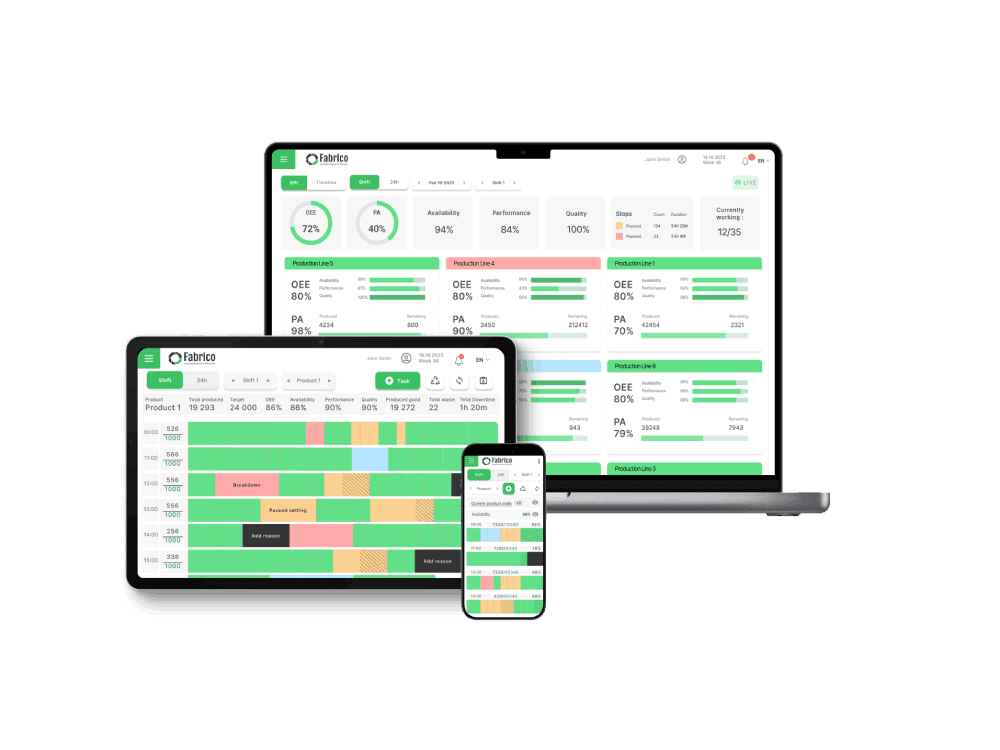
The Digital Fix: Instead of writing on a whiteboard that gets erased, use a digital dashboard. The leader reviews the real-time OEE data from the previous shift.
The Gemba Walk
Leaders must go to the floor.
-
The Standard: Every day at 10:00 AM, walk the value stream.
-
The Action: Look for abnormalities. Is inventory piling up? Are operators waiting?
-
The Tool: Use a mobile app to log observations instantly. Do not rely on memory.
The Process Confirmation (Audit)
Leaders must verify that operator standards are being followed.
-
The Standard: Pick one station per day. Watch the operator for 5 cycles.
-
The Question: "Are they following the SOP?"
-
The Goal: If they are not, ask why. Is the SOP wrong? Is the tool broken?
3. Why Paper LSW Fails
Many companies try to implement LSW using printed Excel sheets on a clipboard.
-
The Failure Mode: The manager gets busy. They forget the checks. At 4:00 PM, they sit at their desk and "pencil whip" the entire checklist for the day.
-
The Consequence: No value is created. The data is fake.
4. The Solution: Digital LSW
To make LSW stick, it must be integrated into the leader's workflow.
Mobile Triggers:
Your maintenance or operations platform should prompt the leader.
-
Notification 9:00 AM: "Time for Safety Audit in Zone B."
-
Action: The leader walks to Zone B, scans a QR code, snaps a photo of the fire extinguisher, and marks the task complete.
Visibility and Accountability:
The Plant Manager should be able to see a "Compliance Scoreboard."
-
Question: "Did the Night Shift Supervisor do their 2:00 AM quality check?"
-
Answer: The system shows a green checkmark with a timestamp. If it is red, you know where the discipline is breaking down.
5. Moving from "Firefighter" to "Farmer"
Without LSW, managers are firefighters. They wait for smoke and then run to it.
With LSW, managers are farmers. They water the crops (check the process) every day on a schedule to prevent the fire from starting.
The Strategy:
Start small. Do not fill a manager's day with 8 hours of checklists.
-
Identify the 3 critical behaviors that drive success in your plant (e.g., Shift Handover, Safety Walk, Scrap Review).
-
Standardize those 3 things first.
-
Digitize them so they are easy to do and impossible to fake.
Conclusion
You cannot improve a process that is not stable. You cannot stabilize a process if your leadership is unstable.
Leader Standard Work provides the rhythm for your factory. By using digital tools to guide your leaders, you ensure that the right things happen every day, driving a culture of excellence from the top down.


 Login
Login
 Blog
Blog