

Key takeaways
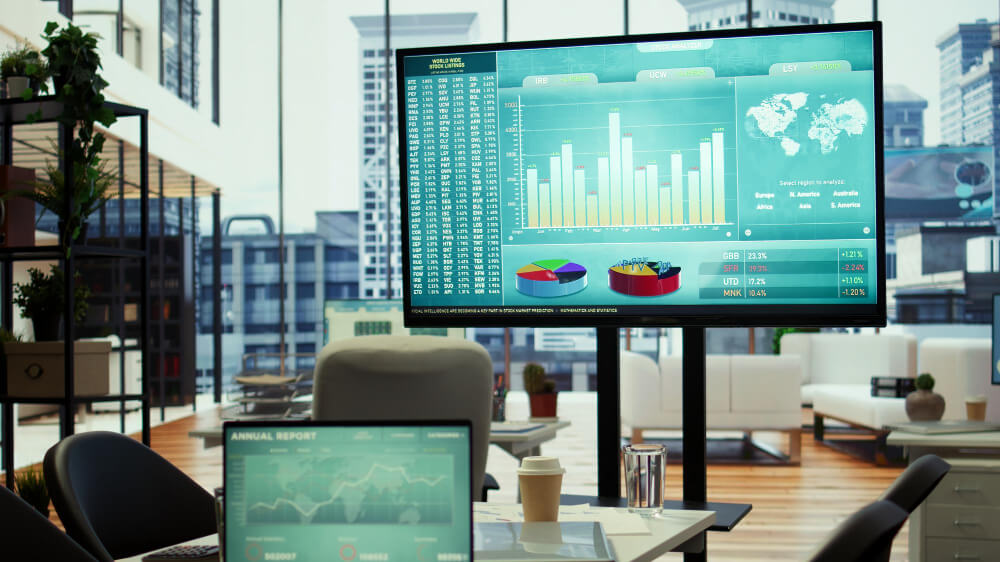
A production monitoring system is the foundation everything else sits on. It captures the live state of each line (how fast it is running, when it stops, why, and what quality it is producing) and makes that data available the moment it happens rather than at the end of the shift.
Everything people associate with manufacturing analytics is downstream of this capture. An OEE score, a downtime Pareto, a shift dashboard: none of them are better than the data feeding them. Get the capture right and the rest follows. Get it wrong and you are polishing reports built on guesses.
When you are ready to compare the tools that do this capture, our review of real-time production monitoring software sets them side by side, with the questions to ask in a demo.
The instinct is to capture everything because storage is cheap. The result is a sea of data nobody acts on. A focused system tracks the signals that change a decision:
| Aspect | Manual logging | Automated capture |
|---|---|---|
| Short stops | Usually missed | Recorded automatically |
| Reason accuracy | Guessed under pressure | Captured from the event |
| Timeliness | End of shift, if at all | Real time |
| Operator load | High, competes with the job | Low, runs in the background |
People ask which one they need, but the question is backwards. Production monitoring is the capture layer; OEE is a metric derived from it. An OEE tool that cannot capture clean downtime and quality data is reporting on numbers it had to assume. Start with reliable capture, then calculate OEE on top. The pillar on OEE for manufacturing covers how the metric is built.
Fabrico captures production and downtime in real time and uses computer vision to attach the true cause to a stop rather than relying on a guessed reason code, so the data underneath your OEE scores is sound.
Because Fabrico is an MES and OEE platform with maintenance (CMMS) built in, a monitored stop flows straight into a work order, and the live floor view connects to the maintenance response. It is built and hosted in the EU with data residency in mind and is ISO 27001 certified.
To see your lines on it, book a demo .
A dedicated decision layer turns raw shop-floor data into consistent, explainable decisions.
There is a point where Excel production planning breaks down and a real system is needed.
No. Monitoring is the capture layer that records what the line is doing. OEE is one metric you calculate from that data. An OEE tool still needs reliable capture underneath it; the monitoring is what makes the score trustworthy.
Downtime with an accurate reason, and rate against plan. Those two drive the most decisions. Quality at the source and changeover time come next. Resist the urge to capture everything at once.
Manual logs are always incomplete. Short stops get skipped and reasons get guessed under production pressure, so the data that should guide improvement is unreliable from the start. Automated capture records the events a busy operator cannot.
It should add value on mixed and older lines using existing signals, rather than requiring every asset to be new or fully instrumented before it pays off.































 Login
Login
 Blog
Blog