

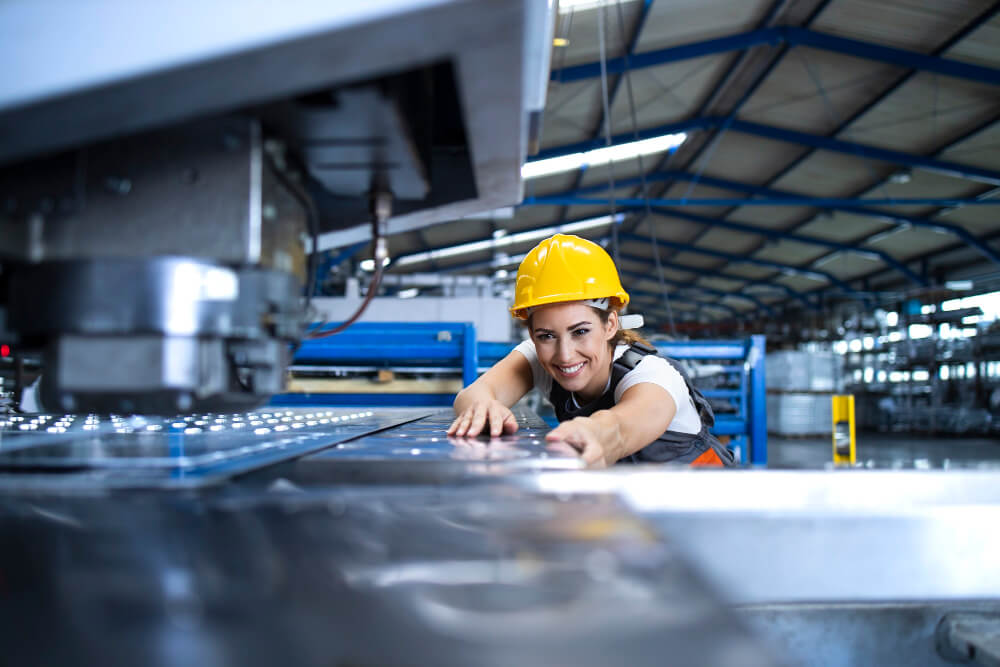

Maschinenschutz ist die Gruppe physischer Barrieren und Schutzeinrichtungen, die Körperteile von bewegten Maschinenteilen fernhalten: feste Abdeckungen über rotierenden Wellen, verriegelte Türen an Gehäusen, Lichtvorhänge an Einlegepunkten, Zweihandbedienungen an Pressen. Einklemm- und Anprallverletzungen gehören zu den schwersten in der Fertigung, und fast alle treten dort auf, wo ein Schutz fehlte, unzureichend war oder außer Kraft gesetzt wurde.
Schutzvorrichtungen werden aus vorhersehbaren Gründen außer Kraft gesetzt: Die Verriegelung fügt einer Aufgabe, die vierzig Mal pro Schicht ausgeführt wird, dreißig Sekunden hinzu; die feste Abdeckung blockiert den Staupunkt, den die Bediener stündlich räumen müssen; der Lichtvorhang löst bei überhängender Verpackung aus.
Jedes Umgehen ist eine Information: Die Schutzkonstruktion kämpft gegen die Arbeit, statt sie zu schützen. Die dauerhafte Lösung ist Technik: ein Sichtfenster, eine werkzeugzugängliche Reinigungsöffnung, eine für den Materialfluss ausgelegte Muting-Funktion, nicht noch eine Sicherheitsunterweisung über den mit Klebeband überklebten Sensor.
Die Türverriegelung eines Casepackers fällt intermittierend aus. Statt einen Arbeitsauftrag zu erstellen, überbrückt jemand sie, und die Maschine läuft sechs Wochen lang mit einer aktiven Gefahr hinter einer unverschlossenen Tür. Das Ergebnis war in diesem Fall glücklicherweise: Ein Auditor entdeckte die Überbrückung, bevor jemand zu Schaden kam.
Die Folgen blieben dennoch real: Die Produktion wurde sofort für 14 Stunden angehalten, bis repariert und geprüft war, gegenüber den 2 Stunden, die die ursprüngliche Reparatur gedauert hätte, und die Anlage stand wochenlang unter verschärfter Beobachtung.
Die Rechnung geht für den Überbrücker nie auf; so fühlt es sich nur in der Schicht an, in der der Sensor zuerst ausfällt.
Schutzvorrichtungen, Verriegelungen und Lichtvorhänge versagen wie alles andere: Schalter drifteten, Aktuatoren rissen, Vorhänge verloren die Ausrichtung. Schutzeinrichtungen gehören daher ins Instandhaltungsprogramm: periodische Funktionsprüfungen an Verriegelungen und personenerfassenden Einrichtungen, Begehungen zur Überprüfung der Schutzintegrität auf einer Route und sofortige Reparaturpriorität, wenn ein Schutz ausfällt, denn während des Ausfallzeitraums läuft die Anlage nur noch auf administrativen Maßnahmen.
Wartungsarbeiten selbst stehen in Wechselwirkung mit Schutzeinrichtungen durch LOTO : Das Entfernen einer Schutzvorrichtung ist genau der Moment, in dem Isolationsdisziplin am wichtigsten ist.
Fabrico entwirft oder zertifiziert keine Schutzvorrichtungen; Maschinensicherheitsingenieure tun das nach den anwendbaren Normen. Fabrico verleiht dem Schutzprogramm operative Zähne: Verriegelungs- und Vorhang-Funktionstests als wiederkehrende Arbeitsaufträge mit Bestehen/Nichtbestehen-Nachweis, Schutzmängel mit oberster Reparaturpriorität markiert, schutzbedingte Ausfallzeiten ehrlich kodiert, damit die Kosten schlechten Zugangsdesigns sichtbar werden, und wiederholte Störenfried-Maschinen durch ihre eigene Historie entlarvt. In der EU entwickelt, mit Datenresidenz in der EU.
Wenn der Zugriff dahinter selten ist, grob gesagt seltener benötigt wird als die Wartungsintervalle. Häufiger Zugriff durch eine feste Schutzvorrichtung garantiert, dass sie irgendwann dauerhaft entfernt bleibt; das ist Gebiet für Verriegelungen oder, noch besser, eine Neugestaltung, warum der Zugriff überhaupt nötig ist.
Das sind unterschiedliche Werkzeuge. Lichtvorhänge schützen und erlauben gleichzeitig Materialfluss und häufigen Zugriff, sie sind aber abhängig von korrektem Montageabstand, Ansprechzeit und Steuerungsintegration. Eine korrekt spezifizierte physische Barriere hat weniger Ausfallmodi; ein fachgerecht ausgelegter Lichtvorhang ermöglicht Arbeiten, die eine Barriere behindern würde.
Nach Herstellerangaben und Ihrer Risikobewertung, üblicherweise monatlich bis jährlich, abhängig von Exposition und Beanspruchung. Nicht verhandelbar ist, dass ein Intervall existiert, geplant ist und einen Nachweis erzeugt, eine ungetestete Verriegelung ist Hoffnung, keine Maßnahme.
Sollen Schutzprüfungen terminiert, dokumentiert und unmöglich stillschweigend zu überspringen sein? Buchen Sie eine Fabrico-Demo, um zu sehen, wie ein feldbereites CMMS technische Schutzmaßnahmen wirksam macht.



















 Anmeldung
 Blog
Blog