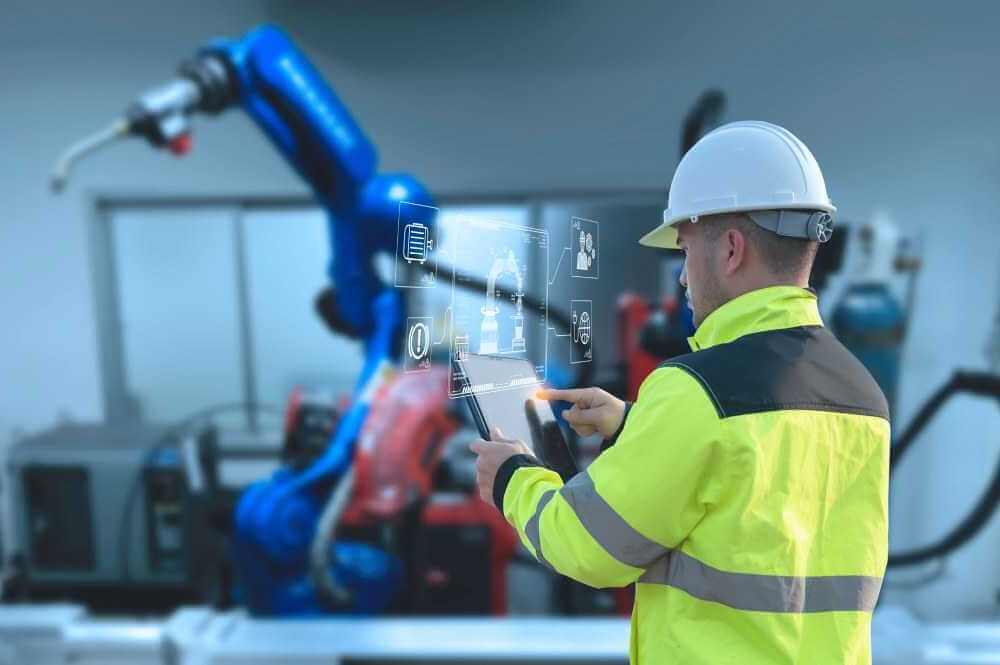
In manufacturing conferences, "Digital Twin" is the buzzword of the decade.
Vendors show flashy demos of jet engines floating in mid-air, with technicians wearing VR goggles to fix them.
For a Plant Manager in a food factory or a machine shop, this looks cool, but it feels impossible (and expensive).
Here is the secret: You don't need the VR goggles. You don't need the 3D CAD models.
You can build a highly effective Digital Twin today using the data you already have.
In 2026, the definition of a Digital Twin has matured. It is no longer about Geometry (what it looks like); it is about Context (how it behaves).
Here is the practical guide to building a Digital Twin that actually helps you fix machines.
1. What is a "Pragmatic" Digital Twin?
Think of your car's navigation app (Google Maps/Waze).
It is a Digital Twin of the road network.
-
It knows the Static layout (Roads exist).
-
It knows the Dynamic status (Traffic/Accidents).
-
It uses History to predict arrival times.
It doesn't show you a 3D photorealistic image of every tree and building. It shows you data.
An Operational Digital Twin in a factory is the same. It is a live dashboard that tells you:
-
Is the machine running?
-
Is it healthy?
-
When will it fail?
2. Layer 1: The Static Skeleton (Asset Management)
Before a Twin can "live," it needs a body.
If your maintenance software just lists "Conveyor 1," you have a stick figure. If it lists the Motor, Gearbox, and Belt hierarchy, you have a Skeleton.
3. Layer 2: The Dynamic Nervous System (Connectivity)
This is where a Twin comes alive. It must reflect the current state of the asset.
This synchronization allows you to manage the factory remotely. You are looking at the Twin, but you are seeing the Reality.
4. Layer 3: The Historical Memory (Context)
A Twin remembers everything the physical asset "forgot."
When you combine History (Maintenance Logs) with Dynamics (Sensor Data), you get Intelligence.
Why Start Now? (The AI Future)
Why does building a Digital Twin matter? Because AI needs a Twin to talk to.
You cannot ask an AI: "How do I fix the pump?" if the AI doesn't know you have a pump, or what model it is, or how it is running.
By building the Data Structure in Fabrico today—digitizing your assets, connecting your sensors, and logging your repairs—you are building the playground for tomorrow's AI Agents.
Conclusion: Stop Waiting for the Holodeck
Don't wait for the sci-fi version of the Digital Twin. It is expensive and often unnecessary for maintenance.
Build the Data Twin.
Get your assets organized. Get your sensors connected. Get your history digitized.
Once you have that, you have a Digital Twin that saves you money, not just one that looks cool in a presentation.
Build the mirror.
[Request a Demo] and let Fabrico help you structure your digital factory.


 Login
Login
 Blog
Blog