Menu

Importance of Identifying Root Causes

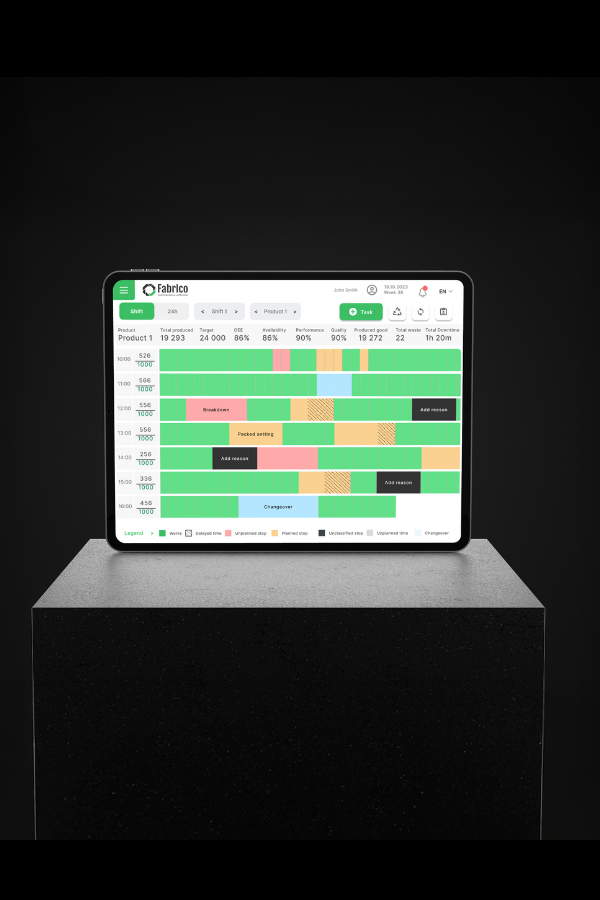
Real-time visibility into production losses is essential for effective performance management. Understanding the exact causes of downtime, speed loss, and quality deviations enables data-driven root cause analysis and structured improvement initiatives. Only by visualizing these inefficiencies can organizations systematically eliminate waste and variation.

Data Acquisition Method

The system integrates three complementary data sources. Machine signals, collected through PLCs or IoT devices, provide the core operational data. This is supplemented by operator input via an intuitive interface, capturing context and human-identified events. Finally, computer vision enhances coverage by recognizing activities and events in the production environment. Together, these inputs form a comprehensive and accurate operational dataset.

Achieving Complete Visibility

Combining data from machines, operators, and cameras delivers 100% visibility of inefficiencies. This unified dataset serves as the master source for performance analytics, OEE measurement, and continuous improvement. 

This end-to-end visibility eliminates blind spots, giving manufacturers complete confidence in their operational data and enabling continuous improvement at enterprise scale.

Performance and quality

Performance Monitoring and Loss Analysis

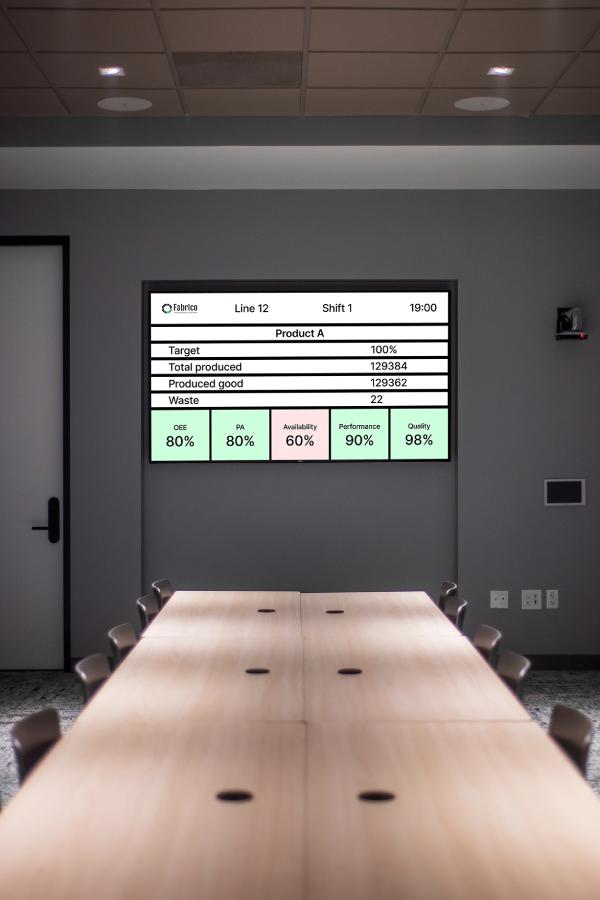
Production performance is continuously measured through machine-level data. The system captures cycle times, microstops, and speed variations to identify performance losses in real time. By applying Lean and Six Sigma indicators such as takt time, throughput, and OEE, it isolates deviations from the standard cycle and quantifies their impact. This enables systematic loss analysis and provides a factual foundation for process optimization.

Detection of Hidden Inefficiencies

Beyond downtime, the system uncovers slow cycles and microstops that often go unnoticed during normal operation. These events are classified within the framework of the Six Big Losses, revealing reduced speed, minor stoppages, and setup inefficiencies. Understanding and addressing these losses improves flow stability, minimizes process variation, and supports higher equipment utilization without additional capacity investment.

Integrated Quality Monitoring

Quality is tracked continuously across all production stages. The system records quality data directly from machines or calculates it from input-output variances between line segments, providing real-time insight into yield and defect trends. Metrics such as first-pass yield, defect rate, and scrap percentage are automatically calculated and integrated into overall equipment effectiveness (OEE).


Performance and quality

Automated and Visual Quality Control

Advanced computer vision modules perform automated inspections, detecting deviations in shape, color, or assembly integrity. These visual systems leverage AI-based pattern recognition to identify non-conformities early in the process. Combined with traditional sensor data, they ensure that product quality remains consistent and verifiable.

Digital Checklists and Traceability

The Checklist module supports structured manual inspections performed by operators or the quality department. Each checklist is configurable by product or process step and aligned with quality standards such as ISO 9001, IATF 16949, or GMP. All results are logged into the digital traceability record, ensuring full visibility and audit readiness.

Foundation for Continuous Improvement

By combining performance and quality intelligence, the system delivers a unified view of process capability. This data-driven insight supports DMAIC cycles, root cause analysis, and targeted improvement initiatives — establishing a culture of continuous improvement and operational excellence

Production scheduling

Fabrico is MES with focus on OEE optimization which allows it to synchronizes machine availability data with production orders, giving manufacturers a live view of true production capacity. By scheduling production orders as per the true availability of the line, Fabrico ensures that every plan reflects actual shop floor conditions. This creates the maximum level of planning accuracy, allowing teams to react instantly, eliminate false availability, and achieve a truly data-driven, reliable production plan.

Move beyond calendar-based PMs. Automatically trigger Work Orders based on actual machine usage, cycle counts, or OEE-detected performance degradation. This Condition-Based Maintenance strategy ensures you only service assets when needed, drastically reducing emergency breakdowns and optimizing your maintenance budget. The automated workflows aim at facilitate immediate communication between operators and technicians, to ensure minimizing downtime.

Digital Operator Checklists & Standardized Work

Standardize every key process, from machine setups to line changeovers. Digital checklists and guided workflows ensure operators adhere to the best practices that directly minimize the Setup & Adjustments loss category. Drive measurable improvements in OEE by reducing process variability and ensuring execution consistency across all shifts.


Wciąż się zastanawiasz?
Sprawdź sam!
Wciąż się zastanawiasz?

Zaplanuj spotkanie 1 na 1 z naszymi ekspertami lub bezpośrednio zapisz się do naszego bezpłatnego planu. Karta kredytowa nie jest wymagana!

Klikając przycisk Akceptuj, wyrażasz zgodę na korzystanie z plików cookie podczas uzyskiwania dostępu do tej witryny i korzystania z naszych usług. Aby dowiedzieć się więcej o tym, jak pliki cookie są używane i zarządzane, zapoznaj się z naszą Polityką prywatności Polityka prywatności i Deklaracja plików cookie