
Many plants are under pressure to increase throughput, cut lead times and improve delivery reliability. At the same time, capital budgets are tight and large equipment projects take months or years to approve. The result: operations teams are asked to produce more with the same lines and the same people.
In this situation, the fastest way to increase effective capacity is usually not a new asset. It is a better understanding of availability and performance losses on the assets you already own. With the right data and workflows, manufacturers can reclaim significant capacity without new capital spending.
This article explains how plants uncover and recover hidden capacity by focusing on availability and performance losses, and how Fabrico supports that work with real time OEE insights and built in maintenance management.
OEE provides a simple structure for thinking about lost capacity: availability, performance and quality. For most mid size and large manufacturers, the largest untapped capacity usually sits in availability and performance. These two factors are where unplanned downtime, slow running and micro stops hide.
Many teams already track downtime in spreadsheets, shift reports or basic dashboards. The problem is that the data is often incomplete, delayed or not connected to maintenance and production action. That makes it hard to translate loss analysis into sustained capacity gains.
A modern OEE platform that captures data directly from machines removes much of this friction. By combining automatic signals from equipment with operator input, it becomes possible to see where time is lost, hour by hour, on each line. For a deeper introduction to this approach, see the article on unlocking smarter manufacturing with OEE.
Recovering capacity without capex starts with knowing what actually happens on the shop floor. That means capturing four kinds of information in one place:
Fabrico connects directly to machines, production counters or PLCs where possible, and combines that data with simple operator inputs on tablets or terminals. This removes manual time studies and after the fact estimates, and replaces them with precise, time stamped production and downtime records.
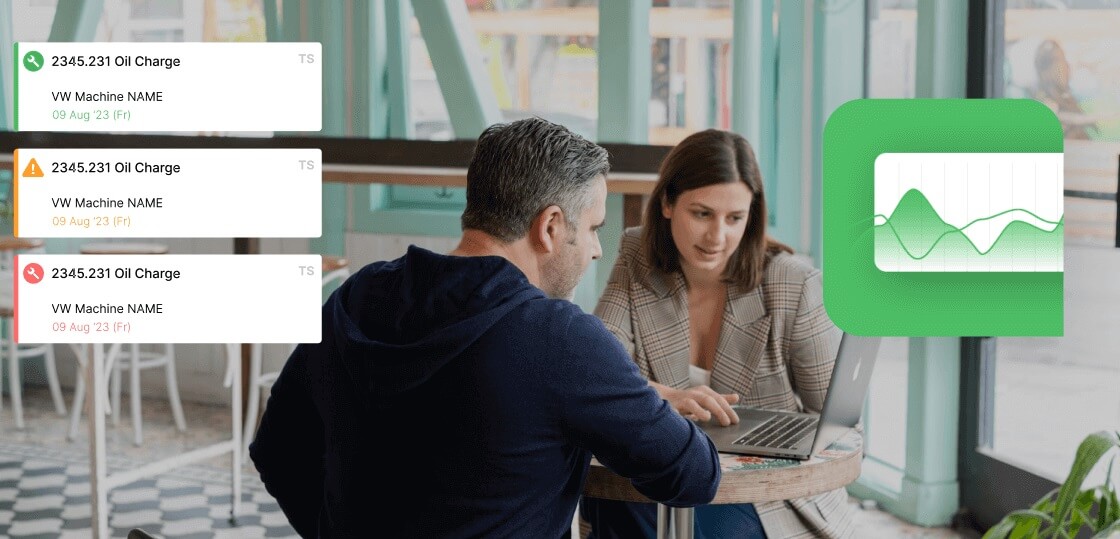
Because Fabrico includes maintenance management as part of the same platform, availability and performance data do not live in a separate reporting tool. Every stop, slow run or repeated minor fault can immediately trigger a maintenance or production action, without re keying data into a separate CMMS or work request system.
Availability losses are often the most visible, but they are not always the most understood. To recover capacity, plants need to go beyond total downtime hours and look at patterns and root causes.
With real time OEE and loss visualization, Fabrico helps teams:
Once top losses are clear, the built in maintenance management capabilities allow you to convert them directly into work. For example:
This connection between OEE data and maintenance actions is essential for reclaiming availability. Instead of reviewing reports at the end of the month and then deciding what to do, teams can respond to loss patterns as they emerge, while the details are still fresh and the data is complete.
Many plants focus intensively on downtime, only to discover later that the largest hidden capacity sits in performance losses. Operators may slow the line to keep it stable, to manage material issues or to avoid jams and alarms. Micro stops may be so frequent that they become part of normal operation and are no longer noticed.
To address performance losses, plants need accurate cycle time data and a clear view of how actual speeds compare to ideal speeds, shift by shift. Fabrico calculates performance in real time, based on machine signals and target cycle times, and exposes three key patterns:
By combining these insights with downtime and maintenance data in the same platform, teams can quickly see if speed loss is due to mechanical condition, setup quality, material variability or operator practice. Then they can define specific actions, such as:
Addressing performance in this structured way often releases significant capacity without any new investment. Instead of buying additional lines to cover peak demand, plants use existing assets closer to their true potential.
Many teams know that OEE can help them see losses, but they are unsure how to turn that visibility into a practical roadmap for capacity recovery. A simple, repeatable approach is:
This approach aligns with the idea of using operational expenditure on software and process improvement before requesting capital expenditure on new equipment. For more on how manufacturers think about this balance, see the discussion of OEE software in capex versus opex decisions.
Many plants run separate tools for OEE, maintenance, production planning and improvement projects. Each tool solves part of the problem, but when systems are fragmented, teams struggle to connect insights to action.
Fabrico was designed as a single cloud based platform that combines real time OEE, production tracking and built in maintenance management. For plant managers and operations leaders, this unification matters in several ways:
If you are evaluating your current software landscape, it can be useful to compare point solutions to unified platforms. The article on MES versus OEE versus maintenance software explores this topic in more detail.
Recovering capacity without capex is not a one time project. It depends on integrating availability and performance management into daily routines for production, maintenance and continuous improvement.
Fabrico supports this by:
When teams use these capabilities consistently, capacity recovery becomes part of normal management, not an occasional initiative. Lines run closer to planned rates, changeovers become more predictable, and chronic downtime is addressed systematically.
Even with strong OEE and maintenance practices, there are times when new equipment or additional lines are the right decision. The advantage of first optimizing availability and performance is that you can make those capex decisions with better information.
Plants that use Fabrico to understand their losses can answer questions like:
This level of clarity helps justify capital projects and increases the likelihood that new assets will deliver the expected results, rather than merely masking underlying performance problems.
Fabrico gives operations and maintenance leaders a practical toolkit to increase capacity without new capital spending:
If you are responsible for throughput, lead time or on time delivery, and you want to delay or reduce capital projects by getting more from your existing assets, Fabrico is built for that challenge.
Request a demo or Contact us to explore how to uncover and recover hidden capacity in your plant.
See how Fabrico unifies OEE and maintenance in one platform.
Request a demo










 Login
Login
 Blog
Blog