
The "AI" Spectrum: AI in maintenance isn't one thing. It ranges from Generative AI (Chatbots reading manuals) to Predictive AI (analyzing vibration) and Computer Vision (seeing jams).
The Knowledge Gap: The biggest immediate value of AI is "GenAI",helping new technicians troubleshoot complex machines by instantly searching thousands of PDF manual pages.
Turn downtime into a number your team can actually act on.
Request a demoData Quality First: AI models are garbage-in, garbage-out. The best software doesn't just process data; it helps you capture clean data from the shop floor first.
Top Picks: We review Fabrico, SparkCognition, Tractian, Fiix (Asset AI), Falkonry, and MaintainX.
Artificial Intelligence (AI) has moved from the "Innovation Lab" to the factory floor.
For years, AI in maintenance meant expensive "Predictive Maintenance" projects that required data scientists to predict when a bearing would fail.
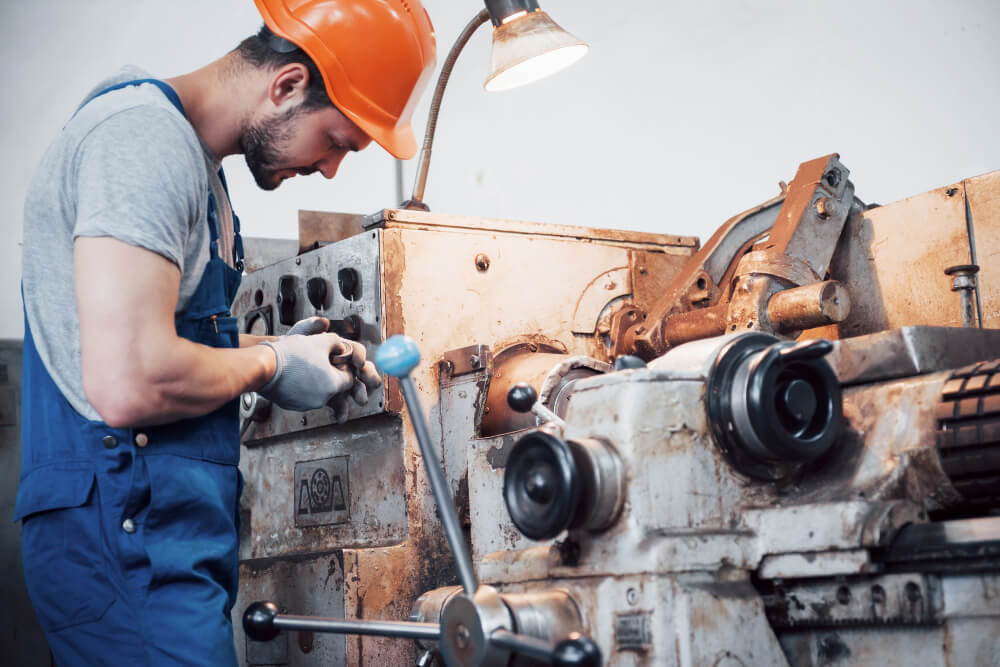
But in 2026, AI is practical. It is wearing a hard hat.
Generative AI (GenAI) acts as a "Super-Mentor," reading 500-page OEM manuals in seconds to tell a technician how to reset a servo drive.
Computer Vision watches the production line 24/7 to catch micro-stops that humans miss.
Prescriptive AI doesn't just say "The machine is broken"; it says "Grease this nipple."
If you are looking to modernize your maintenance stack, you need software that leverages these tools to empower your workforce, not just analyze your data.
Here are the 6 best AI-Powered Maintenance software tools.
Fabrico is building the digital infrastructure to apply AI directly to the technician's daily struggle: Information and Diagnosis. By structuring your maintenance and OEE data today, Fabrico prepares your factory for the next wave of intelligence.
Fabrico’s AI strategy focuses on two distinct future capabilities:
Fabrico Assistant (Roadmap): We are developing a Generative AI assistant designed to bridge the skills gap. The vision is for technicians to ask natural language questions like "How do I calibrate the tension arm?" and receive instant answers derived from your digitized manuals and history, turning rookie technicians into informed experts.
Visual Intelligence (Inefficiencies Zoom-In): Fabrico currently captures video clips of breakdown events ("Zoom-In"), allowing maintenance teams to visually identify root causes like jams or micro-stops. This video data builds the essential library needed to train future Computer Vision models for automated anomaly detection.
Key AI-Ready Capabilities:
Contextual Knowledge: Structuring manuals and history to support future Q&A bots.
Visual RCA: Auto-capturing video evidence of breakdowns for human or AI review.
Intelligent Planning: A data architecture designed to support AI-driven scheduling recommendations based on production windows.
Data Hygiene: Standardizing failure codes to ensure your data is clean enough for machine learning algorithms.
Tractian is a leader in Hardware-Enabled AI.
They provide the sensors (vibration/temperature) and the software (TracOS) in one package.
Their AI creates a "fingerprint" of your motor or pump. It learns what "Normal" sounds like. When the vibration pattern shifts, the AI diagnoses the specific fault (e.g., "Inner Race Bearing Wear") and estimates the "Time to Failure."
It is exceptionally good at Predictive Maintenance for rotating assets.
Best For: Reliability teams focusing on motors, pumps, and fans.
SparkCognition builds industrial-grade AI for high-stakes assets (Wind Turbines, Oil Rigs, Power Plants).
Their Renewable Suite uses AI to detect "Yaw Misalignment" in wind turbines or "Soiling" on solar panels purely from SCADA data.
It focuses on Prescriptive Analytics, telling operators exactly what knob to turn to increase output. It is heavy, powerful, and designed for massive datasets.
Best For: Energy and Heavy Industry asset owners.
Fiix (by Rockwell Automation) has added an AI layer called Asset AI.
It analyzes the history of your work orders and sensor data to flag "Anomalies."
It integrates with the Rockwell automation stack to find correlations between machine control data and maintenance history. It helps prioritize which work orders should be done first based on risk score.
Best For: Existing Fiix/Rockwell users adding predictive capabilities.
Falkonry (now part of IFS) is "Time Series AI."
It looks at the squiggly lines, temperature, pressure, current, flow.
It finds "Patterns of Precursors." For example, it might notice that "Pressure spikes, followed by a Temperature drop, followed by a Flow drop" always leads to a failure 4 hours later.
It is a tool for Process Engineers and reliability experts to solve complex, multi-variable problems.
Best For: Continuous Process industries (Steel, Chemical, Pharma).
MaintainX uses GenAI to simplify the administrative side of maintenance.
Their AI features focus on Procedure Generation. You can upload a photo of a machine nameplate or a manual, and ask the AI to "Create a Monthly Safety Inspection Checklist."
It drafts the SOP for you, saving hours of typing. It also uses AI to transcribe voice notes into clean text for work orders.
Best For: Teams that need to digitize paper processes quickly.
Different tools solve different problems.
| Feature | Fabrico | Tractian | SparkCognition | Fiix | Falkonry | MaintainX |
| Primary AI Type | GenAI & Vision | Vibration AI | Prescriptive | Risk AI | Pattern Recog | GenAI Draft |
| Use Case | Tech Support & RCA | Motor Health | Asset Performance | WO Prioritization | Process Analytics | SOP Creation |
| Data Source | Manuals/Video/PLC | Sensors (Hardware) | SCADA | WO History | Time-Series | Docs/Voice |
| Target User | Technician | Reliability Eng | Asset Manager | Planner | Process Eng | Admin |
| Hardware Req | None (Software) | Proprietary Sensors | None | None | None | None |
The goal of AI in maintenance isn't to replace the technician. It is to give the technician a superpower.
If your goal is Predicting Bearing Failure, Tractian is the hardware/software combo you need.
If your goal is Analyzing Process Data, Falkonry is the standard.
But if your goal is to help your frontline team Fix Machines Faster, by giving them instant answers from manuals and video evidence of breakdowns, Fabrico puts GenAI and Computer Vision directly into the hands of the people doing the work.
See Fabrico's GenAI and Computer Vision in action.
Book a Demo with Fabrico Today
See the Fabrico MES and OEE platform, with CMMS built in, live.
Request a demoSee how Fabrico unifies OEE and maintenance in one platform.
Request a demoThree things are real and shipping: it reads and summarises unstructured history so technicians find the last fix fast, it spots anomalies in sensor or vision data, and it drafts work orders and reports. Anything promising reliable failure prediction out of the box deserves a hard look at the data it would need first.
Consistent asset naming, downtime logged with reasons, and enough history for a pattern to exist. Most disappointing AI projects are data projects that were skipped. See getting your CMMS data AI ready.
Often yes, but not for prediction. The reliable early value is time saved on searching, writing and reporting, which scales down to small teams. Prediction needs volume that a small asset base may not produce.
Give each vendor the same messy sample of your own history and ask what it can tell you. Tools that only demo on clean vendor data will meet your data and stall. Then fix the scope and the success test before any pilot. See designing a pilot that proves something.
Fabrico focuses on AI for OEE and loss detection, including AI cameras for micro stop detection, plus an AI assistant over your maintenance history. Predictive maintenance is available as a custom module rather than a standard feature, so treat it as scoped work. Book a demo to see the boundary clearly.
Be sceptical in one specific place. Failure prediction is the most oversold claim in this category, and the honest position, including ours, is that useful failure forecasting is built per client against their own history rather than shipped as a switch you turn on. Ask any vendor promising it what data it needs and how long before it is useful. What genuinely works today is narrower and more valuable than it sounds: computer vision cameras that measure machines exposing no usable PLC signal, micro-stop detection that catches losses no human logs, an AI assistant for querying manuals and history at the machine, AI inefficiency analysis that points at where the loss sits, and a custom report builder available through the Fabrico Copilot add-on. Fabrico ships all of those, and treats predictive maintenance as custom work, not a standard feature.




















 Login
Login
 Blog
Blog