

Operations and plant leaders rarely lack data. What they lack is a fast and reliable way to turn OEE losses into concrete actions for maintenance and production teams. The six big OEE losses are a useful lens, but they only deliver value when every loss automatically triggers the right workflow, at the right time, on the right asset.
This article walks through each of the six big losses and explains how a cloud based MES and OEE platform like Fabrico helps you detect them instantly, assign ownership, and track the resulting actions to completion.
For many mid size and large manufacturers, OEE is still a weekly report, not a real time decision tool. By the time you review last week’s performance, the root causes are blurred, operators have moved on, and maintenance is already firefighting something else.
An MES and OEE platform that captures data directly from machines changes this dynamic. Instead of asking operators to key in long downtime codes, the platform timestamps every stop, speed change and quality event as it happens, then categorises them into the six big losses. The result is a live view of availability, performance and quality that can trigger structured actions in both maintenance and production.
For a deeper look at how real time measurements change OEE behaviour on the shop floor, explore this guide to real time OEE.
What the loss looks like: Unplanned stops where equipment is down and cannot produce. Typical causes include component failures, sensor faults, lubrication issues or control system problems. In many plants, these incidents are logged after the fact, which makes root cause analysis difficult and hides patterns across lines or shifts.
How Fabrico detects it: The platform connects to machines and collects run, stop and state data in real time. Every time a machine stops unexpectedly, Fabrico records the duration and context. Operators can quickly choose a failure reason from a short, role specific list on a simple interface, using the live machine state as a starting point instead of a blank form.
What action it should trigger:
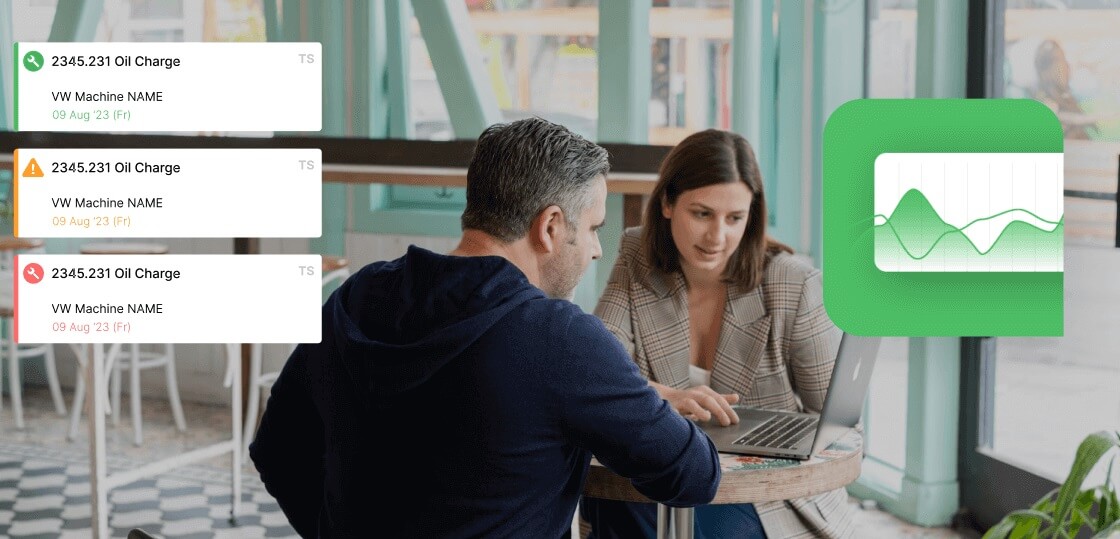
Because Fabrico includes maintenance management capabilities as part of the same platform, you do not need to pass spreadsheets or emails between departments. Every breakdown related OEE loss is tied directly to a structured maintenance workflow and can be analysed later by asset, line, product or team.
Request a demo
What the loss looks like: Time lost while machines are running below standard or not producing during changeovers, die or tool changes, product adjustments and trial runs. These periods often hide large variations between shifts and teams, even when standard operating procedures exist.
How Fabrico detects it: The platform tracks every start, stop and speed change in real time, so you see the full timeline of a changeover, not just its start and end. Operators can select structured reasons such as planned changeover, cleaning, or first article approval. This data is grouped automatically under setup and adjustment losses in the OEE model.
What action it should trigger:
Over time, you build a clear picture of where setup time is truly spent and which part is controlled by operations, maintenance or engineering. That clarity is what allows operations directors to set realistic changeover targets and sustain them.
What the loss looks like: Frequent short stops, often under a few minutes each, that do not always get logged because the line technically keeps running or operators do not have time to record them. Examples include sensor misreads, label jams, brief material shortages and short operator interventions.
How Fabrico detects it: Direct machine connectivity means the platform can distinguish between running, idling and stopped states. Short interruptions are captured automatically, even when operators are busy. These events are grouped under idling and minor stops rather than being lost in the background.
What action it should trigger:
This is where a modern MES and OEE platform has a large impact on performance. What used to be invisible interruptions becomes a ranked list of loss reasons, each linked to a specific action and owner. For guidance on how to choose and deploy the right OEE tools across your plants, review this overview of the best OEE software for manufacturing.
Request a demo
What the loss looks like: Machines are running, but not at the speed they were designed or planned to run. Operators may slow down intentionally to cope with quality concerns, upstream instability or downstream bottlenecks. Without a live view, these losses appear as normal output rather than as a performance gap.
How Fabrico detects it: By collecting machine counts and cycle times directly from equipment, the platform compares actual speed with the standard speed defined for each product or routing. Any sustained period below target is captured as a reduced speed loss, visible both on the line and across the plant in real time.
What action it should trigger:
Because speed losses are quantified continuously, you can quickly see which products or lines suffer the most and decide whether to address the root cause, adjust planning parameters or plan a maintenance intervention.
What the loss looks like: Materials and products rejected during stable production, once equipment is up and running. These defects often appear as scrap, rework or reclassification. Without proper tracking, they end up counted in material variances rather than as OEE losses that can be addressed at their source.
How Fabrico detects it: Operators record defects and scrap quantities through simple interfaces that are tied to the exact machine, order and time window. Because machine states and counts are already tracked automatically, the platform can associate each defect with the running conditions and recent history of the line.
What action it should trigger:
By connecting defects to specific assets and time windows, you can move quality conversations from general scrap rates to actionable questions such as which machine, which product, which setting and which condition produced this loss.
Request a demo
What the loss looks like: Losses at the beginning of a run, during warm up, ramp up or first article approval. This is where you see start up scrap, parameter fine tuning and the learning curve when changing to a new product or configuration.
How Fabrico detects it: The platform records the complete timeline of a production run, including start up and ramp up. Any material or product that does not meet specification in this period is logged as reduced yield. Because run boundaries and changeovers are automatically captured, early scrap is clearly separated from stable production defects.
What action it should trigger:
Once start up losses are measured and owned, you can design targeted improvements such as pre staging materials, standardised recipes, or proactive maintenance steps that shorten the time to good output.
Capturing the six big losses is only the first step. To drive lasting improvement, operations directors need a strategy that connects OEE data to daily management, maintenance planning and continuous improvement. A unified MES and OEE platform that includes maintenance workflows gives you three core capabilities.
For a practical framework on how to embed these capabilities into your operations, see this guide to building an OEE improvement strategy.
Request a demo
Fabrico is a cloud based MES and OEE platform built specifically for manufacturers who want to move from reporting OEE to acting on it in real time. It connects directly to machines, captures production and downtime data continuously and presents availability, performance and quality in an intuitive interface for operators, supervisors and leaders.
Because maintenance management capabilities are built into the same platform, every OEE loss can trigger a maintenance or production action without leaving the application. Operations, maintenance and continuous improvement teams share a single source of truth, where machine data, loss reasons and actions are all tied together.
For plant managers, operations directors and heads of maintenance, this means fewer surprises, faster response to emerging problems and a clear roadmap of where to focus next. You are not limited to chasing yesterday’s losses. You can shape today’s performance while production is still running.
Request a demo or Contact us to discuss how Fabrico can help your teams turn the six big OEE losses into structured, trackable actions that improve performance across your plants.
See how Fabrico unifies OEE and maintenance in one platform.
Request a demo









 Login
Login
 Blog
Blog