
Most plants know their big breakdowns by heart. A line is down for two hours and it gets attention, root cause analysis and a long email thread. Micro-stops rarely get the same treatment, yet they often erode more capacity than the headline failures that everyone talks about.
Micro-stops are short, frequent interruptions that slow the line, disturb operators and starve downstream processes. They do not always show up clearly in your ERP or even in traditional downtime reports, but they quietly drag OEE down every shift.
In this article, we look at why micro-stops usually cost more than breakdowns, why they are so hard to see with manual tracking, and how a cloud MES and OEE platform like Fabrico can capture and classify them automatically, including through its built-in maintenance management capabilities.
Micro-stops are very short disruptions in machine or line operation, typically lasting a few seconds to a few minutes. Examples include:
Each event feels insignificant, so it rarely gets logged properly. However, across all machines and shifts, these interruptions add up to a large chunk of lost productive time and lower throughput.
Breakdowns are obvious. Production stops, alarms sound and everyone knows the line is down. Micro-stops, in contrast, are silent. Their impact shows up in slower cycle times, unstable flow and a general sense that the line is "never quite at full speed". Several factors make micro-stops more damaging than a few large breakdowns.
Breakdowns are usually recorded as downtime events, so they reduce availability in your OEE. Micro-stops often look like the line is running, just slower than the standard cycle. Instead of a clear downtime record, you see performance loss spread across the shift.
This means your OEE performance factor is quietly degraded by small stops and micro-speed variations that nobody can recall or describe reliably at the end of the shift.
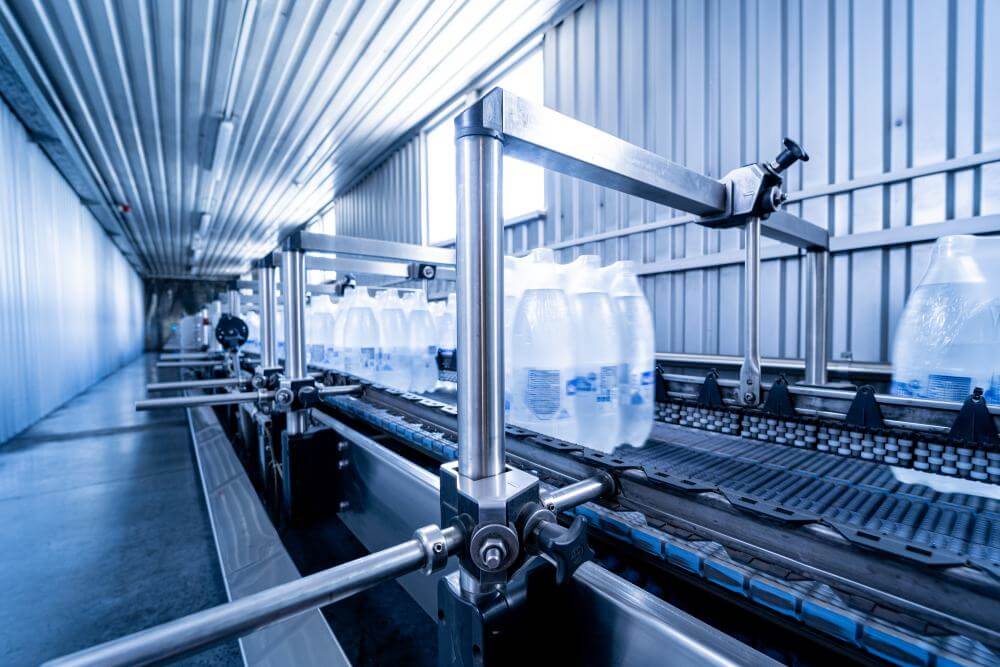
A plant may have a small number of major breakdowns, but micro-stops affect almost every asset. You see them on high-speed packaging lines, discrete assembly cells and process equipment. Each micro-stop is easy to ignore, but in aggregate they can exceed the impact of a few major failures.
Micro-stops do more than steal time. They introduce variability. That variability causes:
Instability is costly, and micro-stops are one of its primary sources.
A 60 minute breakdown usually gets a formal investigation and corrective actions. Ten seconds of stoppage, 200 times per shift, does not. It is seen as part of "how the line runs". Without data, it is difficult to prioritize, so micro-stops remain invisible in continuous improvement discussions.
Many manufacturers still rely on operators to record downtime manually, whether on paper, spreadsheets or simple digital forms. This approach fails for micro-stops for several reasons:
The result is that your data systematically under-represents the real performance losses. Reports from ERP or basic production monitoring tools can show total uptime, but they rarely provide a reliable view of how much time is lost to very short interruptions.
To understand why automated detection matters, it helps to distinguish simple uptime tracking from full production monitoring. For more context, see this article on production monitoring systems in manufacturing and how they go beyond basic machine status.
To manage micro-stops, you first need to see them. That means collecting data directly from machines in real time, tagging every change of state and then classifying these events into a structure that operations and maintenance teams can act on.
A cloud MES and OEE platform like Fabrico connects to your existing equipment, PLCs or sensors, then automatically captures:
With this level of granularity, you can see the real pattern of micro-stops per line and per product. Instead of asking operators to remember why the line felt slow yesterday, you have a precise, time-stamped record of when and where each loss occurred.
A key part of this approach is defining the thresholds that separate a micro-stop, a longer downtime event and a normal speed variation. With an MES and OEE platform, you can configure:
This configurable model allows you to tailor micro-stop detection to each line, which is critical for high-speed operations like packaging versus slower, batch-based processes. To dive deeper into this topic, consider this guide on OEE software and micro-stop detection.
Once you have reliable micro-stop data, the real value comes from turning that visibility into actions for production and maintenance teams. Fabrico is built to connect these dots, from event detection to follow-up work and improvements.
Not every micro-stop deserves attention. A five second stop that happens twice a week is not a priority, but a 15 second stop that occurs 300 times per shift probably is. With detailed machine data, you can sort and filter by:
This lets you focus continuous improvement resources where they matter most, instead of reacting to the most recent or most visible problem.
Many micro-stops have mechanical or electrical roots: worn components, loose sensors, poor lubrication or misalignments. Fabrico includes built-in maintenance management capabilities that allow you to:
Instead of treating micro-stops only as a production problem, you can link them to targeted maintenance tasks and verify their effect on OEE. If you want to explore how this kind of tracking supports maintenance decisions more broadly, see this article on tracking equipment downtime and cost in manufacturing.
Operators are central to any effort to reduce micro-stops. Real-time OEE and stop visibility on shop-floor dashboards allows them to:
When operators can see and influence the data, they are more likely to raise potential improvements and standardize better working methods.
Micro-stop data should not live in a separate tool. It should feed into your regular OEE reviews, daily management routines and improvement projects. With Fabrico, you can:
This helps continuous improvement, production and maintenance teams work from the same set of facts instead of relying on anecdotal information.
If you want to capture and act on micro-stops, not every tool will be sufficient. A practical solution should support you across data collection, analysis and execution.
The platform should communicate with your machines, PLCs or sensors to capture cycle information, status codes and speed in real time. Relying on manual input or rough time estimates will not provide the resolution you need for micro-stops.
You need the ability to configure what counts as a micro-stop versus full downtime for each line. This includes:
Micro-stop insights must be easy to interpret. Look for:
Capturing data is not enough. Your solution should let you:
Fabrico is designed around this flow. The platform unifies OEE, real-time production monitoring and built-in maintenance functionality so that every loss, including micro-stops, can trigger appropriate responses from the right team.
Fabrico is a cloud-based MES and OEE platform for manufacturers, with maintenance management capabilities built in. It connects to your machines, captures production and downtime data in real time and presents OEE in a way that reveals both big and small losses.
For micro-stops in particular, Fabrico provides:
This combination helps manufacturers turn micro-stop data into concrete improvements, from tuning sensors on a packaging line to adjusting standard work during changeovers or planning better preventive maintenance.
If your lines often "almost" hit their target rates, if operators describe equipment as "temperamental" or if you see performance losses in OEE that nobody can explain, micro-stops are likely a major contributor. Manual tracking and coarse downtime categories are not enough to understand these patterns.
By capturing micro-stops automatically from the machines themselves, and by linking those events to structured maintenance and production actions, you can reclaim capacity that is currently invisible in your reports.
Contact us to discuss how Fabrico can help you detect and reduce micro-stops on your lines, or explore the platform in more detail and Request a demo.

Zakažite sastanak KSNUMKS-to-KSNUMKS sa našim stručnjacima ili se direktno upišite u naš besplatni plan.
Nije potrebna kreditna kartica!






 Login
Login
 Blog
Blog