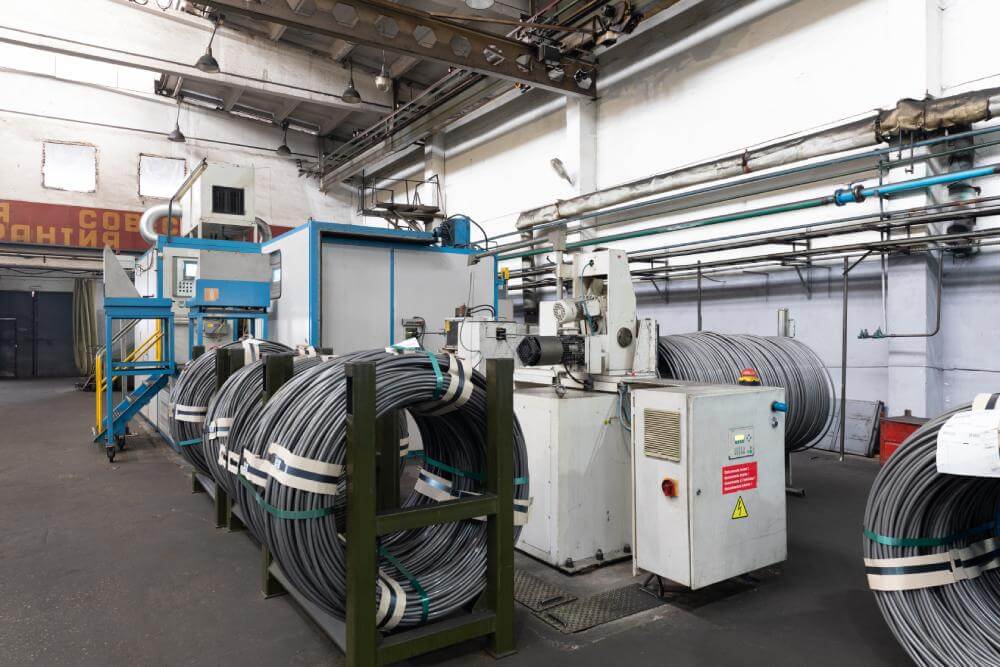
![[ARCHIVED CANNIBAL DUPE: DO NOT PUBLISH] Best OEE Software for Tire and Rubber Manufacturing: Curing Press Monitoring and Vulcanization Tracking](https://s3.fabrico.io/uploads/best-oee-software-rubber-tire-manufacturing.jpg)

Tire and rubber manufacturing combines continuous mixing and extrusion processes with discrete curing press cycles, a hybrid production model that creates unique OEE measurement challenges.
Curing press availability is the primary production bottleneck in most tire plants: each press has a defined cure cycle time determined by tire specification, and any deviation from the planned cure time or unexpected press downtime directly reduces output and risks product quality.
OEE calculation in tire manufacturing needs to accommodate the batch nature of curing press cycles rather than treating production as a continuous flow.
Each curing cycle is a discrete event with a planned duration (determined by the cure recipe), an actual duration (recorded from the press controller), and an outcome (good tire, rejection, or rework).
OEE Performance is the ratio of planned cure time to actual press cycle time; Availability is the proportion of planned production time when presses are running productive cycles; Quality is the ratio of good tires to total tires cured.Banbury mixer and calender line OEE adds a second layer of monitoring complexity.
Compound mixing batches must hit temperature and mixing time targets that determine rubber compound quality; calender lines must maintain speed and tension within specification to produce consistent compound thickness.
OEE software for tire plants needs to monitor both the continuous upstream processes and the discrete press cycles, maintaining a connected production record that links compound batches to the press loads that used them.
The most operationally significant OEE metrics in tire manufacturing are: curing press utilization (the percentage of available press time running productive cure cycles versus idle, waiting for compound, or in maintenance) cure cycle deviation (the distribution of actual cure times versus planned cure times, which indicates both process control and recipe compliance)
and compound batch rejection rate (the percentage of mixer batches that fail quality checks before entering the press room, which is a leading indicator of downstream quality losses).Planned versus unplanned downtime analysis for curing presses is critical for maintenance planning.
Tire presses operate under high temperature and pressure, and mold cleaning, bladder replacement, and press maintenance are significant planned downtime events.
OEE software that distinguishes planned maintenance cycles from unplanned breakdowns, and tracks the duration accuracy of planned maintenance versus estimates, gives maintenance teams the data to schedule press work more accurately and reduce the unplanned proportion of press downtime.Energy OEE is increasingly relevant in tire manufacturing given the high energy intensity of vulcanization.
Tracking energy consumption per press cycle alongside OEE performance metrics reveals which presses are running efficiently (hitting planned cure cycle times with normal energy consumption) and which are experiencing gradual degradation (longer cure times, higher energy per cycle) that indicates mold or heating system maintenance requirements before quality issues emerge.
OEE software for tire and rubber manufacturing should support mixed production models, handling both continuous process lines (mixing, extrusion) and discrete cycle-based production (curing presses) within the same platform.
Systems that only support one production model typically require workarounds for tire plants that result in data gaps or manual aggregation steps that undermine the value of automated OEE monitoring.Cure cycle tracking capability is a differentiating feature for tire OEE software.
The platform should capture cycle start and end times automatically from press controllers, compare actual cure durations to recipe-specified targets, and flag deviations that exceed tolerance without requiring operators to manually log each cycle.
This automated cycle monitoring is the foundation of press performance analysis, and it requires PLC integration capability specific to the press controller types used in the plant (commonly Siemens or Rockwell PLCs in European and North American tire plants).For multi-plant tire manufacturers
OEE software with cross-site benchmarking capability allows operations directors to compare press utilization, cure cycle performance, and quality rates across plants producing the same tire specifications.
This benchmarking identifies best-practice plants whose operational approaches can be transferred to lower-performing sites, and it provides the data foundation for capital investment decisions about press replacement or capacity expansion based on actual utilization rather than estimated capacity.













 Login
Login
 Blog
Blog
![[ARCHIVED CANNIBAL DUPE: DO NOT PUBLISH] Best OEE Software for Solar Panel Manufacturing: Cell Efficiency Tracking and Production Monitoring](https://s3.fabrico.io/uploads/best-maintenance-software-solar-panel-manufacturing.jpg)