


 Login
 Blog
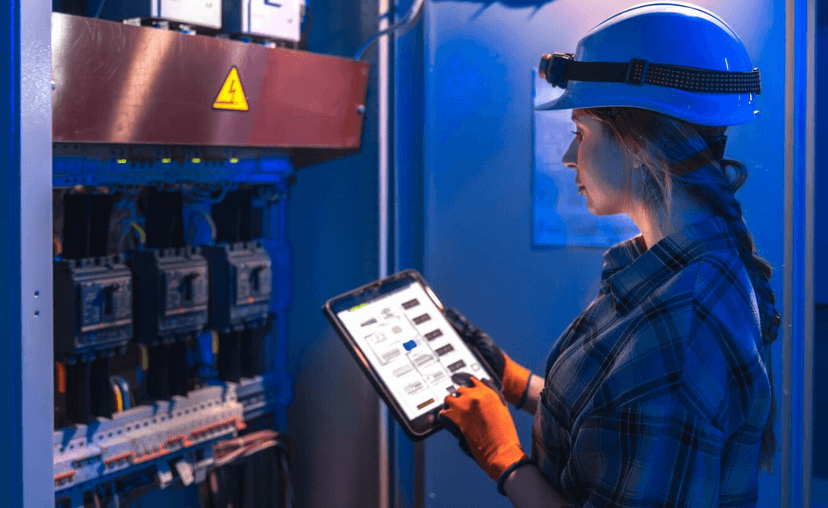
Andon Systems in Manufacturing: Real-Time Problem Signaling
Key takeaways
- An Andon system is a way for anyone on the line to signal a problem the instant it appears, so help arrives before a small issue becomes a stoppage or a defect.
- The principle is to surface problems immediately rather than hide them. A pulled Andon is a success, not a failure, because it caught something while it was still cheap to fix.
- Andon only works if a signal triggers a fast, committed response. A light that nobody answers trains operators to stop pulling it.
- Digital Andon ties the signal to data: which station, what reason, how long until response, and a record of every event for analysis.
What an Andon system is
Andon (Japanese for a paper lantern) is a visual signal that an operator triggers when something goes wrong: a quality issue, a missing part, a machine fault. The classic form is a coloured light over the station, green for normal, yellow for a developing issue, red for a stop. The signal calls help to the exact spot, immediately.
The deeper purpose is cultural: it makes problems visible the moment they happen instead of letting them hide until the end of the shift. A workplace where Andons are pulled often and answered fast is healthier than one where the board is always green because nobody dares stop the line.
Why it works
Problems are cheapest to fix at the instant they appear. A drifting setting caught in the first minute is a quick adjustment; the same drift discovered an hour later is a batch of scrap. Andon compresses the time between a problem appearing and someone competent responding, which is where most avoidable loss lives.
It also prevents the quiet workaround. Without a fast signal, operators improvise around problems, and the real cause never gets recorded or fixed. The piece on fault-to-fix covers turning that signal into a closed work order.
The three parts of a working Andon
- The signal: easy to trigger, visible, and specific about location and type.
- The response: a named person or team committed to arriving within a defined time. This is the part most plants get wrong.
- The record: every signal logged with reason, response time, and resolution, so patterns can be analysed.
Physical versus digital Andon
A physical light tower signals "there is a problem here." A digital Andon does that and captures the data around it: which station, what category, how long help took, and a permanent event log.
That record turns Andon from a momentary alert into a source of improvement data, feeding the same downtime and reason analysis as the rest of your OEE picture. See downtime versus uptime for how those events are classified. If budget allows one project this year, read our guide on whether to buy andon or OEE first.
Common mistakes
- No response commitment. A signal with no guaranteed responder is decoration. If help does not come, operators stop signalling.
- Punishing the pull. If pulling the Andon is treated as causing trouble, the board stays green and problems go underground.
- No data. A light with no logged history cannot tell you which stations and reasons drive the most signals, so you cannot fix the root causes.
How Fabrico fits
Fabrico covers the alert and the record side of andon. A connected machine reports its own stop with the machine and the time, the operator tags the reason on a tablet or phone, a "line has stopped" alert reaches the people your rules name, and each stop is logged for analysis next to the line's OEE. Operators and technicians can also raise a prioritized maintenance request from a phone or a QR code scan, with a photo.
That gives you the data trail to attack the most frequent stops at their source: stops add up by reason, the reaction time is recorded on each urgent repair, and a technician or supervisor opens a work order from the stop in one step. If you want light towers or call buttons at the line too, ask in the demo how andon calls are handled, and test it on a real call. Fabrico is an EU company, EU customers are hosted on AWS in Frankfurt, and Fabrico is certified to ISO/IEC 27001.
To see real-time stop alerts on lines like yours, book a demo.
Related reading
Teams putting this into practice often review our roundup of the best shop floor management software.
To turn this into a tool decision, see our overview of the best production monitoring systems.
Frequently asked questions
Is pulling the Andon a sign of failure?
The opposite. A pulled Andon means a problem was caught early, while it was still cheap to fix. A healthy line pulls Andons often and answers them fast; a board that is always green usually means problems are being hidden, not absent.
What makes an Andon system fail?
No committed response. If a signal does not reliably bring help within a defined time, operators learn it is pointless and stop using it. The response commitment matters more than the hardware.
What is the difference between physical and digital Andon?
A physical light signals that there is a problem. A digital Andon also captures the data around it (station, reason, response time, history), turning each signal into improvement data rather than just a momentary alert.
How does Andon relate to OEE?
Andon signals are often the leading edge of availability and quality losses. Logging them with reasons feeds the same loss analysis that drives OEE, so the most frequent signals point straight at the biggest improvement opportunities.
See how Fabrico unifies OEE and maintenance in one platform.
Book a demoRelated articles









Real Fabrico tiles, sample data.