


 Login
 Blog

Digital Twin Software: Best Tools for Manufacturing (2026)


Key Takeaways: Digital twin software creates a living virtual model of a machine, line, or plant that updates with real operational data. The platforms that lead the category in 2026 come from the large industrial software vendors, and the single biggest success factor is not the modeling tool itself.
It is the quality of the shop-floor data feeding the twin. A twin built on incomplete downtime and performance data reproduces the same blind spots as the spreadsheets it replaced.
What digital twin software actually does
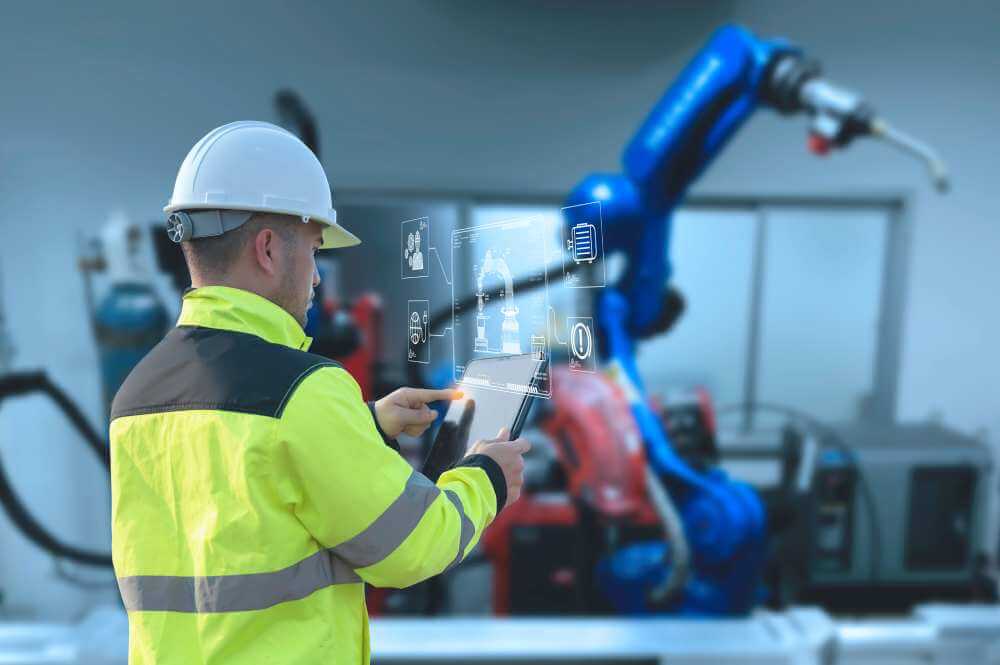
A digital twin is a virtual representation of a physical asset or process that stays synchronized with its real-world counterpart through live data. In manufacturing, twins are used to simulate line changes before committing capital, predict the effect of maintenance decisions, train operators on virtual equipment, and test what-if scenarios without stopping production.
Digital twin software provides the modeling environment, the data connections, and the simulation engine. It sits on top of your operational systems: sensors, PLCs, production monitoring platforms, and the CMMS that records what maintenance actually happened.
Leading digital twin platforms for manufacturers in 2026
- Siemens Simcenter and Teamcenter. A deep simulation portfolio tied into Siemens' broader industrial software stack. Strong fit for plants already running Siemens automation.
- PTC ThingWorx. An IIoT platform with digital twin capability, often paired with PTC's CAD and PLM tools. Known for flexible connectivity to industrial equipment.
- Ansys Twin Builder. Simulation-grade twins built on Ansys' physics engines. Common in engineering-heavy use cases where model fidelity matters most.
- Microsoft Azure Digital Twins. A cloud platform for modeling entire environments as connected graphs. Fits organizations building custom twins on Azure infrastructure.
- AWS IoT TwinMaker. Amazon's toolkit for assembling twins from existing data sources, with 3D visualization. Fits teams already invested in AWS.
- Dassault Systèmes 3DEXPERIENCE. Virtual twin technology grounded in Dassault's 3D modeling heritage, used across aerospace, automotive, and industrial equipment.
All of these are capable platforms. The right choice depends far more on your existing technology stack, in-house skills, and use case than on any feature checklist.
How to choose: five questions that matter more than the demo
- What question should the twin answer? Start from a specific decision (line redesign, maintenance strategy, energy optimization), not from the technology.
- Where will the operational data come from? A twin is only as truthful as its inputs. PLC and sensor feeds capture machine states and stops; the reasons behind stops and manual interventions need operator input on the line.
- Who maintains the model? Twins decay without ownership. Budget engineering time for keeping the model synchronized with physical reality.
- How does maintenance reality get into the twin? Work orders, failures, and repairs from the CMMS are core twin inputs. See our guide to CMMS implementation.
- What is the smallest viable scope? A twin of one bottleneck line that answers one question beats a plant-wide model that answers none.
The data layer: why twins fail without verified shop-floor data
The most common reason manufacturing twins disappoint is not the modeling software. It is that the operational data feeding the twin does not reflect what actually happens on the floor.
Unlogged micro-stops, misattributed downtime, and manual workarounds never make it into the model, so the twin simulates a cleaner factory than the one you run. Closing that gap starts with MES and OEE software that tracks downtime automatically as it happens.
For many plants that system is a light MES, which covers machine data collection, production monitoring and OEE and downtime analytics, while routings and BOMs stay in the ERP.
This is where Fabrico fits in a digital twin stack. Fabrico is an MES and OEE platform with maintenance (CMMS) built in. Machine data comes from the PLC, from a Fabrico IoT device with external sensors on older machines, or from AI cameras (an add-on) that count output where there is no machine signal. Connected machines report their own stops, including short stops too brief to log by hand, operators add the stop reason on a tablet or phone, and the CMMS records what maintenance was actually performed.
That event stream is exactly the ground truth a digital twin needs to stay honest. For the monitoring fundamentals, see Overall Equipment Effectiveness and equipment downtime analysis.
FAQ
What is digital twin software?
Software that creates and maintains a virtual model of a physical asset, line, or plant, synchronized with real operational data, used for simulation, prediction, and decision support.
Is a digital twin the same as a simulation?
No. A simulation is typically a one-off model run with assumed inputs. A twin stays connected to live data and evolves with the physical asset.
Do small and mid-size manufacturers need digital twin software?
Usually not as a first step. Most SME plants get faster returns from reliable OEE monitoring and maintenance execution, which also build the data foundation a future twin would need.
What data does a digital twin need?
Machine states, cycle times, downtime events with causes, maintenance history, and quality outcomes. The completeness of downtime and intervention data matters most.
To see how live OEE and stop data from the PLC or IoT devices, with AI cameras (an add-on) counting output where there is no signal, can strengthen your operations today and feed whatever twin you build tomorrow, book a demo.
Related articles




Real Fabrico tiles, sample data.