


 Login
 Blog
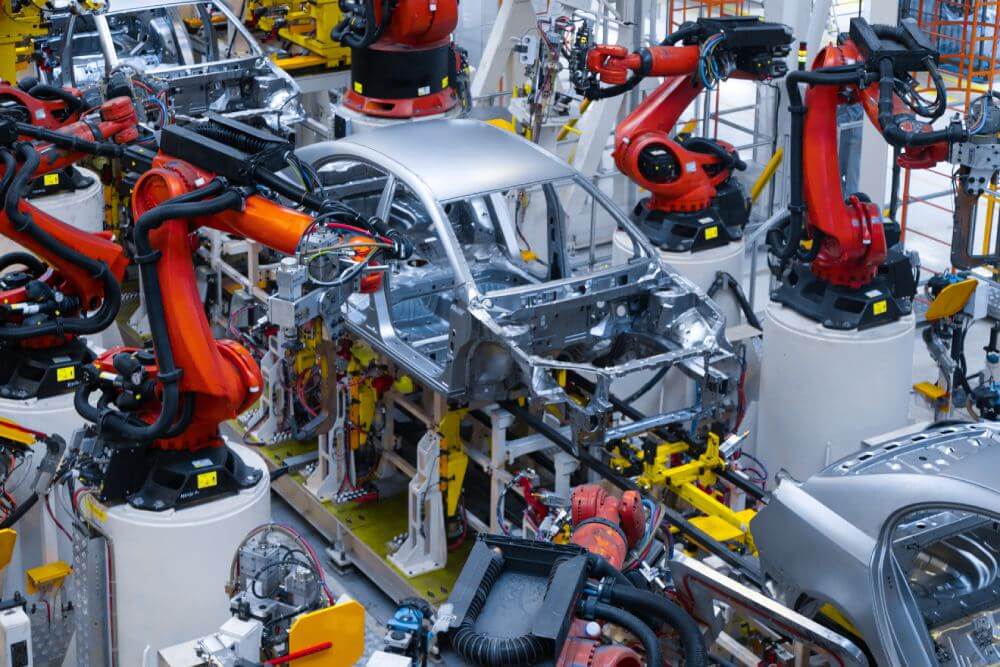
The 5 Best Automotive Maintenance Software Platforms for 2026

Key Takeaways
-
For automotive manufacturers, the "best" maintenance software must be able to support core Lean principles like Just-in-Time (JIT) and Total Productive Maintenance (TPM).
-
Key features to look for include support for autonomous maintenance checklists, robust audit trails for IATF 16949 compliance, and, most importantly, real-time integration with production data.
-
Fabrico, which publishes this page, joins real-time OEE with a built-in CMMS, so a coded stop and the repair that follows sit on the same machine record.
See the roundup of affordable CMMS software.
What to Look For in Automotive Maintenance Software (The 4-Point Checklist)
To thrive in this high-stakes environment, you need a system built for speed, compliance, and data.
-
JIT & TPM Enabled: Does it have features like mobile checklists for operators and data-driven PMs to support a culture of proactive, shared reliability?
-
Audit-Ready: Can it provide the unchangeable electronic records and e-signatures needed to instantly prove compliance with standards like IATF 16949?
-
Real-Time Integration: Can it connect directly to the factory floor to provide a live, data-driven view of asset health and performance?
-
Speed & Usability: Is the platform fast and simple enough for your team to use effectively in a high-pressure, fast-paced environment?
The Best Automotive Maintenance Software of 2026
Here is our breakdown of the top platforms that are built to meet the unique demands of the automotive industry.
Fabrico: OEE and maintenance in one system
What it is: Fabrico is OEE software and a light MES with a CMMS built in. It records stops and counts from the machine, operators give the reason, and maintenance work is planned and logged on the same asset.
How the two connect: In a JIT environment, response time matters. When an operator logs a stop reason that is set up to create a task, Fabrico opens the work order automatically, with the stop attached; a stop without a reason sends a notification.
For a plant running TPM, that link puts each repair next to the stop that caused it, so the stop list and the maintenance plan use the same data.
Key Automotive Features:
-
Digital checklists for autonomous maintenance (TPM) tasks for operators.
-
Work order history and digital checklists kept per asset.
-
Native, real-time OEE integration to connect your maintenance response directly to your production data.
-
Data-driven PM optimization based on actual OEE failure data, not just a generic calendar.
Fits: Automotive OEMs and Tier 1/2 suppliers who want to move beyond a simple CMMS and implement a true, data-driven Lean manufacturing system that connects their maintenance "cure" directly to their operational "diagnosis."
IBM Maximo: global enterprise asset management
Description: For the largest global automotive OEMs, IBM Maximo provides a massive, enterprise-wide EAM platform. Its strength lies in managing the entire financial lifecycle of assets, including depreciation and capital planning, across a global portfolio of plants and facilities.
Infor EAM: supply chain and ERP integration
Description: Infor EAM is another powerful, enterprise-focused platform. It is a strong choice for large automotive companies that need deep, native integration with their existing Infor ERP and supply chain management systems to create a unified business planning environment.
Fiix by Rockwell Automation: OT and IT connectivity
Description: Fiix is a robust cloud CMMS with strong capabilities for the automotive sector. Its position within the Rockwell Automation ecosystem makes it a good fit for plants that need to connect their CMMS to a wide variety of factory floor automation and control systems (Operational Technology).
eMaint by Fluke: reliability and predictive maintenance
Description: eMaint is a highly configurable CMMS with a deep focus on reliability-centered maintenance. For automotive plants looking to build an advanced predictive maintenance (PdM) program using condition-monitoring sensors, eMaint's close connection to the Fluke ecosystem is a key advantage.
Frequently Asked Questions (FAQ)
How does a CMMS support IATF 16949?
A modern CMMS provides a complete, auditable history of all maintenance activities. It provides the digital records, checklists, and electronic signatures needed to prove that maintenance is being performed according to standardized work, a key requirement of IATF 16949.
Can this software be used to manage tooling and dies?
Yes. Tooling and dies can be treated as assets within a modern CMMS. You can track their usage, schedule preventive maintenance (like cleaning or resurfacing), and manage their entire lifecycle to maximize their value.
What is the difference between a CMMS and TPM software?
A CMMS is the engine that powers a TPM program. TPM is a philosophy and a set of processes, and a modern CMMS provides the tools, like operator checklists and data analysis, to make that philosophy a reality.
Stop Just Managing Maintenance. Start Driving Production.
In the automotive industry, maintenance isn't a separate department; it's a core part of the production system.
The "best" software doesn't just manage your maintenance work. It integrates it directly with your real-time production data to create a powerful, agile, and truly Lean operation.
Ready to see the integrated platform that's built for the speed and demands of the automotive industry?
Turn downtime into a number your team can actually act on.
Request a demoRelated articles











Real Fabrico tiles, sample data.