


 Login
 Blog

4 Best Manufacturing Cost Reduction Software Tools (2026 Review)
Manufacturing Cost Reduction is the top priority for the C-Suite in 2026. Facing inflation, supply chain volatility, and tight labor markets, executives are looking for technology that pays for itself.
Key Takeaways
-
The Reality: You cannot cost-cut your way to growth by firing people. You must Optimize processes to get more output from the same resources.
-
The Targets: The biggest savings are found in Unplanned Downtime, Material Scrap, and Labor Inefficiency.
CFOs often view software as an "Expense." But the right software is a Savings Engine.
If a platform costs $20,000 a year but saves $200,000 in lost production, it isn't a cost, it's a profit center. The challenge is identifying where the waste is hiding.
-
The Downtime Tax: Machines sitting idle while overheads burn.
-
The Scrap Tax: Raw materials thrown in the bin due to machine faults.
-
The Labor Tax: Technicians paid to walk to the office instead of fixing machines.
Here are the 4 best software tools to reduce manufacturing costs.
Where are the "Hidden Costs" in Your Factory?
Traditional cost-cutting focuses on "Cheaper Parts" or "Lower Headcount." This is short-sighted.
Operational Cost Reduction focuses on Waste Elimination (Lean).
-
Reducing MTTR (Repair Time) reduces the cost of downtime.
-
Improving OEE (Efficiency) reduces the cost per unit.
-
Digital Workflows reduce the administrative burden on expensive staff.
Top 4 Manufacturing Cost Reduction Software Tools (Ranked)
1. Celonis
Best For: Process Mining (Overhead Reduction).
Overview: Celonis is the leader in Process Mining. It connects to your ERP (SAP/Oracle) and "X-Rays" your business processes to find inefficiencies.
It is excellent for reducing Administrative Costs. It finds bottlenecks in Procurement (e.g., "Why does it cost $50 to process a $5 PO?") and Supply Chain.
Key Cost Features:
-
Duplicate Payment Detection: Finds instances where you paid a vendor twice.
-
Process Standardization: Identifies deviations that increase overhead.
-
Inventory Optimization: Finds capital trapped in slow-moving stock.
Pros:
-
Massive savings for global enterprises with complex back-office operations.
-
Finds "Cash on the table."
Cons:
-
Shop Floor Gap: It optimizes the Business Process, not the technician's repair work. It saves "Overhead," not "Direct Manufacturing Costs."
2. Plex (Rockwell Automation)
Best For: Inventory Cost Control.
Overview: Plex attacks cost through Inventory Management. For many manufacturers, millions of dollars are tied up in Raw Materials and WIP (Work in Progress).
As a unified ERP/MES, Plex provides real-time visibility into inventory. It supports Just-in-Time (JIT) manufacturing, allowing you to reduce stock levels without risking stockouts.
Key Cost Features:
-
Scrap Analysis: Tracks the financial cost of scrap in real-time.
-
Job Costing: Knows exactly how much profit you made on every specific order.
-
Material Traceability: Reduces the cost/scope of recalls by pinpointing exact batches.
Pros:
-
The best tool for controlling "Working Capital."
-
Eliminates "Ghost Inventory" write-offs.
Cons:
-
Implementation: Replacing your inventory system is a major project.
3. Augury
Best For: Catastrophic Failure Avoidance (Asset Savings).
Overview: Augury saves money by preventing Catastrophic Asset Failure. Replacing a bearing costs $500. Replacing a motor and gearbox because the bearing seized costs $50,000.
Augury’s AI listens to the machine and tells you to replace the bearing before it destroys the motor.
Key Cost Features:
-
Spare Parts Optimization: Order parts only when needed (JIT), reducing shelf inventory.
-
Energy Reduction: Identifying misaligned motors reduces electricity consumption by 5-10%.
-
Insurance: Some insurers lower premiums for plants using predictive tech.
Pros:
-
Prevents the massive "Black Swan" expenses that blow up the maintenance budget.
-
Immediate energy savings.
Cons:
-
Hardware Cost: The savings must outweigh the subscription cost of the sensors. Best for critical, large assets.
4. MaintainX
Best For: Contractor Spend Management.
Overview: If you use external contractors, cost control is difficult. MaintainX provides a digital audit trail for vendor work. You can require contractors to upload "Before and After" photos and log hours directly in the app.
This prevents Overbilling. You have proof of exactly when they arrived and what they did.
Key Cost Features:
-
Time Tracking: precise logs of contractor hours.
-
Approval Workflows: Prevent unauthorized spend on Purchase Orders.
-
Part Usage: Ensure contractors aren't using expensive parts unnecessarily.
Pros:
-
Tightens control over "External Spend."
-
Very affordable platform.
Cons:
-
Focuses on Maintenance Spend, with less impact on Production Efficiency costs.
One note: we sell Fabrico. It is an MES and OEE platform with maintenance built in, so it is not ranked here. These tools target back office, inventory, asset and contractor costs. Fabrico OEE and downtime analytics show where stops and losses cost output. If your problem is line stops and downtime, start with what OEE means.
Comparison Matrix: Cost Impact
| Feature | Celonis | Plex | Augury | MaintainX |
| Primary Saving | Admin Overhead | Inventory/WIP | Asset Hardware | Contractor Spend |
| Time-to-ROI | Medium | Longer (Major project) | Fast (Months) | Fast (Days) |
| Method | Process Mining | ERP Control | Predictive AI | Audit Trail |
| Target Budget | Finance / IT | Supply Chain | Reliability | Maintenance |
| Best For | Corporate | Enterprise | Critical Assets | Outsourcing |
Conclusion
-
To reduce Back-Office Waste, use Celonis.
-
To reduce Inventory Holding Costs, use Plex.
Turn downtime into a number your team can actually act on.
Request a demoContact usRelated articles







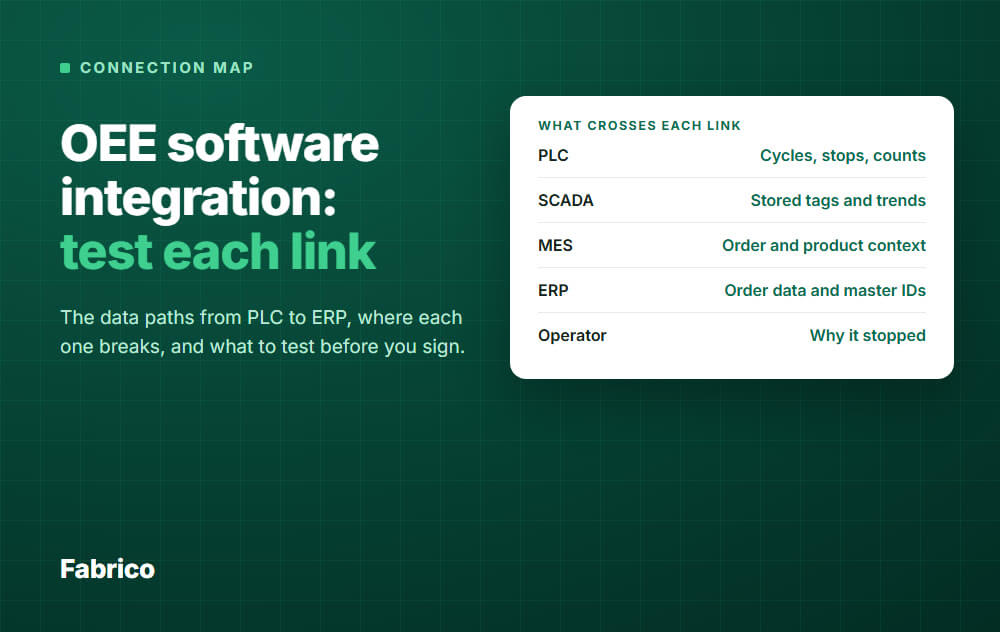
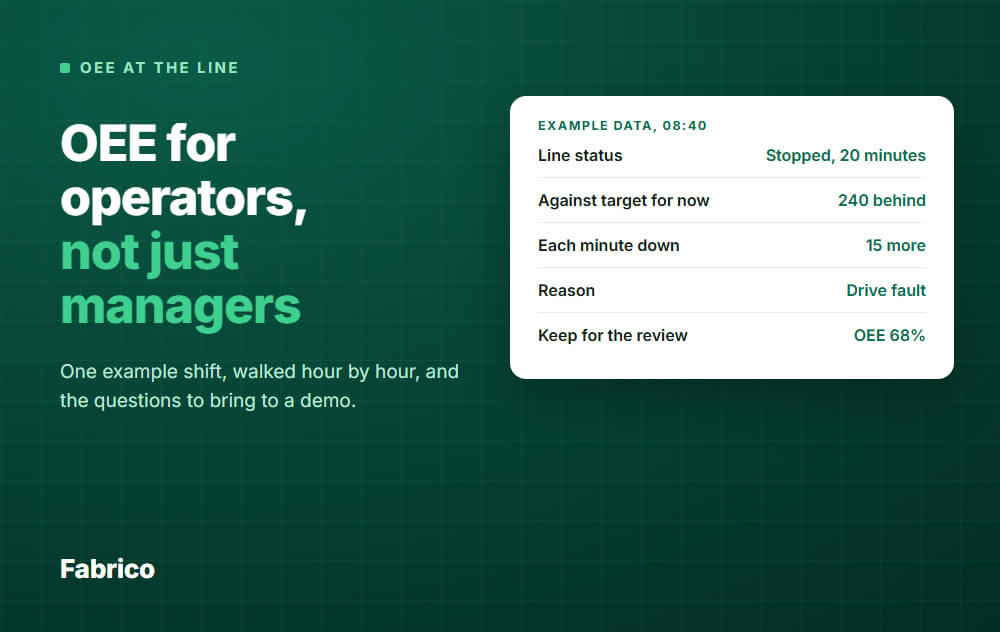


Real Fabrico tiles, sample data.