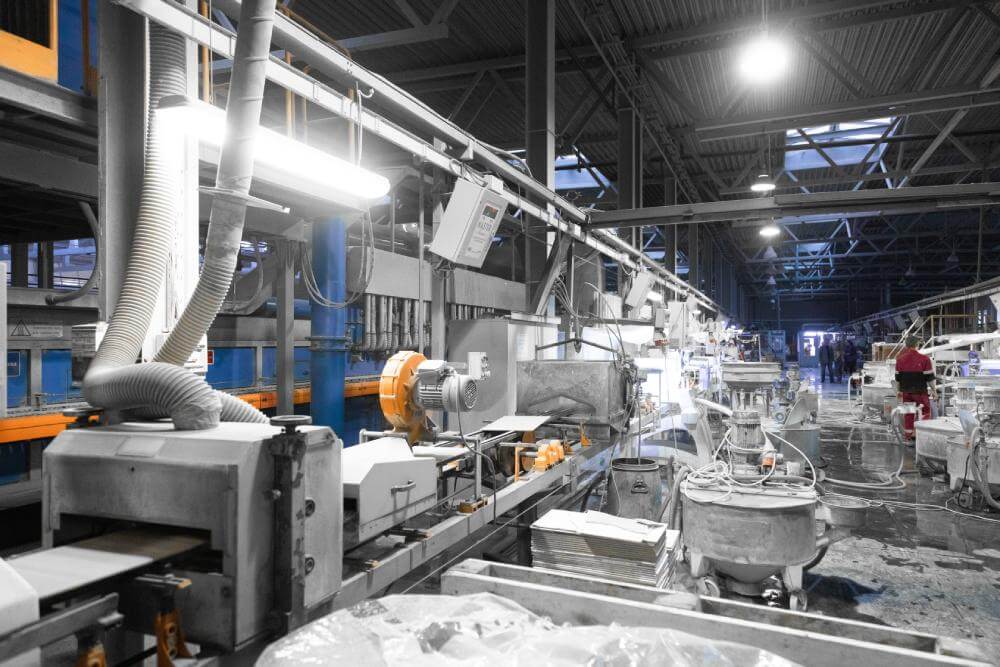

The Dust Danger (ATEX): In milling, dust isn't just dirty; it's explosive. CMMS software must digitize Dust Control Inspections (baghouses, filters) to ensure safety and insurance compliance.
Continuous Flow Criticality: A grain mill is a gravity-fed continuous loop. If a bucket elevator fails, the whole mill chokes. Predictive Maintenance on critical motors is essential.
Food Safety (FSMA): Mills are subject to strict hygiene audits. Maintenance software must track Pest Control, Sanitation, and Magnet/Sifter Checks.
Top Picks: We review Fabrico, Aptean, Maintenance Connection, Mapcon, and Pragma On Key.
Flour and Grain Milling is a unique intersection of heavy industry and food safety.
You are managing massive mechanical forces (Rollermills, Hammermills) that generate heat and vibration, while simultaneously producing a food ingredient that must be pristine.
OEE (Overall Equipment Effectiveness) in a mill is driven by Asset Availability and Safety.
The environment is hostile, abrasive dust, loud noise, and strict ATEX/Combustible Dust zones. Standard maintenance software often fails here because it treats the mill like a generic factory. It doesn't account for the critical Sanitation Schedules or the Fire Watch requirements.
Here are the 5 best CMMS software tools specifically suited for Flour and Grain Milling.
Fabrico is designed to handle the dual challenge of the mill: Mechanical Uptime and Regulatory Safety.
A breakdown in a mill creates a choke point that can take hours to clear manually. Fabrico focuses on preventing these stops through data-driven maintenance.
It bridges the gap between the Miller (Production) and the Millwright (Maintenance).
Key Features for Milling:
ATEX & Dust Inspections: Digital checklists for baghouse differentials, filter changes, and bearing temperature checks. This creates an unshakeable audit trail for insurance and safety inspectors.
Vibration Monitoring: Connects to sensors on critical Roller Mills and Sifters. It detects the specific vibration signature of a failing bearing before it generates heat (a fire risk).
Sanitation Logs: Digitizes the "Master Sanitation Schedule." Operators can log cleaning tasks on mobile tablets, linking hygiene directly to asset history.
Magnet & Screen Checks: Mandatory food safety checks (tailings magnets, sifter screens) are logged digitally with "Pass/Fail" photos, replacing paper clipboards.
Best For: Mills focused on preventing dust explosions and mechanical breakdowns.
Aptean is a heavyweight in the food and beverage ERP space.
For large milling groups, Aptean offers deep integration between Maintenance and Inventory.
It excels at tracking the cost of maintenance per ton of flour produced. It connects the MRO storeroom to the financial ledger, ensuring that expensive roller replacements are capitalized correctly.
It is a robust, financial-first tool that is often mandated by corporate HQs.
Best For: Large corporate milling groups running Aptean ERP.
Maintenance Connection (by Accruent) is widely used in regulated industries.
If your primary pain point is the BRCGS / SQF Audit, this software is a strong ally.
It organizes training records, standard operating procedures (SOPs), and historical work orders into an "Audit Portal."
It makes it incredibly easy to prove to an inspector that "Yes, we did inspect the elevator belt on March 14th."
Best For: Quality Managers and Mills facing strict regulatory audits.
Mapcon is a veteran in the industrial maintenance space.
It is known for being rugged, reliable, and cost-effective. It is less focused on the flashiest user interface, but it handles the basics of Work Orders and Parts Inventory very well.
For smaller, independent mills that need to move away from paper but don't need AI or complex integrations, Mapcon is a solid "Blue Collar" choice.
Best For: Independent or family-owned mills needing a solid basic CMMS.
Pragma (On Key) is technically sophisticated Asset Management software.
It focuses on RCM (Reliability Centered Maintenance).
It helps you build a taxonomy of your mill assets (e.g., classifying every bucket elevator, screw conveyor, and spout).
It is excellent for engineering teams who want to analyze "Mean Time Between Failures" (MTBF) on specific component types (e.g., "Why do our sifter bearings keep failing?").
Best For: Engineering-led maintenance teams focused on long-term reliability strategy.
Which tool fits your mill?
| Feature | Fabrico | Aptean | Maint. Connection | Mapcon | Pragma |
| Primary Strength | Safety & Reliability | Financial/ERP | Audit Prep | Simplicity | Engineering |
| OEE/Process Link | Native (Unified) | Module | Limited | Limited | Asset Logic |
| Dust/Safety Checks | Native (Digital) | Work Order | Document Mgmt | Checklist | Asset Data |
| Condition Monitoring | Native (Vibration) | Module | Integration | Limited | Advanced |
| Mobile App | Rugged/Offline | Standard | Standard | Basic | Standard |
In a mill, downtime is dangerous. A stopped leg or a seized bearing creates heat, dust, and lost production.
If your focus is Corporate Finance, Aptean is the standard.
If your focus is Basic Work Orders, Mapcon works well.
But if your goal is to modernize your mill operations by integrating Safety Compliance (Dust/Food) with Mechanical Reliability (Vibration/PMs), Fabrico offers the modern platform that keeps the flour flowing safely.
See how Fabrico handles ATEX inspections and maintenance for mills.
See how Fabrico unifies OEE and maintenance in one platform.
Request a demo





















 Login
Login
 Blog
Blog