
In high-speed manufacturing, the most expensive labor cost isn't the physical repair; it is the "Walking Waste" spent by technicians traveling between the machine and the maintenance office.
See our roundup of mobile CMMS apps that support QR workflows.
Traditional CMMS software often functions as a desktop-bound database that treats technicians like data entry clerks rather than reliability engineers.
To achieve world-class results in 2026, you must move beyond "System of Record" tools and run one platform built for the field.
QR Codes are the "Access Port" to the smart factory. Scanning an asset eliminates search time and ensures Tom (the Technician) works with 100% accurate machine history.
"Wrench Time" is the only labor metric that matters. Field-ready tools reclaim the 30% of the day technicians usually waste on administrative travel.
Digital SOPs prevent human-induced defects. Providing high-resolution schematics and checklists at the machine protects your Residual Asset Value.
A Field-Ready CMMS is a native, mobile-first maintenance execution platform designed for offline use on the shop floor, utilizing QR code scanning and digital SOPs to provide technicians with instant access to asset history and spare parts inventory at the point of repair.
For Mike (the Tactical Manager), a field-ready system is a tool for Decision Latency reduction.
In a siloed factory, a technician discovers a fault, walks to the office to check the manual, walks to the warehouse to check parts, and walks back to the line.
Fabrico eliminates this "Information Void" by putting the entire "Factory Brain" in the technician's pocket.
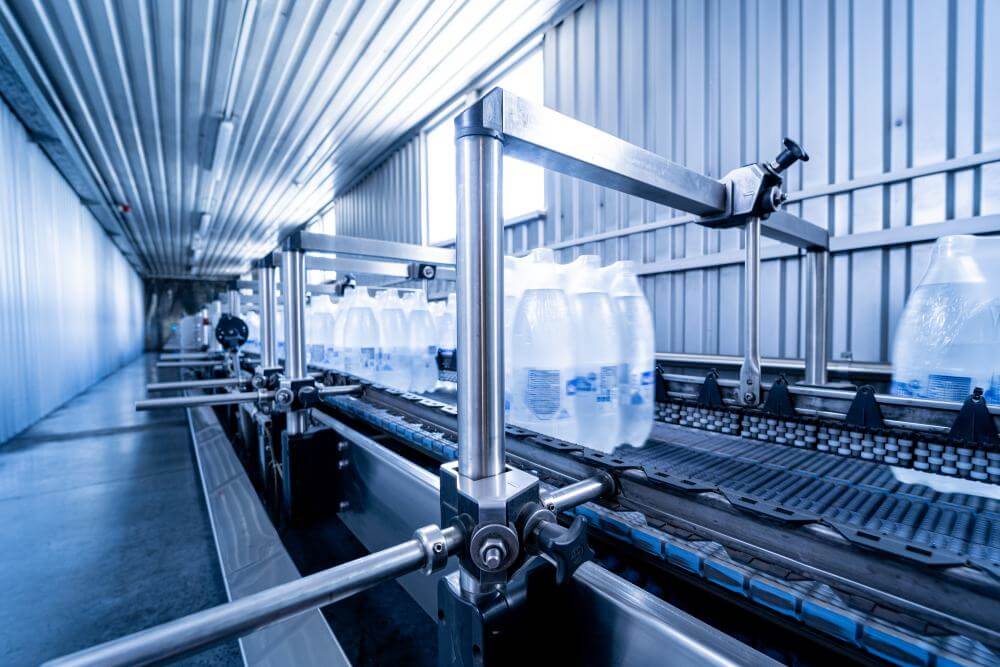
High-speed lines in Food & Beverage or Plastics move too fast for manual asset searches.
When a machine stops, Tom scans the QR Code on the control panel to instantly trigger the "Cure" workflow.
Instant History: He sees every recent OEE performance drop and the last three repairs performed on that specific motor.
Digital SOPs: He accesses the exact, version-controlled repair manual, ensuring he follows ISO-compliant procedures.
MRO Sync: He identifies the required spare part and its exact location in the warehouse without leaving the machine.
| Capability | Legacy ERP / CMMS (SAP/Maximo) | General Task Apps | Fabrico (MES and OEE Platform) |
| User Interface | Desktop-First / Complex | Mobile / Browser | Native Mobile App |
| Asset Identification | Manual Search | Manual Search | Instant QR Code Scan |
| Data Integrity | Low (Batch Entry) | Moderate | Absolute (Point-of-Work) |
| Wrench Time Impact | Negative (Admin Heavy) | Neutral | Positive (+30% Increase) |
| Information Access | Office-Bound | Cloud-Dependent | Local Cache / Offline Ready |
| ROI Strategy | Compliance | Communication | Capacity Reclamation |
Mean Time to Repair (MTTR) is the primary driver of your OEE Availability score.
For Paula (the Strategic Leader), reducing MTTR is a high-yield financial strategy.
By providing Tom with a Field-Ready CMMS, you slash the "Diagnostic" phase of the repair.
Instead of guessing why a filler failed, Tom views the Inefficiencies Zoom-In video replay on his mobile device, ensuring he has the right tools for the job.
This efficiency directly lowers the Maintenance Cost per Unit and ensures that your technical team is focused on the Value Fulcrum.
For multi-site manufacturers, the challenge is maintaining the same high standard across different plants.
Fabrico’s Group-First Architecture allows you to push Master PM Templates and digital checklists to every site's QR codes instantly.
This ensures that a technician in Germany follows the same reliability standard as a technician in the USA.
It turns individual "Tribal Knowledge" into an enterprise-wide asset, giving the Fabrico Assistant, available today, the data it answers from.
See how Fabrico unifies OEE and maintenance in one platform.
Request a demo





















 Login
Login
 Blog
Blog