


For decades the data historian was the workhorse of the factory data stack. It quietly logged temperatures, pressures, speeds and states from the plant's equipment, second by second, year after year. It still has a job to do.
But many manufacturers are discovering that a historian on its own is no longer enough for what they now want, real-time OEE , connected maintenance and AI. Understanding what a historian is, and where it stops, is key to building a modern data foundation.
See our roundup of what comes after the historian.

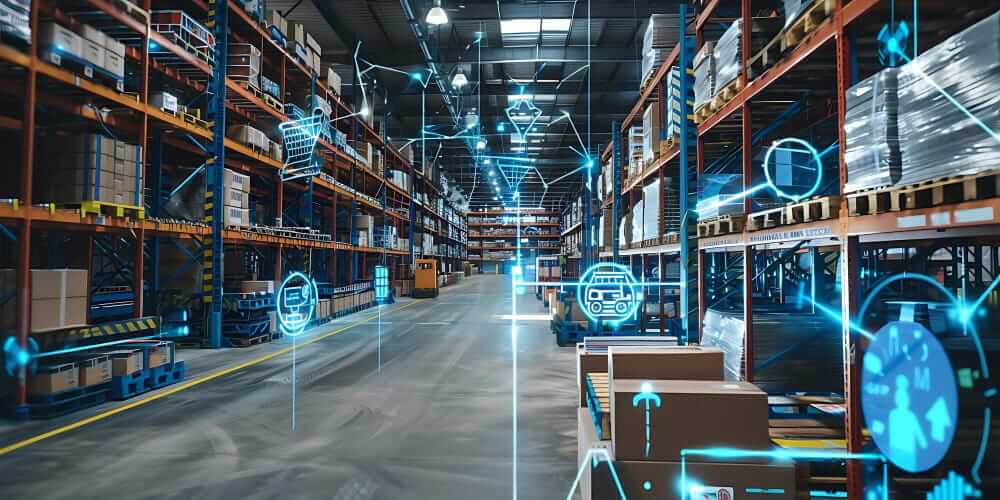
A historian stores the data; turning it into live OEE and action needs more than storage.
A data historian is specialised software that captures and stores time-series data from industrial equipment and processes, the readings coming off PLCs, SCADA and sensors, with a timestamp on every value. It is optimised to ingest huge volumes of these readings quickly and to retrieve them efficiently for trending and analysis. Think of it as the long-term memory of the plant's process data.
Historians are very good at what they were built for: reliable, high-frequency capture and storage of process values.
High-speed capture of large volumes of sensor and process data.
Efficient storage and retrieval of long time-series for trending.
Process troubleshooting, letting engineers look back at exactly what a machine was doing at a moment in time.
The limits show up the moment you want to do more than store and trend raw values:
It stores values, not context. A historian knows a temperature was 78 at 14:02; it does not know that this caused a stoppage, what the downtime reason was, or which work order fixed it.
It is often a silo. Historian data frequently stays disconnected from maintenance, quality and business systems, exactly the data silos that block a single view of operations.
It is not built for OEE or maintenance workflows. Turning raw tags into availability, performance and quality, and into action, needs a layer the historian does not provide.
Much of its data goes unused. Without contextualisation it becomes the dark data that AI projects cannot learn from.
The answer is not to rip out the historian; it is to put a contextualisation and action layer on top, and to connect it to the rest of the operation.
This is the thinking behind OT/IT convergence and a unified namespace : machine data, wherever it originates, becomes part of one real-time, contextualised source of truth.
Pair that with data governance so the values mean the same thing everywhere, and the historian becomes one valuable input rather than an isolated archive.
Fabrico connects directly to the OT layer to capture real-time machine data and, crucially, adds the context a historian lacks: it ties each stoppage to its reason, links production performance to the maintenance that affects it, and turns raw signals into live OEE. For many manufacturers it provides the contextualised, action-oriented layer that a historian was never designed to deliver, in one platform alongside CMMS and analytics.
Not quite. A historian is a database specialised for high-volume time-series data with timestamps, optimised for industrial capture and retrieval rather than general-purpose use.
It depends on your needs. Some keep a historian for high-frequency process archiving and use Fabrico for contextualised OEE, maintenance and action; others find Fabrico covers what they actually use day to day.
It stores raw values without the context of downtime reasons, good-unit counts and quality, which OEE requires. That contextual layer has to sit on top.
Turn stored machine data into live action. See how Fabrico adds real-time OEE, context and maintenance on top of your machine data. Book a demo to see it on your equipment.

















 Login
Login
 Blog
Blog