Login
 Blog
Computer Vision for OEE: Seeing Why a Line Stopped with Video Replay

For high-speed manufacturers, the biggest barrier to a 10% OEE jump isn't a lack of data, but a lack of visual proof.
See our roundup of the analytics tools behind this kind of capture.
Traditional machine monitoring identifies when a line stops, but it leaves your maintenance and production teams guessing at the root cause.
To achieve world-class results in 2026, you must run one platform that adds the "Visual Dimension" to your production heartbeat.
Key Takeaways
-
Data only tells half the story. PLC signals show when a line stopped. Computer Vision adds video that helps your team find out why.
-
"Ghost Losses" are the primary ROI target. Micro-stops under 60 seconds represent the largest untapped revenue source in high-volume plants.
-
Integrated Action reduces MTTR. Giving technicians a visual "Replay" of a failure before they arrive at the machine slashes diagnostic time.
What is Visual OEE Monitoring?
Visual OEE monitoring is an advanced production analytics framework that synchronizes real-time machine performance data (OEE) with high-definition video footage (Computer Vision) to provide an undeniable record of every downtime event, micro-stop, and process deviation.
For Mike, the maintenance manager, visual truth is the end of the "Blame Game."
When a high-speed labeler jams fifty times a shift, the PLC simply logs "Stop."
Fabrico's Inefficiencies Zoom-In module flags the video clip, allowing Mike to see if the cause was a material defect, an operator adjustment, or a vibrating guide rail.
Dimension 1: Capturing the "Hidden Factory" with Computer Vision
The Hidden Factory represents the 15-20% of capacity lost to micro-stops that are too fast for sensors to explain and too frequent for operators to log manually.
In high-speed Food & Beverage and Plastics lines, these "Ghost Losses" are often filtered out as noise by traditional OEE tools.
Fabrico utilizes the Visibility Trifecta, PLC signals, operator context, and visual evidence, to ensure no loss remains invisible.
By identifying and fixing these recurring micro-events, you reclaim capacity without purchasing a single new piece of hardware.
Dimension 2: Slashing MTTR via Visual Diagnostics
Mean Time to Repair (MTTR) is often inflated by "Diagnostic Latency" the time technicians spend investigating why a machine failed.
Standalone OEE dashboards identify a fault but provide no technical context to Tom, the technician.
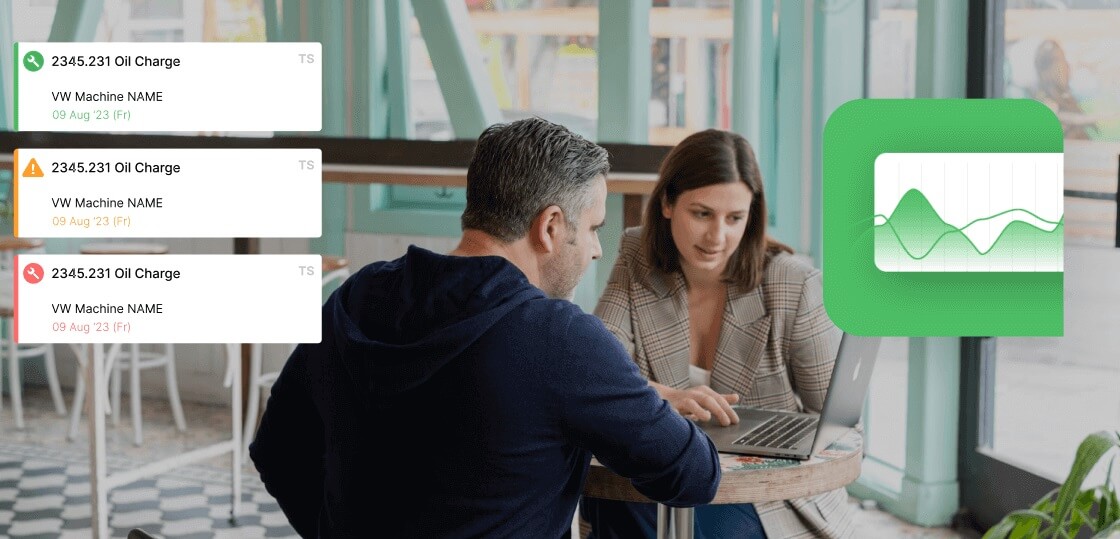
Fabrico is a cloud-based MES and OEE platform for manufacturers, with maintenance management (CMMS) built in, so Tom receives a smart notification on his mobile device containing a 10-second "Replay" of the failure.
This visual proof lets him arrive at the machine with the correct tools and parts.
Comparison Matrix: Traditional Monitoring vs. Visual Evidence Linked to Maintenance
| Capability | Standard Machine Monitoring | Siled OEE Dashboards | Fabrico (MES and OEE Platform) |
| Data Source | PLC Signal Only | Data + Manual Logs | PLC + CV + Operator |
| Micro-stop RCA | Guesswork | Subjective | Video of the moment the line stopped |
| Response Trigger | Visual Alert Only | Emailed Report | A stop can open a maintenance task |
| Maintenance Link | None | Via API (Complex) | Native Integrated CMMS |
| Decision Latency | High (Hours) | Moderate | Stop and repair task in one system |
| ROI Strategy | Awareness | Reporting | Every loss shown in money |
Dimension 3: Protecting the Value Fulcrum in High-Speed Lines
Sustainability requires moving from reactive "Firefighting" to a proactive reliability strategy.
Fabrico’s visual evidence allows you to find your plant's Value Fulcrum, the point where maintenance effort perfectly balances against revenue uptime.
By identifying "Bad Actor" assets through visual trends, you can move your team to Condition-Directed Tasks that prevent failures before they occur.
This shift reduces your Maintenance Cost per Unit and ensures your multi-million dollar assets reach their full residual value.
The Strategic ROI: ROI Today, Autonomy Tomorrow
For plant leadership, the business case for Visual OEE is built on "Master Data."
By consolidating OEE signals and video proof into one platform, you are building the "Factory Brain" required for future optimizations.
Frequently asked questions
What is video replay in an OEE context?
Short clips captured around a recorded event, so when a stop or a reject appears in the data you can see the seconds before and after it. It is not continuous surveillance footage, it is evidence attached to a specific loss.
How does it change root cause analysis?
It removes the recall problem. Instead of asking an operator what happened three shifts ago, the team looks at what happened. Arguments about whether an event was real end quickly, which is usually where most of the time went.
How do you calculate ROI on this?
Take the time currently spent investigating stoppages plus the losses that never get diagnosed at all, then compare against the deployment. Attribute honestly using a control line rather than a before and after snapshot. See measuring ROI with control lines.
How long is footage kept?
That is your policy decision, and it should be written down before install. Short retention tied to specific events is both cheaper and easier to justify to the workforce than open ended recording.
Does the team need to accept being filmed?
Frame and retention are what make this workable. Point the camera at the process, keep clips tied to machine events rather than people, and be explicit about it. See cameras without surveilling people.
Want OEE captured straight from your machines, no manual logs?
Request a demoRelated articles