


 Login
 Blog

CMMS Total Cost Checklist: 10 Line Items to Budget For

Key takeaways
- Hidden CMMS costs are the ones that do not appear on the quote but show up during and after rollout.
- The usual surprises are data migration, integration, customization, and the ongoing time to keep records clean.
- Change resistance and under-used licenses quietly erode value after go-live.
- Naming these costs up front turns them from surprises into planned line items.
The quote is the easy part. The costs that wreck CMMS budgets are the ones nobody listed: the migration that took twice as long, the integration that needed a specialist, the records that slowly went stale. Here is a checklist of what to watch for before you commit.
Implementation and data migration
Getting a CMMS live means moving asset registers, histories, and spare-parts data into it, then checking that data is right. Migration is almost always bigger than expected, especially when the old data is messy. Budget time and people for it, not just the software.
Integration and customization
Connecting the CMMS to ERP, sensors, or procurement, and tailoring forms and workflows to how you actually work, is real engineering effort. The more a system needs heavy customization to fit, the more that cost grows and the harder future upgrades become.
Training and change resistance
People have to learn the system and, harder still, change how they work. Training time is a direct cost, and change resistance is an indirect one: a CMMS that technicians avoid produces poor data and little value, no matter what it cost.
Ongoing data upkeep
The largest hidden cost is the one that never stops: keeping asset records, work orders, and parts data accurate. A CMMS with stale data is worse than a notebook, so the upkeep effort is not optional, it is the price of the value.
A worked example
A plant budgets for the software and nothing else. Go-live slips because migrating ten years of messy asset data takes a quarter, a contractor is needed to integrate procurement, and technicians resist the new forms until they are simplified. None of that was on the quote, but all of it was the real cost. A short hidden-cost checklist would have caught every item.
Where OEE fits
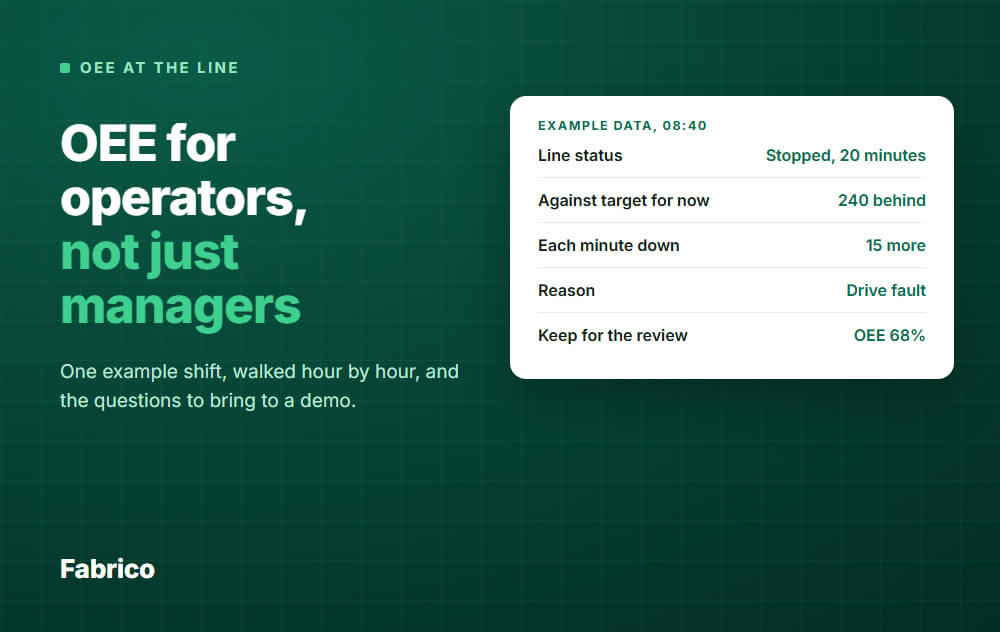
Hidden costs feel less painful when the value is clear and measured. Tying the rollout to recovered uptime through OEE keeps the focus on the return that justifies the effort. Book a Fabrico demo to see the value side of a maintenance program in live data.
Common mistakes
- Budgeting only the software. Implementation, integration, and upkeep often dwarf the license.
- Underestimating migration. Moving and cleaning old data is the most common schedule-buster.
- Ignoring adoption. A system people avoid generates bad data and no return, however cheap it was.
Frequently asked questions
What is the most overlooked CMMS cost?
Ongoing data upkeep. Keeping asset, work-order, and parts records accurate is continuous effort, and it is exactly what determines whether the system delivers value.
How do we avoid hidden-cost surprises?
List them before buying: migration, integration, customization, training, and data upkeep. Turning each into a planned line item removes the surprise.
Licensing Hidden Costs: What the Base Tier Doesn't Include

Every CMMS vendor quotes a compelling base price that excludes features most manufacturers consider standard. Watch for these common traps:
- Mobile access: UpKeep Starter excludes full mobile features; Fiix restricts mobile work order creation to higher tiers
- Read-only manager accounts: 30-60% of full user price, adds a per-manager monthly fee
- API access: Restricted to Professional or Enterprise tiers that cost 40-80% more than entry tier
Before Signing: Map Every Feature to Its Tier
Request the full feature comparison matrix and map every feature your team needs to the tier that includes it. The tier you actually need is almost never the tier quoted.
Integration and Infrastructure Costs That Surface Post-Contract
Integration costs are the largest post-contract surprise in CMMS deployments:
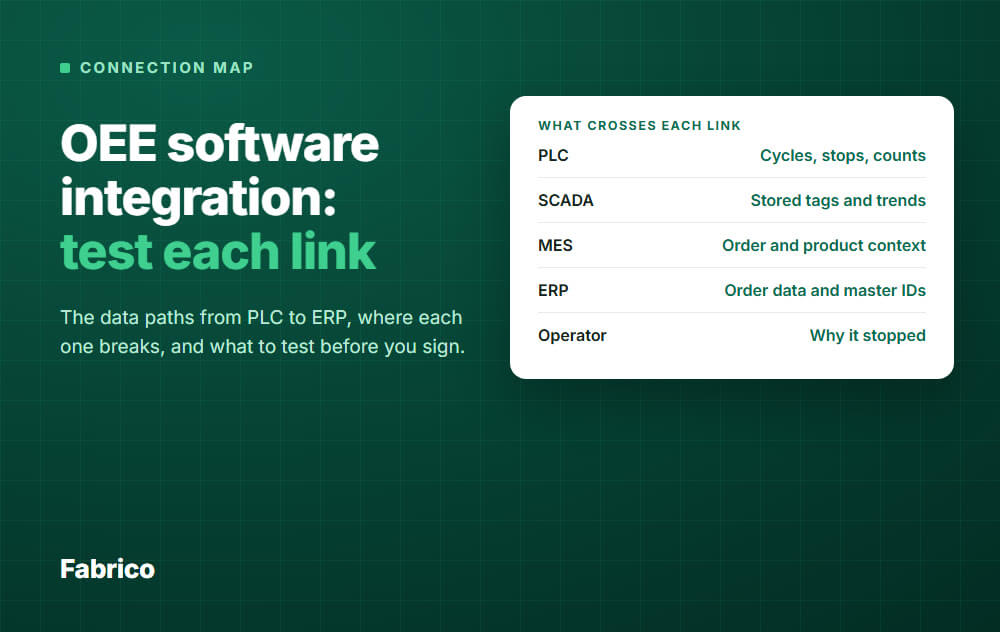
- Pre-built ERP connectors (SAP, Oracle, NetSuite): a configuration fee plus ongoing connector licensing, varying by seat count and modules
- Custom API integrations for historian systems or IoT platforms: priced per integration in professional services
- Storage overage charges: Work order photos, PDFs, sensor data accumulate fast, with extra monthly charges when limits are exceeded
- Single sign-on (SSO) integration: Often gated behind Enterprise tiers only
- Audit log retention beyond 12 months: Paid add-on across most platforms
Always ask specifically: what is the all-in monthly cost once we add ERP integration, SSO, and mobile access for all technicians?
Contract and Renewal Costs That Compound Over Time
Long-term CMMS contract economics are structured to benefit vendors:
- Annual price escalation: 5-12% per year compounds; a contract signed today costs meaningfully more by year four
- Early termination fees: Typically 50-100% of remaining contract value
- Data export fees: Some contracts charge you to retrieve your own maintenance data
What to Demand in Every CMMS Contract
- Annual price cap: No more than 5% escalation per year
- Data portability clause: Guaranteed CSV export at no charge at any time
- Product roadmap commitment: Minimum 3 years of documented product direction
Vendors who push back on these terms are telling you something important about how they view the relationship.
Curious what honest, real-time OEE looks like on your floor?
Request a demoRelated articles








Real Fabrico tiles, sample data.