


 Login
 Blog
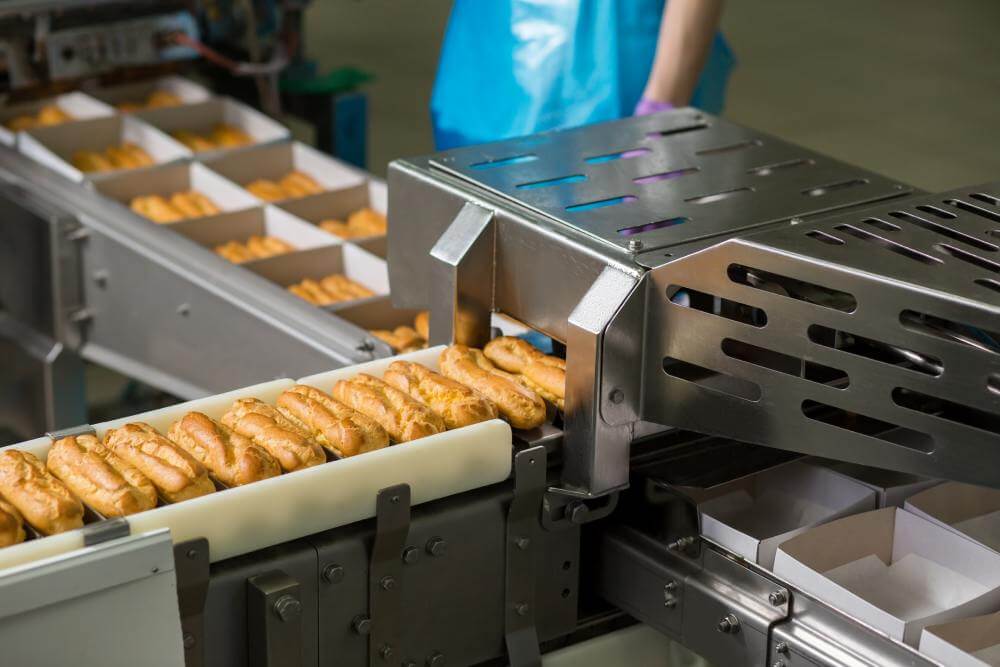
MES and OEE for Food Safety: BRC, SQF and FSSC 22000 Compliance

Why Food Safety Standards Require Both OEE and Maintenance Data

Food safety management standards, BRC Global Standard, SQF Code, and FSSC 22000, require food manufacturers to demonstrate that production equipment is maintained in a condition that does not present food safety risk. This requirement has two components that an MES and OEE platform with CMMS built in satisfies together.
See our roundup of production monitoring systems used in food safety environments.
First, the maintenance documentation component: PM schedules for food contact and food safety-relevant equipment must be documented and compliance demonstrated. CMMS provides this.
Second, the equipment performance component: equipment running outside its specified parameters may present contamination or quality risks. OEE data showing stops, speed losses and scrap on that equipment adds evidence of how it actually ran between maintenance tasks.
The connection between these two components, maintenance execution supporting equipment performance within food safe parameters, is the kind of evidence that BRC Issue 9 Clause 4.7 and SQF Edition 9 Clause 11.2.1 call for when they ask for evidence that the maintenance program supports food safety objectives.
Most food manufacturers have this data in separate systems and present it as two disconnected evidence packages during audits.
Food Safety Audit Evidence From an MES and OEE Platform with CMMS Built In
Food safety auditors increasingly ask process-level questions that require integrated data to answer credibly. For a BRC Issue 9 Clause 4.7 assessment, an auditor might ask: show me how you manage equipment maintenance to prevent food safety risk on your heat treatment line.
From an MES and OEE platform with CMMS built in, the response demonstrates: the PM schedule for the heat treatment equipment (CMMS), the PM compliance record showing all scheduled maintenance was completed at the required intervals (CMMS), and the OEE data for the heat treatment line showing its stops, speed losses and scrap during the audit period (OEE).
The integrated narrative, maintained equipment produces consistent performance within validated parameters, is more compelling than separate maintenance records and separate OEE data that must be manually correlated by the auditor.
For the FSSC 22000 prerequisite programme on equipment maintenance (ISO/TS 22002-1 clause 8.6; Version 7 moves the PRPs to ISO 22002-100:2025 and ISO 22002-1:2025), an MES and OEE platform with CMMS built in provides the record that maintenance was planned and completed, with OEE data showing how the equipment ran after the work.
Implementing an MES and OEE Platform with Built-In CMMS in Food Manufacturing Environments
Food manufacturing has unique implementation requirements for an MES and OEE platform with CMMS built in that industrial manufacturers do not face. Hygienic design of sensor hardware: OEE monitoring sensors installed in food processing environments must meet hygiene requirements, IP69K rated for high-pressure washdown, food-grade materials for any sensors in food contact zones.
Discuss sensor placement and specification with the OEE vendor before installation, and involve the food safety team in specifying sensor locations to avoid creating cleaning difficulties. Allergen and cleaning validation schedule integration: food manufacturers running multi-allergen products on shared equipment need CMMS to track cleaning validation completion before product changeovers.
OEE monitoring that tracks changeover time should distinguish allergen cleaning changeovers from standard product changeovers for accurate OEE analysis. Pest control equipment maintenance integration: pest control devices (UV traps, electronic monitoring systems) require maintenance records in CMMS as part of the food safety maintenance program, not just production equipment maintenance.
The integrated OEE and CMMS platform scope for food manufacturers is therefore broader than for industrial manufacturers and should be scoped explicitly during implementation planning. Request food manufacturing-specific references from any integrated platform vendor and verify that their implementation team has food industry experience before committing to deployment.
Curious what honest, real-time OEE looks like on your floor?
Request a demoRelated articles



Latest from our blog




Real Fabrico tiles, sample data.