

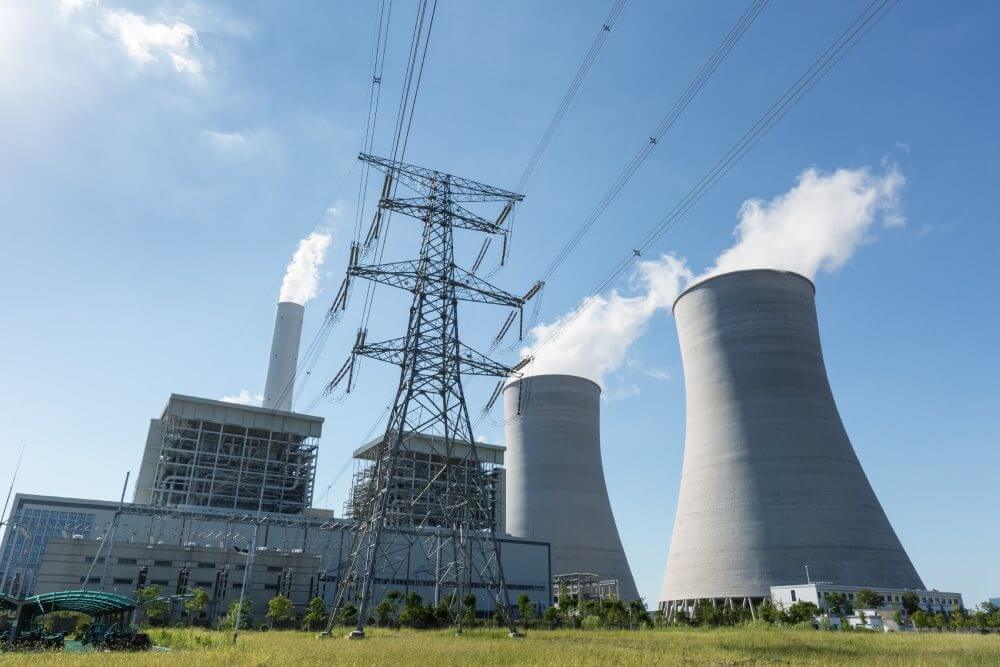

Peak demand management is the practice of controlling a plant’s highest short-term power draw, because on most industrial tariffs a large slice of the electricity bill is not for the energy used but for the peak demand reached, often set by a single worst 15- or 30-minute interval in the whole billing period. Flatten that peak and the demand charge falls, without necessarily using a single kilowatt-hour less energy.
Industrial tariffs typically split into an energy charge (per kWh consumed) and a demand charge (per kW of peak power, measured over a short interval).
The demand charge can be a surprisingly large share of the total, and it is set by your maximum, not your average: one coincident spike, several large motors starting together, a furnace and a compressor loading at once
can set a peak that you then pay for across the entire month, even if it happened for fifteen minutes on one day.
A plant has an average demand of 400 kW but a monthly peak of 650 kW, set on one morning when three large loads happened to start within the same interval.
At a demand charge of, say, 12 per kW per month, that 650 kW peak costs 7,800 in demand charges, versus the 4,800 the 400 kW average would imply. The 250 kW of coincident-start peak is costing about 3,000 a month, 36,000 a year, for spikes that serve no production purpose.
Staggering those start-ups by a few minutes so they never coincide can shave the peak toward the average with zero loss of output, a scheduling change worth tens of thousands a year. The energy used is identical; only the shape changed.
Peak management is a scheduling problem, and scheduling that ignores production reality backfires: shifting or deferring load without knowing what the plant is actually running risks starving a line or delaying an order to save a demand charge.
Effective peak management coordinates energy timing with the production schedule and equipment state, so peaks are flattened around production rather than at its expense. That coordination is exactly where an interactive planning board and real-time equipment state matter, energy timing has to respect what the floor is doing.
The first step is always the interval demand data from the meter or utility: when do peaks occur, what loads coincide, are they production-driven or accidental? Overlaying that demand profile against production and equipment run-state turns "our peak is 650 kW" into "our peak is three specific loads starting together at 06:15," which is the difference between a vague target and a fixable event.
Fabrico is not an energy or demand-control system and does not meter power or shed load. What it provides is the production and equipment context that peak management needs to work safely: real-time run-state and the production schedule, so load timing can be coordinated with what the plant is actually doing rather than blindly deferred.
Overlay Fabrico’s equipment-state data on your demand meter and accidental coincident peaks become identifiable, schedulable events instead of a mystery line on the bill. EU-built, with EU data residency.
Because demand charges bill your peak power, not your total energy. A brief coincident spike, several large loads starting together, can set a monthly peak you pay for across the whole billing period, even though it happened once for a few minutes. Flattening the peak cuts the charge without cutting energy.
Usually staggering the start-up of large loads so they never coincide, a scheduling change with no production cost. Soft starters and VFDs reduce inrush spikes, and shifting flexible loads off peak windows helps further, but the coincident-start fix is often the biggest, cheapest win.
It should not, if it respects the production schedule. The risk is deferring or shedding load without knowing what the floor is running; done with real-time production and equipment awareness, peaks are flattened around production rather than at its expense.
Want to see which coincident starts are setting your demand peaks? Book a Fabrico demo to see equipment run-state data that makes peak management schedulable without hurting output.


























Programați o întâlnire individuală cu experții noștri sau înscrieți-vă direct în planul nostru gratuit.
Nu este nevoie de card de credit!






 Login
Login
 Blog
Blog