


 Login
 Blog

5 Best Limble CMMS Alternatives for Manufacturing (2026 Review)

Key Takeaways
-
The "Generalist" Limit: Limble is fantastic for facilities and light maintenance, but is often less focused on the depth required for complex industrial reliability.
-
The Missing Link: Limble excels at work orders but is less focused on native OEE (Overall Equipment Effectiveness) integration to connect maintenance with production.
-
The Top Contenders: We review Fabrico, UpKeep, Fiix, and others to help you find a tool built for the factory floor.
Limble CMMS has shaken up the maintenance software industry.
With its sleek interface, drag-and-drop dashboards, and excellent mobile app, it has proven that maintenance software doesn't have to be ugly or difficult to use. Technicians generally love it.
But is "easy to use" enough for a modern factory?
Limble is a "Generalist" tool. Its customer base includes gyms, churches, franchises, and property managers. While it handles work orders beautifully, it often treats a multi-million dollar production line the same way it treats a broken treadmill.
It is less focused on the deep, native manufacturing context, specifically OEE integration and Reliability-Centered Maintenance (RCM) logic, that Operations Directors need to justify their budget.
If you love the usability of Limble but need more manufacturing horsepower, here are the 5 best alternatives for 2026.
1. Fabrico: The "Manufacturing Specialist"
Fabrico is listed first because it is our product.
Best For: Factories that want Limble's ease of use + deep Production Intelligence.
Fabrico is built for manufacturing and combines OEE and maintenance in a single platform.
Why Manufacturers Switch to Fabrico:
-
OEE and CMMS: Limble manages maintenance. Fabrico manages Reliability. By integrating OEE data (Speed, Quality, Availability) directly into the dashboard, Fabrico tells you which machines are causing the biggest production losses, helping you prioritize maintenance based on profit, not just schedules.
-
Stoppage Reasons: A stoppage reason can be configured to open a maintenance task automatically.
-
No "Fluff": Because Fabrico isn't trying to sell to hotels or gyms, you don't have to wade through facility-management features that don't apply to your plant.
-
Visual Asset Management: Fabrico allows for complex parent-child hierarchies typical in production lines, visualizing them in a way that makes sense to industrial technicians.
The Verdict: If you want the modern feel of Limble but the data depth of an industrial tool, Fabrico is the upgrade.
2. UpKeep
Best For: Asset-light industries and facilities.
UpKeep is Limble's direct rival in the "Generalist" space. They battle constantly over who has the better mobile app.
-
Pros: Excellent inventory tracking for general parts. Like Limble, it requires almost no training to get started.
-
Considerations: Like Limble, it is less focused on the heavy data requirements of complex manufacturing.
3. Fiix (Rockwell Automation)
Best For: Heavy data users and large enterprises.
If Limble feels too "lightweight" for your complex needs, Fiix is the heavyweight alternative.
-
Pros: Extremely powerful reporting and AI capabilities. It integrates deeply with Rockwell Automation hardware.
-
Considerations: It is the opposite of Limble in terms of usability. It can be complex, click-heavy, and requires a dedicated administrator to manage.
-
The Difference: Move to Fiix if you are willing to sacrifice "ease of use" for "maximum data power."
4. MaintainX
Best For: Teams that run on communication.
Limble is great at tracking tasks; MaintainX is great at tracking conversations.
-
Pros: The interface looks like a chat app (WhatsApp/Slack), which makes adoption instant for younger workers. It handles digital safety checklists and SOPs better than almost anyone.
-
Worth checking: Check how it fits your asset lifecycle and reliability needs.
-
The Difference: Choose MaintainX if your biggest problem is technicians not talking to each other.
5. eMaint (Fluke)
Best For: Condition Monitoring hardware integration.
Limble has some sensor integrations, but eMaint (owned by Fluke) is built around hardware connectivity.
-
Pros: If you rely heavily on Fluke handheld vibration testers or multimeters, eMaint connects that data seamlessly.
-
Considerations: Compare the interface with Limble to see how it fits your team.
-
The Difference: You gain hardware connectivity but lose the modern user experience.
Summary: Why switch from Limble?
Limble CMMS is a great piece of software. If you manage a fleet of delivery vans or a chain of restaurants, you should probably stick with it.
But if you manage a factory: You need more than just a work order system. You need a system that understands cycle times, scrap rates, and overall equipment effectiveness.
-
Choose Fabrico if: You want to keep the "easy-to-use" feel of Limble but gain the OEE and Reliability tools necessary to reduce downtime in a manufacturing plant.
Get the best of both worlds.
Book a Demo with Fabrico to see a platform built by manufacturers, for manufacturers.
Curious what honest, real-time OEE looks like on your floor?
Request a demoRelated articles







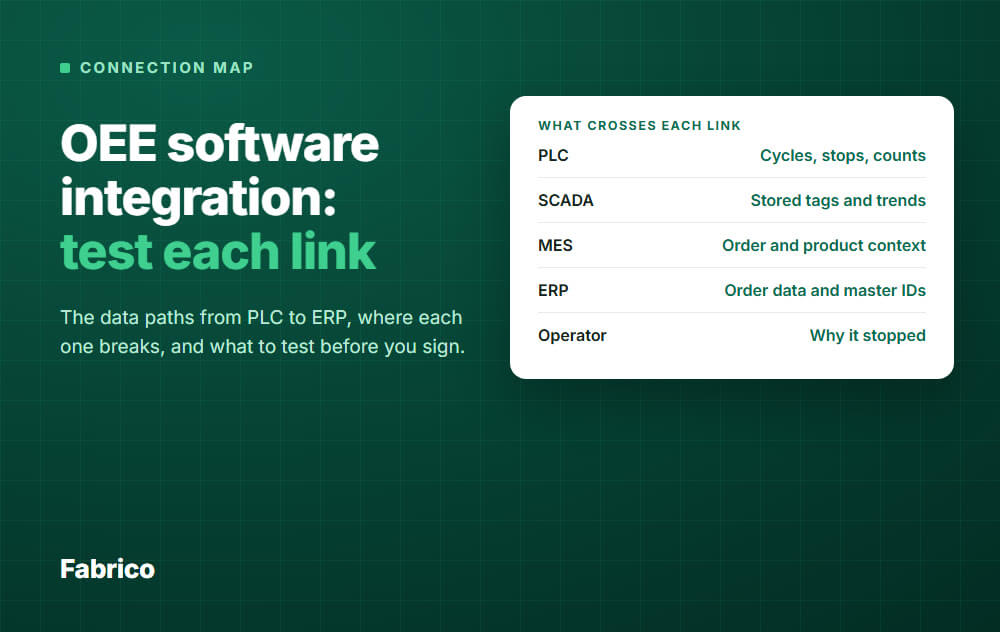
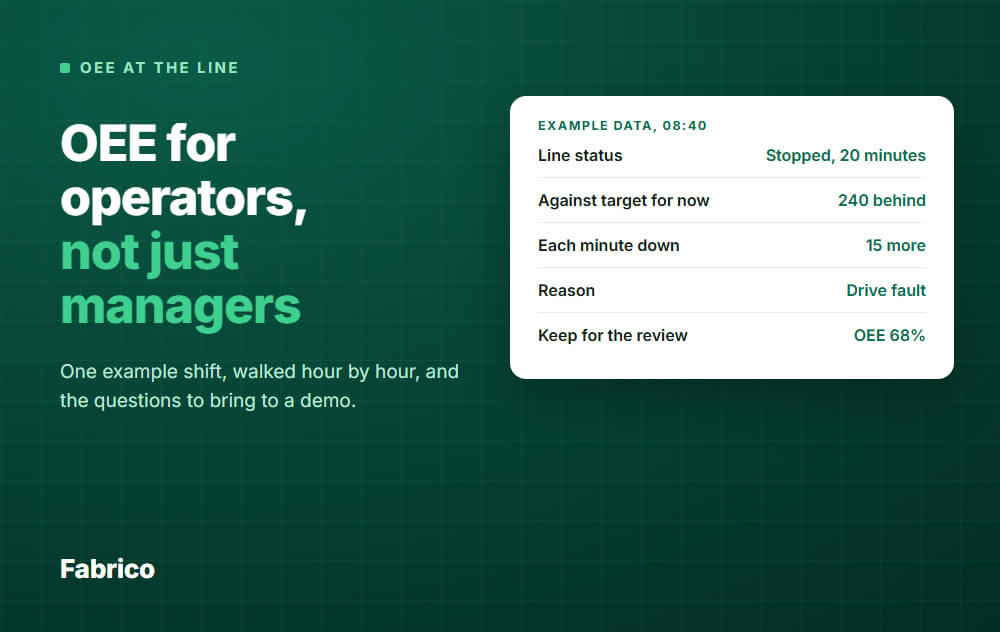


Real Fabrico tiles, sample data.