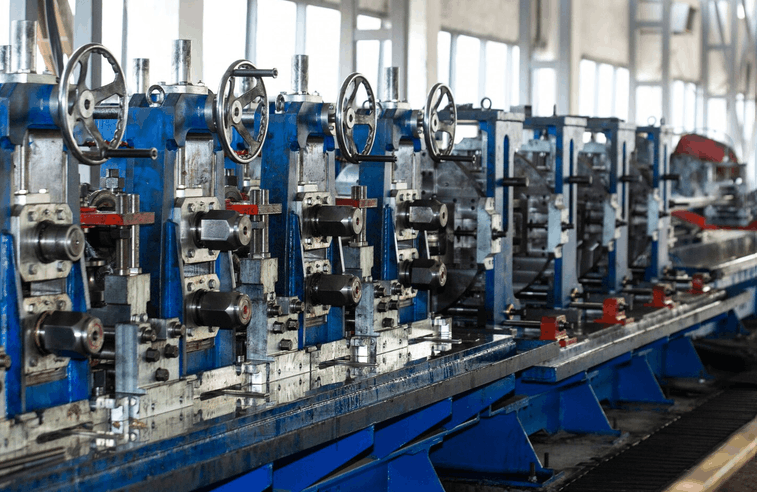
Marine and shipbuilding component manufacturing, producing propulsion systems, deck equipment, structural assemblies, and marine systems, combines heavy fabrication processes with rigorous class society quality requirements. DNV, Lloyd Register, Bureau Veritas, and American Bureau of Shipping (ABS) classification requirements create maintenance and calibration documentation obligations across the production process.
Key CMMS requirements: welding equipment calibration management tied to DNV-approved or equivalent WPS, NDE equipment calibration with survey records accessible by class surveyors during audits, large fabrication equipment maintenance (plate cutting machines, welding manipulators, assembly fixtures) with traceability to structural component certification, blasting and coating equipment maintenance and calibration (coating application quality directly affects corrosion protection certification), and hydrostatic test equipment calibration for pressure vessel components.
Whichever platform you shortlist, the value comes from closing the loop between seeing a problem and fixing it. Fabrico pairs computer-vision-verified OEE with closed-loop maintenance execution, so a detected loss becomes a work order automatically instead of a note someone forgets. See our guides to what a CMMS is and building a preventive maintenance schedule, or book a Fabrico demo.
Marine manufacturers with class society approval must maintain equipment calibration records accessible on demand to classification society surveyors. Survey audits are unannounced in some programs, requiring CMMS calibration records to be current and retrievable within minutes rather than hours.
The practical CMMS requirement this creates: calibration due date alerts must prevent equipment from being used past its calibration date, and overdue calibration must immediately flag the equipment as unavailable for production use on class-surveyed work.
This is a stronger compliance enforcement requirement than most manufacturing sectors, where overdue calibration is a finding rather than an immediate production stop. CMMS work order approval workflows for production release, confirming all production equipment used for a class-surveyed component is within calibration, are a standard requirement in marine manufacturing that most general-purpose CMMS platforms support through configurable workflows.
Marine component manufacturers require CMMS with strong calibration management, audit-ready evidence generation, and long record retention for classification society requirements. Marine coating and corrosion protection documentation, spray equipment calibration, environmental condition records during application, has specific retention requirements that tie maintenance records to vessel construction certificates.
For propulsion system manufacturers (propellers, shafting, gearboxes, azipod systems), DNV-approved suppliers require quality management documentation at the level of a certified manufacturer, with calibration and maintenance records tied to specific component serial numbers.
Enterprise CMMS platforms with marine industry references. Infor EAM, IBM Maximo, are common in large shipbuilding groups. For specialist marine component manufacturers and equipment suppliers, Fabrico, Fiix, and eMaint provide capable calibration management and compliance documentation at a scale-appropriate cost. Select vendors that have handled survey audits for existing customers and can provide reference contacts in the marine manufacturing sector.





















 Login
Login
 Blog
Blog