


 Login
 Blog
Plant Strikes Tracker: What the Restart After a Strike Costs the Line

In short: When a strike or lockout ends, the plant does not restart at its old rate. The first two weeks back carry four costs that can be measured line by line: scrap from the first shifts, stops and slow running while crews and machines settle, the days until OEE is back near its pre-stoppage level, and the backlog set against the capacity the plant has left. This tracker logs strikes and lockouts at discrete and FMCG plants in North America and Europe each month, from the union's, the company's or the statistics office's own dated release, and works through what the restart costs.
- Cases, September to November 2026: a six-week strike at Pilgrim's Europe in Enniskillen; a 17-day strike at Active Dynamics in Scarborough, Ontario; a strike announced at Triumph Engine Control Systems in West Hartford; 464,000 warning strikers in German metal and electrical plants.
- Example plant: a cereal bar line back after two weeks out ends its first fortnight 41,944 cartons short, with 5,122 extra cartons scrapped (USD 57,417.62). The restart costs USD 70,067.02 to 70,143.74 if the shortfall is made back on Saturdays.
Tracker, updated 18 November 2026. Next update: December 2026, with the releases published since. Sources are listed at the end.
A strike or a lockout stops the line on a date that the release states. The restart has no such date: the line runs again on the first shift back, but at a rate that climbs over days, with more scrap and more stops than before. What the plant loses in those days is measurable only if the line's rate, stops and scrap are recorded by shift from the first hour, which is the job of OEE software. The crew side, how much good output each paid hour brings while people settle back in, is overall labor effectiveness. This page logs the stoppages of the month from the parties' own releases, then prices one Example plant's first two weeks back. It takes no side in any dispute: each case reports what the releases say and what the restart asks of the line.
The tracker: plant strikes and lockouts, September to November 2026
Each row comes from a dated release by the union, the company or a statistics office, read at source. Discrete and FMCG plants in North America and Europe only; public sector and service disputes are left out.
| Release date | Plant | Workers | Stoppage | Status in the latest release read | Release by |
|---|---|---|---|---|---|
| 16 November 2026 | Metal and electrical plants, Germany (industry bargaining round) | 464,000 in warning strikes since 1 November | Short warning strikes; 24-hour warning strikes approved on 12 November, subject to a member vote in each selected plant | Ongoing; no fourth round of talks agreed on 12 November | IG Metall (union) |
| 10 November 2026 | Active Dynamics, Scarborough, Ontario: exhaust systems for tractors and ATVs | 240 | Strike from 6 a.m. on 19 October | Ended after 17 days; three-year agreement ratified on 6 November | Unifor (union) |
| 4 November 2026 | Saint-Gobain, Plattsville, Ontario | 42 | Strike since 24 July | Ongoing on 4 November | Unifor (union) |
| 1 November 2026 | Triumph Engine Control Systems, West Hartford, Connecticut: fuel systems for military helicopters | 175 | Strike announced from 5 a.m. on 2 November | No later release read | UAW (union) |
| 2 October 2026 | Pilgrim's Europe, Enniskillen, Northern Ireland: meat snacks and sausages | About 130 | Strikes from late summer, all-out strike from 2 September | Ended after six weeks; 4% pay rise and fully paid breaks accepted | Unite (union) |
Sources: the releases linked in each case below. Workers are the counts each release gives. Plants with fewer than 1,000 workers do not enter the United States count of major work stoppages, which is why the tracker reads the parties' releases first.
Three readings of the table:
- Short stoppages are restarts too. A warning strike of a few hours in a German plant stops a shift, then restarts it the same day. Seventeen days at Active Dynamics and six weeks at Pilgrim's are longer, but the first shift back follows the same pattern: lower rate, more scrap, more stops.
- Some plants run through the dispute. Where a site keeps part of its operation going, as Pilgrim's said it did, the restart brings two groups of people back onto the same lines. That is the period the research below links to quality problems.
- The end date is not the restart date. A ratification vote, a return date and the first good unit at the old rate are three different days. Only the first two are in the releases.
Why the restart costs more than the lost days
The days a plant stands are easy to count. The cost that follows is less visible, because it hides in the first weeks of normal running. Two independent studies of past disputes, and one company's own accounting, show where it sits.
- Quality falls around a dispute. Alan Krueger and Alexandre Mas studied tyres from Bridgestone/Firestone's Decatur plant in the mid-1990s, in NBER Working Paper 9524, published in the Journal of Political Economy in 2004. Tyres made at Decatur during the labour dispute had significantly higher failure rates than those made there before or after it, and than those from other plants. The monthly data show defect production particularly high in late 1995 and early 1996, when large numbers of replacement workers and permanent workers worked side by side.
- The market prices it in later. Mas's study of Caterpillar, NBER Working Paper 13138 (May 2007), found that buyers in the construction equipment resale market significantly discounted machines built in facilities that went through contract disputes in the 1990s, and put the lost service flows from inferior quality equipment alone at no less than USD 400 million.
- The lost volume is costed per unit not built. Ford's release of 30 November 2023, filed with the SEC, put the cost of the 2023 UAW strike at USD 1.7 billion of lost profits, USD 1.6 billion of it in the fourth quarter, from interruptions in the production of trucks and SUVs that left wholesales about 100,000 units below plan. That is about USD 17,000 of lost profit per vehicle not built (1.7 billion / 100,000, page arithmetic).
The two studies cover unrelated companies, products and disputes (Mas is an author of both, with different data each time), and they point the same way: the quality cost of a dispute is real and shows up after the units leave the plant. Neither study measures the restart week by week, so the method below is a plant's own, built from its line data. The Ford figure shows the second half of the method: price the units the line did not make at what each one would have earned.
How the official counts measure a stoppage
National statistics count a stoppage in working days lost. Their rules show what a plant's own record has to hold, because the counts start from the employer's data.
- United States. The Bureau of Labor Statistics work stoppages program counts only major stoppages, those involving 1,000 or more workers. Its preliminary figures for October 2026 show one major stoppage beginning in the month and three in effect, with 149,600 days of idleness from stoppages in effect (the page reports 149.6 thousand). In 2025, 30 major stoppages began and idled 306,800 workers; manufacturing accounted for 6,200 of them, according to the annual release of 20 February 2026.
- Two 2025 manufacturing cases in the same series. The BLS listing records Boeing in Missouri and Illinois, 3,200 workers, 4 August to 13 November 2025, with 230,400 days idle, and Pratt & Whitney, 3,000 workers, 5 to 27 May 2025, with 48,000 days idle. Days idle per worker: 230,400 / 3,200 = 72 and 48,000 / 3,000 = 16 working days.
- United Kingdom. The Office for National Statistics series on working days lost to strike action, released on 17 November 2026, shows 26,000 days lost in September 2026, 740,000 in the whole of 2025 and 733,000 in 2024, against 2,660,000 in 2023.
- Germany. Employers report the start and the end of each strike to the local employment agency under section 320(5) of the Social Code III, on the Federal Employment Agency's strike notification form, which feeds the agency's annual strike statistics. The form asks for the number of workers on strike by day and the total working days lost, and states that in shift operation each fully struck shift counts as a whole working day, with partly struck days counted in proportion. A late or wrong report can be fined up to EUR 2,000.
The German rule is the useful one for the plant floor. A count by shift, with the time each shift actually stopped and restarted, is what the agency asks for, and the same record is what the restart numbers below are built on. A warning strike that stops a line for two hours in the middle of a shift is a partial day for the statistics, and a start-up, a cleaning and a few hours of slow running for the line.
Cases, newest release first
Each case ends with what its own release tells a plant to measure. A new month's cases go on top, under the date of the release.
IG Metall, releases of 12 and 16 November 2026: warning strikes across German metal and electrical plants
IG Metall's press release of 12 November 2026 says its executive board approved 24-hour warning strikes in the metal and electrical industry, after 464,000 employees had taken part in shorter warning strikes. The members in each plant selected for a 24-hour strike vote first, and no fourth round of talks had been agreed. The union's bargaining round page of 16 November 2026 dates the warning strikes from 1 November, after the peace obligation ended at midnight on 31 October, and states the union's demand of 5% for 12 months. On the same page, the union gives the employers' offer as 1.3% from July 2028 over a 26-month term. As a second source, ZDFheute reported on 12 November 2026 that Gesamtmetall's president called the escalation unnecessary and harmful, and that the demand covers about 3.7 million employees.
- A two-hour strike is a restart in the same shift. Short warning strikes stop a line and restart it within the day. Each one carries a shutdown, possibly a cleaning or a purge, and a start-up with its first parts. Log each as two events with times, not as lost hours only.
- A 24-hour strike is three shifts and a cold start. Under the agency's rule, each fully struck shift is a working day lost. For the line, 24 hours means a full stop of every shift on the pattern and a start-up the next day, so the first shift after it is the one to watch for scrap.
- Selected plants, announced late. The release names no plants and no dates for the 24-hour strikes, and members vote plant by plant, so a plant cannot count on weeks of notice. The restart checklist has to exist before the date is set.
Active Dynamics and Unifor, releases of 20 October and 10 November 2026: a 17-day strike at an exhaust plant
Unifor's release of 20 October 2026 says the 240 members of Local 591-G at Active Dynamics in Scarborough, Ontario, who make exhaust systems for non-automotive engines such as tractors and ATVs, went on strike at 6 a.m. on 19 October. The members work as welders, machine operators, painters and assemblers, and the release lists wages, benefits and representation rights as the open issues. The release of 10 November 2026 says members ratified a three-year agreement on 6 November, expiring on 30 June 2029, after 17 days on the picket line, with new premiums for operating certain machinery and more health and safety representatives among the changes.
- Four trades, four restarts. Welding, machining, painting and assembly restart at different speeds. A paint line needs its booth and its process back in window before the first good part, while assembly waits for welded parts. Measure the time to the first good part by area, not for the plant.
- 17 days is long enough for drift. After more than two weeks idle, weld settings, fixtures and paint process checks are first-article items. The release's new premiums for operating certain machinery also mean the crew on each machine may change, and that belongs in the restart record.
- More health and safety representatives, from day one. The agreement adds representatives. Put the pre-start safety walk on the first shift's checklist with its time, because it is part of the restart, and the line's availability on day one should show it as a planned step rather than as a loss without a reason.
Saint-Gobain and Unifor, release of 4 November 2026: a strike still open after more than three months
Unifor's release of 4 November 2026 says the 42 members of Local 12 at Saint-Gobain in Plattsville, Ontario, have been on strike since 24 July, after a strike vote over the summer. Their work covers assembly, machine operation, mixing, shipping and receiving, tow motors, cleaning and skilled trades. The release objects to the use of replacement workers at the site; the company's view was not in a release read for this page.
- A plant that kept running restarts a second time. When the strikers return, two groups share the lines, the situation in which the Decatur study found defects particularly high. Record scrap and first-pass yield by shift and by crew for the first weeks.
- More than three months idle for the skilled trades. Maintenance done by other people during a long dispute has to be handed over in writing: what was changed, what was deferred, and which machines ran at which settings.
- Mixing is a recipe restart. Where the plant mixes material, the first batches after the return are the ones to hold and test before they go on.
Triumph Engine Control Systems and the UAW, release of 1 November 2026: a strike announced at a fuel systems plant
The UAW's release of 1 November 2026 says the 175 members of Local 405 at Triumph Engine Control Systems in West Hartford, Connecticut, who build fuel systems for military aircraft including the Chinook, Apache and Black Hawk, would begin an unfair labour practice strike at 5 a.m. on 2 November. It lists job security, successorship, cost-of-living protection, wages and healthcare costs as the issues. No later release from either side was read for this update; the next one will say whether it ended.
- Aerospace parts restart through approvals. For fuel system parts, the first parts after a stop go through the plant's own first-article and test steps before they ship. The restart is measured to the first approved part, not the first part off the machine.
- 175 people is below the federal count. A stoppage of this size does not appear in the Bureau of Labor Statistics major stoppage figures, so the plant's own shift record is the only full account of the hours lost.
- Plan for an open end. With no end date in the release, the restart checklist is written now, while the line stands, and dated when the return is agreed.
Pilgrim's Europe and Unite, releases of 1 September and 2 October 2026: six weeks at a chilled food plant
Unite's release of 1 September 2026 says about 130 workers at Pilgrims Europe's Enniskillen production facility, which makes products including Fridge Raiders and Richmond sausages, would move to a continuous strike from 06:30 on 2 September, after three weeks of strikes. It names pay and fully paid breaks for the morning shift as the issues. Unite's release of 2 October 2026 says members accepted a 4% rise for all shop floor workers and fully paid breaks for all, ending a six-week strike. As a second source, Food Manufacture reported on 6 October 2026 that a Pilgrim's Europe spokesperson welcomed colleagues back and thanked staff who kept operations running and supported new product launches during the dispute.
- New products launched during the dispute. The returning crews meet products that were launched while they were out. Treat the first runs of those products as a launch for these crews: line settings, pack formats and checks briefed before the first shift, and first-pass yield recorded by product.
- Breaks now paid for every shift. A change in how breaks are paid can change how breaks are taken across the shift pattern. Check the planned time per shift against the new pattern before the restart week is judged against the old one.
- Chilled food restarts from cleaning. A meat products line that has stood or run on reduced crews restarts from a full clean and pre-start checks. Log the cleaning as its own stop reason with its duration, so day one's availability is not blamed on the crew.
For comparison: Cargill, Fort Morgan, Colorado, a lockout that ended before the window
The Teamsters' release of 20 May 2026 says more than 1,700 members of Local 455 were locked out that morning at Cargill Meat Solutions' beef plant in Fort Morgan. As a second source, High Plains Public Radio reported on 19 August 2026 that members ratified a contract on 17 August and that Cargill planned to recall the workers in stages, with the first group due back on 24 August, and quoted the company on giving employees the training and support needed to return safely. The case is outside the September to November window and is kept as the clearest example of a staged restart: the plant decides which areas come back first, and the crews return as those areas need them.
Seven restart costs to measure in the first two weeks
The releases say when people return. The plant's own record says what the return costs. Seven numbers, each with a place in the shift record:
- Restart readiness time. Cleaning, maintenance checks, safety walks and first-article approvals before the first good unit. Booked as stops with their own reasons, they are planned steps, and the line start-up standard work sets their sequence.
- First-shift scrap. Units made and scrapped in the first shifts, as a share of units made, against the line's normal scrap rate. The scrap rate by shift is the measure; the excess over normal is the restart's.
- Start-up stops. Short stops while settings, materials and people settle: jams, adjustments, waiting for material. Their count and minutes by shift show when the line is stable, and the difference between them and slow running is set out in reduced speed loss vs minor stops.
- Slow running. The line set below its normal rate on purpose, or running below it. Performance by shift shows how fast the speed comes back.
- Time to rate. The first day on which OEE is back within two points of its pre-stoppage level, measured with the same OEE calculation as before the stop, by line and shift.
- Good output per crew hour. Good units per paid crew hour, against the pre-stoppage value. A crew working hard on a line that will not hold rate shows here, not in OEE.
- Backlog against the capacity left. The volume customers still want, plus the restart's own shortfall, set against the hours the line can add: Saturdays, a night shift or longer runs. The method behind it is the overtime and weekend shifts capacity diagnostic.
The difference between losses at start-up and quality losses later in the run matters for the first two numbers; it is explained in startup loss vs reduced yield loss.
Worked example: a cereal bar line back after two weeks out
Example plant. Every operating figure in this section is Example data; the labour rate and the industry cost and margin ratios are sourced. The plant, its products and its customers are not any company named above.
An FMCG plant runs one cereal bar line (forming, cutting, flow-wrapping and cartoning) on two shifts a day, five days a week, with 7.75 planned hours a shift: 15.5 planned hours a day, 77.5 a week. The ideal rate is 2,000 cartons an hour. Before the stoppage the line ran at 90% availability, 85% performance and 96% quality: OEE = 0.90 x 0.85 x 0.96 = 73.44%. That gives 2,000 x 15.5 = 31,000 ideal cartons a day, 31,000 x 0.90 x 0.85 = 23,715 cartons made, and 23,715 x 0.96 = 22,766.4 good cartons a normal day, 113,832 a week. Normal scrap is 4% of what is made. Each shift has a crew of 11. A carton sells for USD 14.60.
The plant stood for two working weeks, 10 working days. It did not make 10 x 22,766.4 = 227,664 cartons. Its customers still want half of them, 113,832 cartons; the rest is lost.
Step 1: the first ten days back, measured by day.
| Day back (Example data) | Availability | Performance | Quality | OEE | Good cartons short of a normal day |
|---|---|---|---|---|---|
| 1 | 62% | 66% | 84% | 34.4% | 12,111 |
| 2 | 74% | 72% | 90% | 48.0% | 7,901 |
| 3 | 80% | 75% | 92% | 55.2% | 5,654 |
| 4 | 83% | 77% | 93% | 59.4% | 4,341 |
| 5 | 84% | 79% | 94% | 62.4% | 3,429 |
| 6 | 85% | 80% | 94% | 63.9% | 2,951 |
| 7 | 86% | 81% | 95% | 66.2% | 2,252 |
| 8 | 87% | 82% | 95% | 67.8% | 1,757 |
| 9 | 88% | 83% | 96% | 70.1% | 1,030 |
| 10 | 89% | 84% | 96% | 71.8% | 518 |
| Before the stoppage | 90% | 85% | 96% | 73.44% | 0 |
Example data. Short = 22,766.4 minus that day's good cartons (31,000 x availability x performance x quality), rounded to whole cartons. The ten rows add up to 41,944.
Step 2: the shortfall. In ten days the line made 185,720 good cartons against 227,664 in a normal fortnight: 227,664 minus 185,720 = 41,944 cartons short. The first five days carry 12,111 + 7,901 + 5,654 + 4,341 + 3,429 = 33,436 of them, 79.7%, and day 1 alone 12,111, 28.9%. On day 1 the line made 31,000 x 0.62 x 0.66 = 12,685.2 cartons and scrapped 16% of them, against 4% on a normal day.
Step 3: split the shortfall into scrap and lost running. Each day, the excess scrap is the cartons made times the scrap rate above the normal 4%; day 1: 12,685.2 x (16% minus 4%) = 1,522.2. Over ten days the excess scrap is 5,122 cartons. The rest, 41,944 minus 5,122 = 36,822 cartons, is the output lost to restart stops and slow running (cartons not made, net of the normal 4% scrap).
Step 4: time to rate. OEE on day 9 is 70.1%, 3.3 points below 73.44%. On day 10 it is 71.8%, 1.6 points below: the line is back within two points on day 10, the tenth working day after the restart.
Step 5: good output per crew hour. Two crews of 11 for 7.75 hours give 170.5 paid crew hours a day. Before the stoppage: 22,766.4 / 170.5 = 133.53 good cartons per crew hour. On day 1: 31,000 x 0.343728 = 10,655.6 good cartons, / 170.5 = 62.50 per crew hour, 46.8% of normal. The crew is paid for the same hours as on any day; what it loses is output.
Step 6: price the scrap. The NYU Stern margin data, as of January 2026, give the food processing industry (78 United States firms) cost of goods sold of 76.77% of sales, a gross margin of 23.23% and EBITDA of 15.25% of sales. A scrapped carton costs about 14.60 x 76.77% = USD 11.21 in goods. Excess scrap: 5,122 x 11.21 = USD 57,417.62.
Step 7: price the shortfall, two ways. If the 41,944 cartons are made back, they cost overtime. The BLS series for food manufacturing gives average hourly earnings of production and nonsupervisory employees of USD 24.73 in August 2026 and USD 24.88 in October 2026 (preliminary). A Saturday shift pays 11 x 7.75 x 1.5 = 127.875 hours: 127.875 x 24.73 = USD 3,162.35 to 127.875 x 24.88 = USD 3,181.53, and makes 2,000 x 7.75 x 0.7344 = 11,383.2 good cartons at the normal OEE. The shortfall needs 41,944 / 11,383.2 = 3.68, so 4 Saturday shifts: 4 x 3,162.35 = USD 12,649.40 to 4 x 3,181.53 = USD 12,726.12. If the cartons are not made back, the sales are gone: 41,944 x 14.60 = USD 612,382.40 of sales, at an EBITDA margin of 15.25% to a gross margin of 23.23%: USD 93,388.32 to 142,256.43.
Step 8: the restart fortnight in money. Made back on Saturdays: 57,417.62 + 12,649.40 = USD 70,067.02 to 57,417.62 + 12,726.12 = USD 70,143.74. Not made back: 57,417.62 + 93,388.32 = USD 150,805.94 to 57,417.62 + 142,256.43 = USD 199,674.05. The baseline is the line's own pre-stoppage fortnight, not an ideal one. Overtime figures are earnings only; benefits and any premium set in a local agreement come on top and are not priced here.
Step 9: the backlog against the capacity left. The backlog is 113,832 + 41,944 = 155,776 cartons. The line runs 77.5 of the 168 hours in a week, 46.1%; the capacity left on the current crews is Saturdays. At 11,383.2 good cartons a Saturday shift, the backlog needs 155,776 / 11,383.2 = 13.68, so 14 shifts, or two shifts on 7 Saturdays (14 x 11,383.2 = 159,364.8 cartons of capacity). Crew earnings: 14 x 3,162.35 = USD 44,272.90 to 14 x 3,181.53 = USD 44,541.42. The restart's own 41,944 cartons are 26.9% of the backlog, and four of the fourteen shifts.
Two caveats. A real plant takes its scrap cost from its own standard costs; the industry ratio only sets the scale. And the restart curve here is Example data: the plant's own first days back are the number to measure, which is why the record has to start on the first shift.
Book a demo and see OEE, scrap and losses per line and shift.
Clearing the backlog: three options and who should pick which
The example gives three ways to deal with 155,776 cartons. Each fits a different kind of plant and a different end to the dispute.
| Option | Choose it if | Cost anchor on this page | Watch for |
|---|---|---|---|
| Saturdays with the current crews: 14 shifts over 7 weeks | The crews accept overtime under the new agreement and customers can wait seven weeks | USD 44,272.90 to 44,541.42 of crew earnings | Saturday OEE below the weekday rate while the line is still settling; check it against 73.44% |
| A temporary night shift: 14 nights, under three weeks | Trained people are available, and the customers need the volume in weeks, not months | 11 x 7.75 x 1.12 = 95.48 paid hours a night, with an Example night premium of 12%: USD 2,361.22 to 2,375.54 a night, 14 x 2,361.22 = USD 33,057.08 to 14 x 2,375.54 = USD 33,257.56 of earnings, before hiring and training | A new crew on a restarted line, the mixed-crew situation the Decatur study links to defects; record scrap by shift and crew |
| Make back only the restart shortfall and agree what will not ship | Customers have already replaced part of the volume, or the line cannot hold its normal OEE on extra shifts yet | 4 Saturday shifts, USD 12,649.40 to 12,726.12; the 113,832 cartons not made back are USD 1,661,947.20 of sales (113,832 x 14.60), USD 253,446.95 to 386,070.33 of margin at 15.25% to 23.23% | Customers who were promised the volume; agree it in writing before the line is full again |
The night-shift option is cheaper per carton only on earnings: 2,361.22 to 2,375.54 a night against 3,162.35 to 3,181.53 a Saturday shift, for the same 11,383.2 cartons. It adds people who have not run the line, at a time when the line itself is still coming back.
A second choice comes before the backlog: restart everything on day one, or restart in stages. Cargill's staged recall at Fort Morgan is the pattern for a large site. For one line it means restarting the products with the shortest start-up first, holding the longest changeovers and the new products until day three or four, and bringing back a second line only when the first holds its rate. Questions to settle before the first shift back:
- Which line or area restarts first, and what is its first good unit target, in hours from the start of the shift?
- Which checks (cleaning, first article, safety walk) are planned stops on day one, and who signs each?
- Which products were changed, launched or moved during the stoppage, and who briefs the returning crews on them?
- What scrap rate on day one is expected, and at what rate does the shift leader stop the line?
- Which customers get the first cartons, and what has been agreed with the rest?
The first-shift record: what to log from the hour the line restarts
The numbers in the example come from seven entries on the shift record. Each one is cheap to log on the first shift and impossible to rebuild a week later.
| Entry | When | What it shows |
|---|---|---|
| Time the line stopped, by shift, and the time it restarted | At the stoppage and at the return | Working days lost by shift, as the German notification form counts them, and the start of the restart curve |
| Restart steps as stops with their own reasons | Day one, before the first good unit | Readiness time, kept apart from losses the crew can act on |
| Time of the first good unit, by line and area | Day one | The real restart time, as against the return time in the release |
| Units made and scrapped, by shift and product | Every shift for two weeks | First-shift scrap and the excess over normal, as in Step 3 |
| Start-up stops and speed, by shift | Every shift for two weeks | Lost running, split into stops and slow running |
| Crew on each line, by shift | Every shift for two weeks | Good output per crew hour, and which crews mix returning and other staff |
| OEE by line and shift against the pre-stoppage value | Daily | Time to rate, as in Step 4 |
Two rules keep the record honest. Compare the restart against the line's own weeks before the stoppage, not against a target, so the shortfall is the restart's and not the target's. And keep the restart weeks marked in the record, so that they neither inflate nor hide next quarter's trend. For cleaning time and its place in OEE on food lines, the method is in sanitation shifts, OEE and TEEP; for a line that has to climb a curve from its first day, the new line ramp-up plan uses the same daily measures.
This week back, this quarter
Plant, production, maintenance and HR managers can split these as the plant runs.
Before the first shift back
- Write the restart sequence: which line first, which checks, who signs each, and the first good unit target.
- Add stop reasons for restart steps (cleaning after the stoppage, first-article hold, safety walk) so day one's availability is read correctly.
- Hand over in writing any maintenance done, deferred or changed while the plant stood.
The first two weeks
- Record scrap, stops, speed and crew by shift and product, and set the day-by-day table of Step 1 beside the pre-stoppage OEE.
- Check first-pass yield by crew where returning and other staff share a line.
- Count the backlog: the volume customers still want plus the restart's own shortfall.
This quarter
- Choose how to clear the backlog with the table above, priced with the plant's own rates.
- Write the restart curve down as the plant's own reference: days to first good unit, days to rate, scrap on day one.
- Keep the restart checklist ready for the next stoppage, short or long, so it can be dated and used within a day.
The record behind the restart numbers
A union's release gives the return date, and a company's statement welcomes the crews back. Neither says when the line reached its old rate. That answer sits in the shift log of the first ten days: the time of the first good unit, the scrap per shift, the stops with their reasons, which product ran on which line, and the crew on it. Kept from the first hour, it splits the backlog into the stoppage's part and the restart's part, and it gives the plant its own restart curve for the next time.
Fabrico is a cloud OEE and light MES platform. It shows OEE and losses by machine, line and shift, with data from the machine's PLC or a Fabrico IoT device, and operators give the reason for a stop at the machine, so restart steps such as "cleaning after the stoppage" or "first-article hold" are summed by shift. With the selling price and margin of each SKU entered, losses are priced in money. On manual stations, AI cameras (an add-on) count output. Customer volumes, promises and the backlog plan stay in the ERP, APS or spreadsheet; Fabrico supplies the measured rates they are built on. The building blocks are OEE software and a light MES for the production record.
Book a demo and see OEE, scrap and losses per line and shift.
What people ask next
How long does it take a plant to get back to normal output after a strike?
It depends on the line, the length of the stoppage and the crews, so the plant's own record is the measure: the first day OEE is back within two points of its pre-stoppage level. In the Example plant on this page, a cereal bar line out for two weeks reached that on its tenth working day back, after starting at 34.4% OEE on day 1 against 73.44% before the stoppage.
What does restarting a production line after a strike cost?
Price four things: excess scrap in the first shifts, output lost to restart stops and slow running, the overtime to make that output back or the margin if it is not made back, and the backlog against the capacity left. In the Example plant the first fortnight cost USD 70,067.02 to 70,143.74 with the shortfall made back on Saturdays, and USD 150,805.94 to 199,674.05 without it.
Why is scrap higher after a strike or a lockout?
Settings, materials and crews all restart at once, and machines that stood may need cleaning and checks before they hold their process. Research on past disputes found quality problems around them: tyres made at Bridgestone/Firestone's Decatur plant during its dispute had significantly higher failure rates, with defects particularly high when replacement and permanent workers worked side by side. Record scrap by shift, product and crew from the first shift back.
How are working days lost to a strike counted?
National statistics count working days lost. In Germany, employers report the start and end of each strike to the employment agency, and in shift operation each fully struck shift counts as a whole working day. The United States count covers only stoppages of 1,000 or more workers, so smaller plants appear only in their own records and the parties' releases.
How do you clear a backlog after a strike?
Add the volume customers still want to the restart's own shortfall, then set it against the capacity left: Saturday shifts, a temporary night shift, or a smaller promise agreed with customers. In the Example plant, 155,776 cartons need 14 Saturday shifts at USD 44,272.90 to 44,541.42 of crew earnings, or 14 nights with a new crew.
Which manufacturing plants had strikes in autumn 2026?
From the parties' own releases: about 130 workers at Pilgrim's Europe in Enniskillen ended a six-week strike in early October; 240 workers at Active Dynamics in Scarborough, Ontario, ended a 17-day strike in November; a strike at Triumph Engine Control Systems in West Hartford was announced from 2 November; and IG Metall counted 464,000 warning strikers in German metal and electrical plants from 1 November.
Sources
All sources accessed on 18 November 2026. Dates are release, publication or data dates where a page gives one; other dates are labelled as what they are.
- IG Metall, press release: IG Metall-Vorstand beschließt 24-Stunden-Warnstreiks in der Metall- und Elektroindustrie, release dated 12 November 2026
- IG Metall, Aktionen zur Metall-Tarifrunde (bargaining round page), page dated 16 November 2026
- ZDFheute, IG Metall kündigt ganztägige Warnstreiks an (second source, press report), published 12 November 2026
- Unifor, Active Dynamics members ratify new three-year agreement, ending strike lasting more than two weeks, release dated 10 November 2026
- Unifor, Unifor shows its solidarity for Saint-Gobain members across Ontario, release dated 4 November 2026
- Unifor, Unifor Active Dynamics manufacturing members on strike, release dated 20 October 2026
- UAW, UAW Local 405 members will walk out on strike after company fails to propose fair deal, release dated 1 November 2026
- Unite the Union, Pilgrims workers secure inflation busting pay improvement and end strike, release dated 2 October 2026
- Unite the Union, Pilgrims workers begin all-out strike over pay in Enniskillen, release dated 1 September 2026
- Food Manufacture, Pilgrim's Enniskillen workers end strike following inflation-busting pay rise (second source, trade press), published 6 October 2026
- International Brotherhood of Teamsters, Cargill Teamsters demand employer end lockout (PR Newswire), release dated 20 May 2026
- High Plains Public Radio, Fort Morgan meatpackers vote yes on Cargill contract to end 89-day labor lockout (second source, press report), published 19 August 2026
- U.S. Bureau of Labor Statistics, Work Stoppages (major work stoppages, monthly data), data to October 2026, preliminary
- U.S. Bureau of Labor Statistics, Major work stoppages in 2025 (news release USDL-26-0232), release dated 20 February 2026
- U.S. Bureau of Labor Statistics, Average hourly earnings of production and nonsupervisory employees, food manufacturing (CES3231100008), data to October 2026, September and October preliminary
- Office for National Statistics, Labour disputes: working days lost due to strike action, UK (BBFW), release dated 17 November 2026, data to September 2026
- Bundesagentur für Arbeit, BA-Anzeige-Streik: Einzelmeldung Streikmeldung (strike notification form), form version 05/2024
- Alan B. Krueger and Alexandre Mas, labor strife and the production of defective Bridgestone/Firestone tires, NBER Working Paper 9524 (Journal of Political Economy, 2004), working paper issued March 2003
- Alexandre Mas, Labor Unrest and the Quality of Production: Evidence from the Construction Equipment Resale Market, NBER Working Paper 13138, working paper issued May 2007
- Ford Motor Company, release of 30 November 2023 on the UAW agreement and 2023 guidance, Form 8-K exhibit 99 (SEC EDGAR), release dated 30 November 2023
- Aswath Damodaran, NYU Stern School of Business, Operating and Net Margins by Industry Sector (United States), data as of January 2026


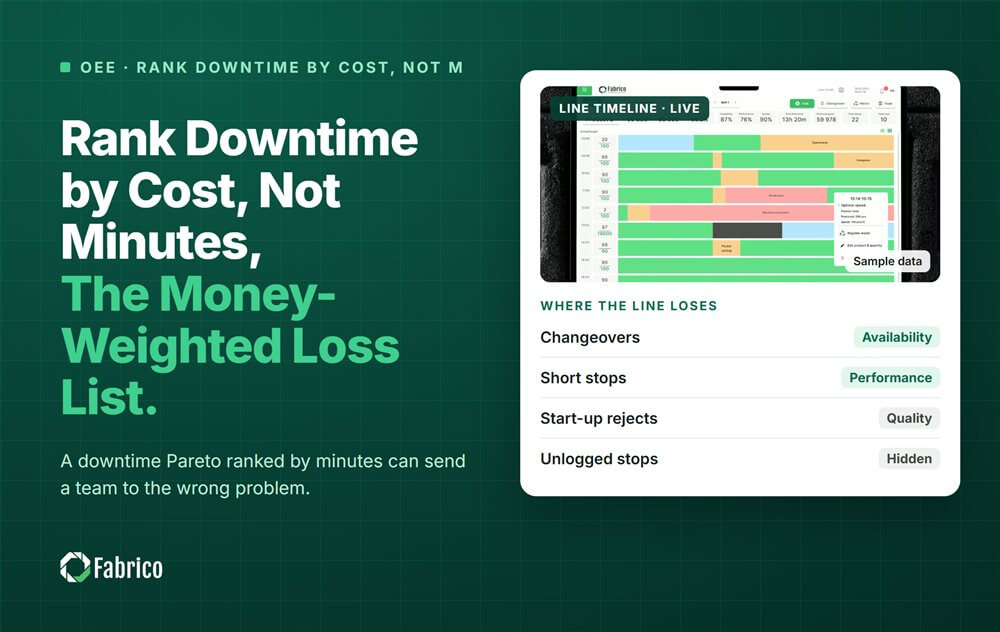



Real Fabrico tiles, sample data.